
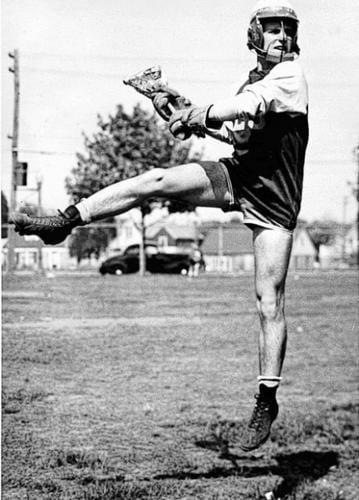
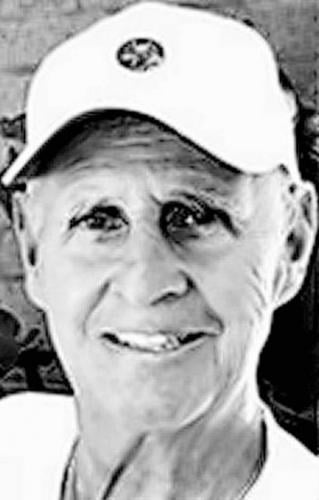
Tom Nolan ate, dreamed and breathed lacrosse for more than 60 years.
When he was a World War II paratrooper diving out of airplanes.
During his 40-year, Emmy-Award-winning career as a special-effects man for NBC.
And even in retirement when he moved his beat-up lacrosse gear cross-country to Tucson.
"It's probably one of the most important things in my life. That's where my heart is," said the nationally recognized youth coach in a 2005 issue of Lacrosse magazine.
Though some of Tucson's lacrosse infrastructure was in place when Nolan and his wife of 58 years, Joan, moved to Arizona in 1988, Nolan was recognized by a national lacrosse organizations for elevating the sport's profile on the East Coast and in the Southwest.
Nolan introduced a multitude of Tucsonans to the sport, and the coaches he trained plan to continue promoting lacrosse now that he's gone. Nolan died July 29, after living with colon cancer for five years. He was 81.
People are also reading…
"It didn't matter what level of lacrosse, he just really had a passion for the game," said Jason Spatafora of Miami, who met Nolan while playing for the University of Arizona lacrosse team in 2000.
"I had come from Long Island (N.Y.) and played on a national championship team," Spatafora said. "People knew his lacrosse background, and the things he said made sense. They were universal truths. Even though he may have played 30 years ago, his work ethic back then held as true as it did when we were players."
Nolan played lacrosse while attending high school on Long Island. Later in life he played in adult leagues. Nolan was so attached to the game that when he enlisted in the Army at 17, he took his lacrosse stick with him.
"He was a young man with visions of being a hero, I suppose," said Joan Nolan, who met her husband after he was discharged from the Army.
Nolan was an Army paratrooper during World War II, assigned to the 17th Airborne Division. He was part of "Operation Varsity," the first airborne invasion over the Rhine River into Germany and the last full-scale airborne drop of the war.
Nearly 4,000 aircraft loaded with British, U.S. and Canadian forces dropped soldiers behind enemy lines to capture key military points and assist the ground troops. It was during this operation that Nolan earned the Bronze Star when he chose to stay with a wounded buddy despite the risk of being captured by German forces.
After the war, Nolan and his wife moved to Garden City, N.Y., and he took a job with NBC as the special-effects crew chief. During his 40 years with the network, he had a hand in many of the most popular programs, including "The Milton Berle Show," "The Howdy Doody Show," "Late Night With David Letterman," "Saturday Night Live" and "The Tonight Show Starring Johnny Carson," when it was taped in New York.
Nolan and his crew won an Emmy Award for the 1956 "Kraft TV Theater" live adaptation of "A Night to Remember," the story of the Titanic disaster. It was a "remarkable production," wrote a Time magazine critic, because the live telecast required 40 set changes.
Despite Nolan's success in entertainment, his avocation was always lacrosse. He coached first in 1947 in Garden City and ended his youth sports career in 2007 at Tucson's Townsend Middle School, where the lacrosse field is named in his honor.
Nolan was voted "Lacrosse Man Of The Year" by the United States Lacrosse Coaches Association in 1981. He became a member of the Long Island Metropolitan Lacrosse Hall of Fame in 1994, and, in 2002, he received the first "For the Growth of the Game" award from the Lacrosse Association.
While in Tucson, Nolan coached teams at the University of Arizona, St. Gregory College Preparatory School and at Townsend. It was the 12 years he volunteered with students from San Xavier Mission School, though, that may have been most meaningful.
Nolan was an aficionado of American Indian art and culture, and lacrosse is an indigenous sport.
Modern lacrosse — a combination of basketball, soccer and hockey — is based on the oldest sport in North America, according to US Lacrosse, the national governing body of men's and women's lacrosse. At the time of first European contact, at least 48 tribes throughout the United States and southern Canada played some form of the game.
"He was a tremendous influence on a lot of lacrosse players," said Joe Lore, of New Jersey, who had Nolan as a coach in the early '70s. "Tom was masterful at goalie coaching. He coached so many high-school and college all-Americans throughout his career.
"Tom was way ahead of his time in terms of what he taught, and more importantly, how he taught it," Lore said.
Players and coaches agree, Nolan was a personable guy who connected with players.
"He was one of the best coaches I ever had," Spatafora said.
Nolan's final coaching stint was at Townsend, where he developed a co-ed program that continues, physical education teacher Susie Ribaudo said.
When Nolan's cancer forced him to stop coaching last year, he donated all his lacrosse equipment to Townsend so the program could continue.
Nolan taught the young athletes the rules and skills of the game, as well as respect and self-control, Ribaudo said.
"He explained to them that in the heat of battle you do get excited and angry, but you have to turn the anger into energy in the game and not get upset.
"He really liked to work with kids," Ribaudo said. "He brought the best out in them."
Teaching was a joy for Nolan, but he couldn't resist charging down the field on occasion. During one practice, Ribaudo recalled, the Townsend teams were short a player, so Nolan, then in his 70s, jumped in.
"Before I could holler at the boys and tell them to take it easy on Tom," Ribaudo said, "Tom grabbed stick, ran into the crowd (of players), scooped up the ball, zig-zagged down the field and scored a goal.
"He blew them away," she said. "They were standing there with their mouths open."
Life Stories
This feature chronicles the lives of recently deceased Tucsonans. Some were well-known across the community. Others had an impact on a smaller sphere of friends, family and acquaintances. Many of these people led interesting — and sometimes extraordinary — lives with little or no fanfare. Now you'll hear their stories. Past "Life Stories" are online at go.azstarnet.com/lifestories.