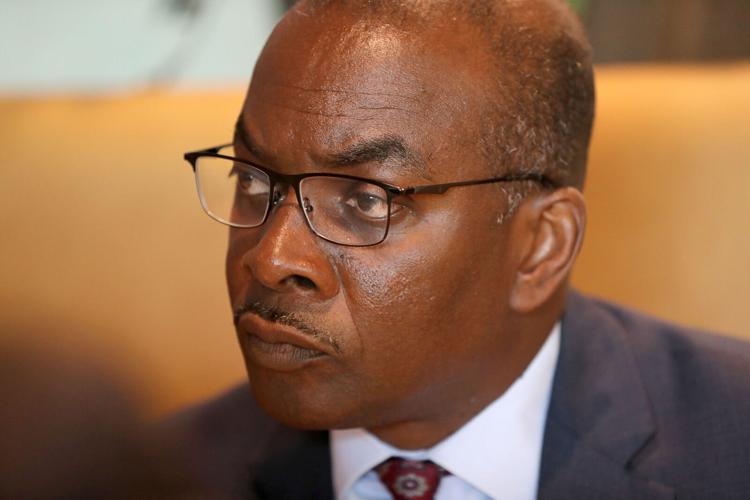
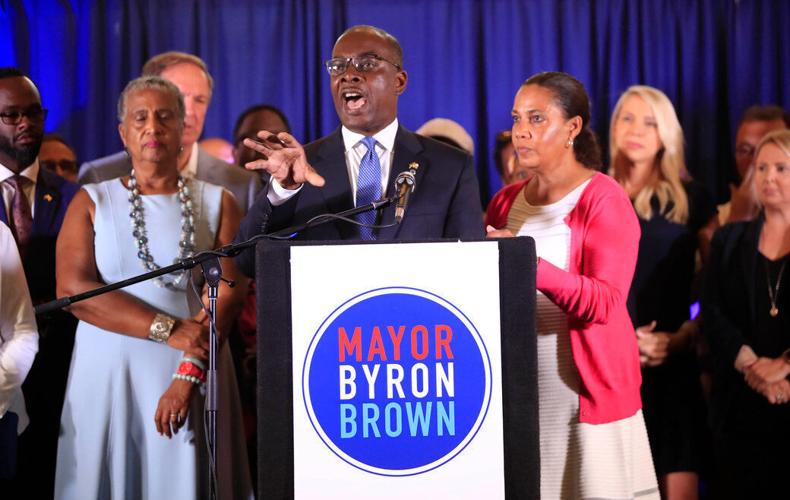
Byron W. Brown acknowledges he has spent almost two weeks answering "the question."
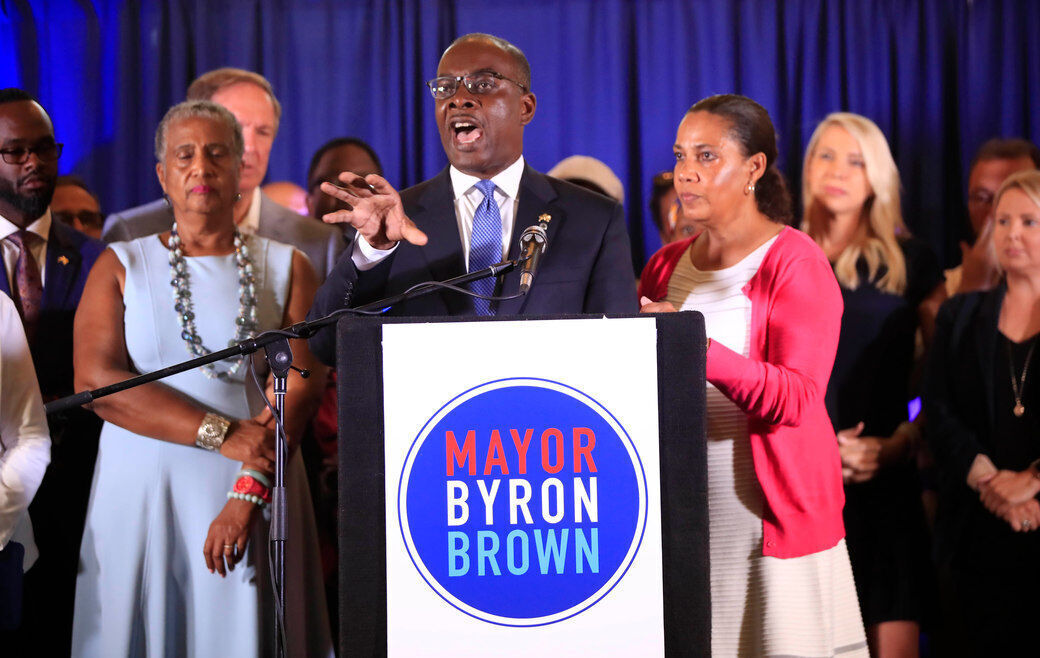
Brown, four-term leader of New York's second largest city and former chairman of the Democratic State Committee, must soldier on without Buffalo Democrats that are either tired of his reign or sensing new political currents flowing through the city.
How could a four-term mayor of Buffalo with all the advantages lose the June 22 Democratic primary to a far left newcomer?
"The entire community took it for granted – including myself," he said Thursday during an extensive interview. "That was a mistake and I apologize to the community.
"I can't go back, only forward," he added.
In the days following what may rank as the biggest political upset in Buffalo history, Brown seeks to put "the question" behind him. The city's political stars, moons and planets all aligned perfectly for India B. Walton, he said. And after the victory of an avowed socialist caught the nation's attention, he now looks to the Nov. 2 general election for political redemption – even if an unprecedented write-in campaign poses long odds.
People are also reading…
He said he believes the next effort – which he vows will be run better – can succeed. Top notch consultants financed by fresh campaign funds, a re-dedication of his once-vaunted political machine, and the realization that a record fifth term leading New York's second largest city will result only from an extraordinary effort minus the primary's gaffes.
"I think in many ways this is a blessing in disguise," he said of his first defeat at the polls in 28 years, "because it is energizing the community and bringing the community together in ways I have not seen in a very long time."

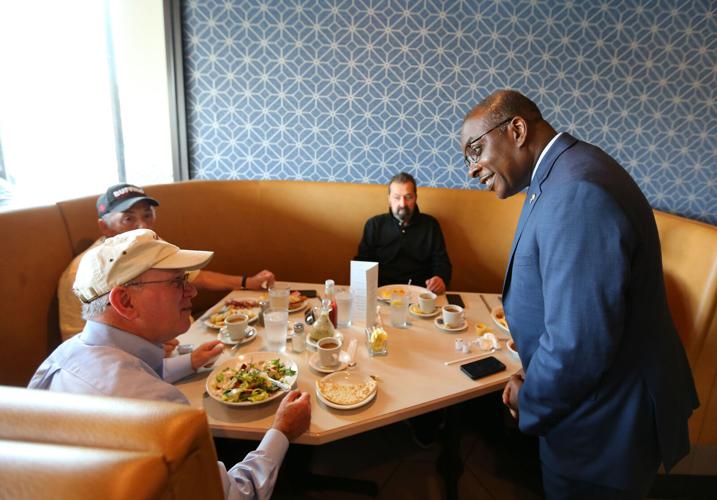
Buffalo Mayor Byron Brown talks with supporters at Kostas Restaurant on Hertel Avenue in Buffalo Thursday, July 1, 2021.
A campaign like no other
Sitting at Kostas Family Restaurant this week, Brown hardly seemed like a defeated mayor. Buffalonians at the Hertel Avenue landmark gladly accepted his outstretched hand, several recalled past meetings and most wished him good luck on Nov 2.
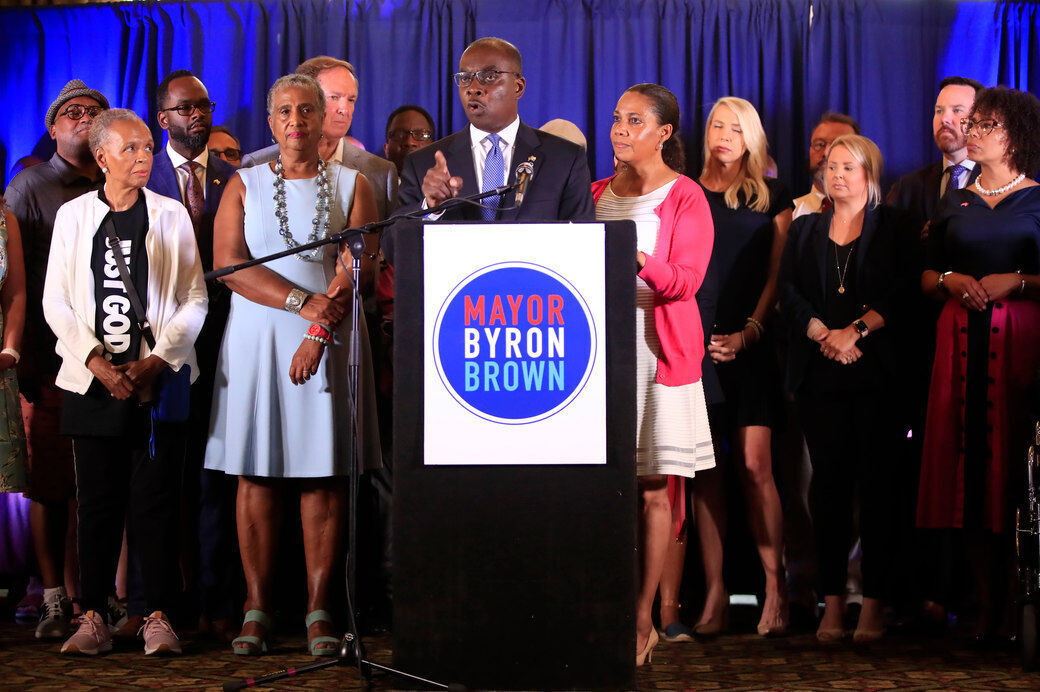
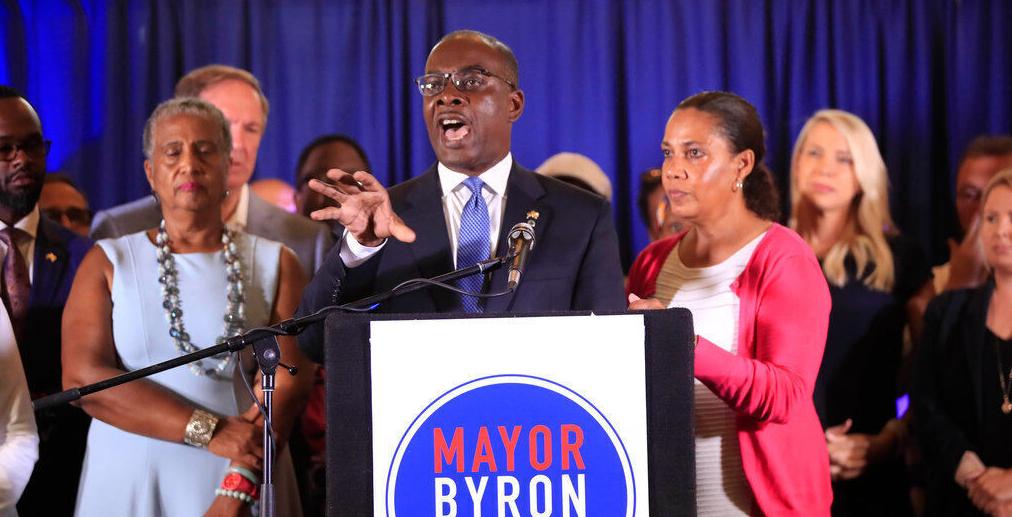
A new and fiery Byron W. Brown sought to revive his failed mayoral campaign Monday with a whole new persona, and former County Executive Joel A. Giambra and Delaware Councilmember Joel P. Feroleto have indicated that they may also join the fray.
Though nobody in New York history has ever won such a high level write-in effort, Brown thinks he can succeed. Like him and his staff, Buffalo voters never saw Walton as a genuine threat, he said. He thinks many stayed home believing the election was uncompetitive, while others cast a "protest" vote they failed to realize might help spell defeat.
The mayor now predicts a broader electorate of moderate Democrats, Republicans and unaffiliated voters will reject a "radical socialist" – a term likely to dominate a more negative effort. Unlike the low turnout primary, Brown predicts the next four months will produce a campaign likely to consume the community's attention.
"What they can expect from me is high energy. They can expect passion about presenting ideas for the future of the city. They can expect me fighting for the future of the city," he said, "and they can expect us really educating people about the many things we were able to accomplish during my tenure as mayor."
Brown predicts the campaign he plans will spur a citywide "movement."

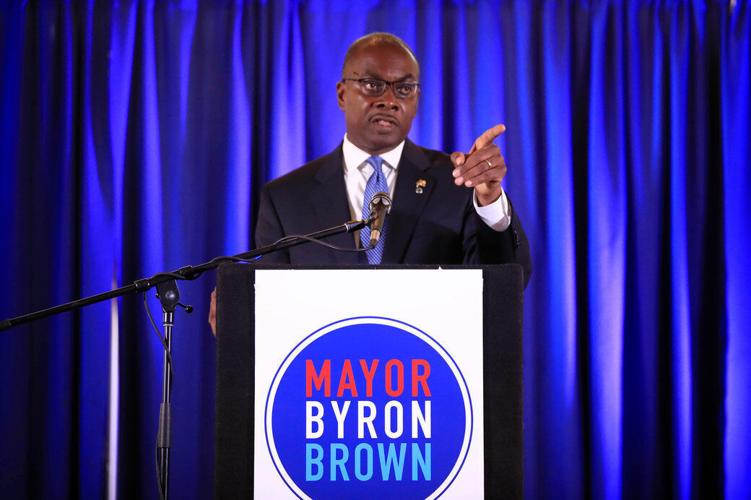
Mayor Byron Brown does an Q&A with media members at the Statler after announcing a write in campaign to run for re-election as mayor on Monday, June 28, 2021.
A changing tone
By all indications, Brown plans to discard the "rose garden" tenor of his primary campaign. He and a staff to include Deputy Mayor Betsey Ball are besieged, he says, by top political consultants from around the country who want to tackle the unusual situation in Buffalo. He points to Walton's optimism stemming from $40,000 in donations immediately after Primary Day; he claims double in commitments.
His campaign, he has promised, will "knock on every door" in the city – a far cry from the primary's laid-back effort. That signals a more active effort from his City Hall troops, though some question whether his Grassroots political club can still flex its traditional muscle on the East Side.
Over the past few days, Brown now deigns to mention Walton by name after ignoring her for months. He promised to meet her in debates he rejected previously. And he is already hinting at a pointed attack aiming at Walton's leftist positions and inexperience.
"What people are saying in every section of the city is they believe a candidate with socialist views and bad ideas definitely is a threat to the future of the city," he said, pointing to progress of the past few years. "They don't want to see those improvements in the quality of life affected, interrupted, stopped."
The mayor paints a grim picture of what to expect under a Walton administration, labeling it "an incredible threat to the progress we have made."
"The lack of experience, the bad ideas and bad decisions like defund the police, particularly at a time when we see crime rising in cities all across the country," he said, although Walton does not use that term. "Now is not the time to defund the police, reduce police or cut police.
"We would see crime go up, we would see homicides go up, and we would see property values in every section of the city – including the East Side – go down," he added.

"As India herself has described some of the things she would do, people are saying very loudly in every section of the city 'No, I don't support that; I don't want that,'" Brown said.
An appeal to all voters
Is Buffalo really a city with socialist leanings?
"As India herself has described some of the things she would do, people are saying very loudly in every section of the city 'No, I don't support that; I don't want that,'" he said. "They're saying loudly and clearly 'I didn't know about those positions. I didn't know about her being a socialist, and that is not what I want for the City of Buffalo.' "

"I'm prepared to take on the challenges that the majority of Buffalonians are facing, and I'm not going to back down, I'm not going to cower and I'm not ashamed," Walton says.
Despite strong Buffalo showings for socialist Bernie Sanders in the past two presidential elections, the mayor rejects any idea the city voters are basically socialist. And the general election campaign, he said, cannot focus on left or right but the electorate as a whole. Rather, he plans a citywide appeal for what could loom as the most noteworthy general election since the late James D. Griffin captured the first of his four terms in 1977.
"I don't see the party really reflecting that," he said of Walton's socialist leanings. "But it's more than the party. The November general election will not be about the Democratic Party. It will be about all registered voters in the City of Buffalo ... regardless of party affiliation."
That translates into an electorate of about 155,000 voters, he said, rather than the 21,000 cast by Democrats only on June 22. Brown calls the opportunity to bring his campaign to the whole city "incredibly liberating."
"Believe it or not, I feel exhilarated," he said. "I feel energized, I feel excited about the opportunity to speak to every voter in this movement to save the city."