

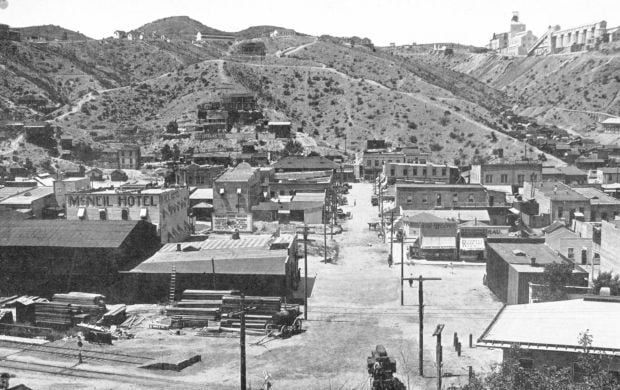
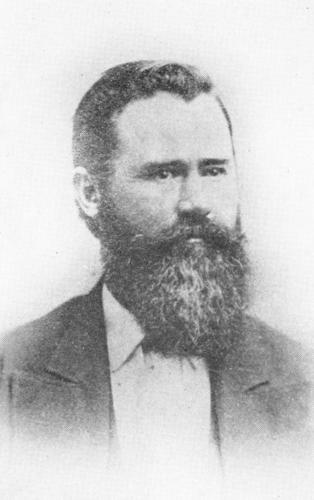
Silver discoveries in the 1870s instigated mining in what became known as the Globe-Miami District, 82 miles north of Tucson in the foothills of the Pinal Mountains. Early pioneers visited the area in 1864, including Col. King S. Woolsey and party, who encountered a band of apache warriors at Bloody Tanks Massacre. By the turn of the century great porphyry, low-grade copper deposits, proved more valuable than silver, having been mined early on by the Lewissohn mining syndicate.
Located five miles west of Globe and settled in 1907 — with a post office opened two years later— the town of Miami was named after early settlers from Miami, Ohio, and reached a population of 9,000 in 1914.
Despite businessmen from Globe unhappy with the prospect of competition from Miami, their subsequent boycott geared toward entrepreneur and land baron Cleve Van Dyke’s acquisition of Miami Flat in 1908 for $25,000 failed. Van Dyke envisioned a housing/business enterprise that became reality with his promotional newspaper, the Silver Belt, along with the influx of copper mining revenue initiated by the incorporation of the Miami Copper Co. in 1908 and the Inspiration Consolidated Copper Co. in 1912.
People are also reading…
A small company-owned mining community known as Inspiration, named after the Inspiration Mine, originated when its owners who were in dire straits to finance their mine, had the “inspiration” to borrow the funds from the bank, and thus called the mine “Inspiration.” The community of 400 included officials, supervisors, and skilled mine employees.
Early descriptions of mining activity included the coal-black slag dumps of the smelter that glowed red at night due to the streams of molten rock dumped from the furnaces. Built in 1915, the International Smelting and Refining Co. smelter at Miami relieved mining companies’ past practice of transporting their concentrates to Cananea, Mexico, for smelting.
That year the Inspiration Mine was the first site in the U.S. to initiate large-scale application of flotation to recover a higher amount of porphyry copper after mining engineer Louis D. Ricketts erected a flotation mill with a capacity of 14,000 tons per day. Electric power was supplied by wire from the Roosevelt Dam and later by steam plants operated by the Miami Copper Co. and Inspiration Consolidated Copper Co.
By 1916, production in the Miami-Inspiration-Globe area surpassed that of Bisbee with a market price of copper valued at a high of 17 cents per pound. The following decades were characterized by booms and busts relative to the market price of copper.
Between 1905 and 1933, both the Miami and Inspiration mines produced over 2.4 billion pounds of copper. Underground mining in the form of block caving continued until it was entirely superseded by open-pit operations in 1954. Already additional copper deposits were being exploited, including 33 million tons of ore at the open pit mine at Porphyry Mountain or Castle Dome Mine six miles north of Miami and the Copper Cities deposit three miles north of Miami.
The Inspiration Mine is also noted for its deposits of chrysocolla, including black chrysocolla, a manganese-rich variety of green chrysocolla. Chrysocolla, a hydrated copper silicate and major ore of copper, has uses ranging from lapidary cut material used in jewelry to attractive yard rock. Deposits of exposed chrysocolla on the surface help geologists locate primary sources of copper.
Active mining continues to play an important role around Miami and Inspiration.
The former Miami Mine property, now an open-pit copper mine operated by Freeport-McMoRan Copper and Gold Co., produced 66 million pounds in 2012, with a smelter and an electrolytic refinery that supplies copper rod.
Additional nearby open pits include Carlota, discovered in the 1990s and currently owned by KGHM International Ltd., with an expected mine life until 2020; and Pinto Valley, owned by Capstone Mining Corp., with an estimated until 2026.
William Ascarza is an archivist, historian and author. Email him at mining@azstarnet.com
Arizona: A State Guide Compiled by Workers of the Writer’s Program of the Work Projects Administration in the State of Arizona. American Guide Series Illustrated Hastings House, New York. 1940; Elsing, Morris J. and Robert E. S. Heineman. Arizona Metal Production. Arizona Bureau of Mines, Economic Series No. 19 Bulletin No. 140. Tucson, University of Arizona, 1936; McClintock, James H. Arizona, Prehistoric, Aboriginal, Pioneer, Modern. 1916. Vol II. Chicago, S.J. Clarke Publishing Co.; Reed, E.F. Geological Notes on the Miami-Inspiration Mine. New Mexico Geological Society. Thirteenth Field Conference; Throop, Allen H. and Peter R. Buseck. Nature and Origin of Black Chrysocolla at the Inspiration Mine, Arizona. Economic Geology. Vol. 66, 1971.
William Ascarza is an archivist, historian and author. Email him at mining@azstarnet.com
Arizona: A State Guide Compiled by Workers of the Writer’s Program of the Work Projects Administration in the State of Arizona. American Guide Series Illustrated Hastings House, New York. 1940; Elsing, Morris J. and Robert E. S. Heineman. Arizona Metal Production. Arizona Bureau of Mines, Economic Series No. 19 Bulletin No. 140. Tucson, University of Arizona, 1936; McClintock, James H. Arizona, Prehistoric, Aboriginal, Pioneer, Modern. 1916. Vol II. Chicago, S.J. Clarke Publishing Co.; Reed, E.F. Geological Notes on the Miami-Inspiration Mine. New Mexico Geological Society. Thirteenth Field Conference; Throop, Allen H. and Peter R. Buseck. Nature and Origin of Black Chrysocolla at the Inspiration Mine, Arizona. Economic Geology. Vol. 66, 1971.


