

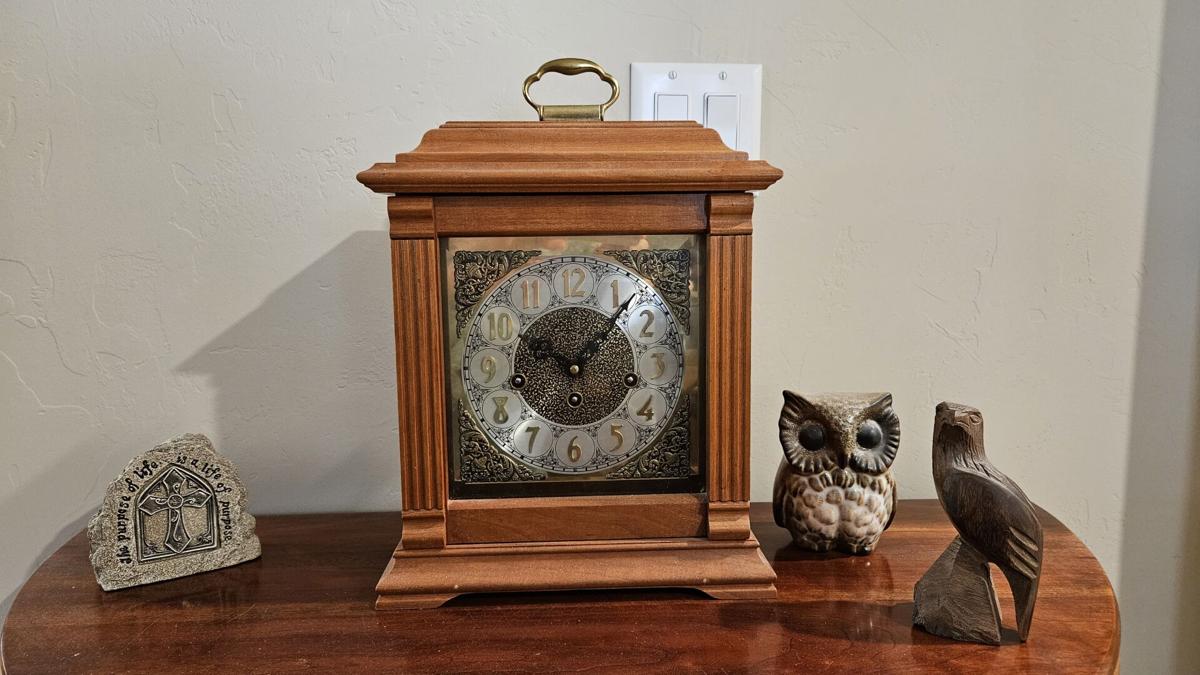
On Sunday, March 12, most of the country will "spring forward" into daylight saving time. That means that at 2 a.m., it will suddenly be 3 a.m.
Those who lose an hour will get it back in November when clocks "fall back" to standard time.
In Arizona, however, that won't be a problem. Most of the state doesn't observe daylight saving time.
When just about all of the United States went to daylight saving time, or DST, beginning April 30, 1967, Arizona joined the rest of the country. By the next year, Arizona had rejected daylight saving time and was granted an exemption during the energy crisis in 1973 and 1974.

The Navajo Nation in northern Arizona does, however, observe the time change to keep residents of the reservation, which includes parts of New Mexico and Utah, on the same schedule.
People are also reading…
Arizona historically joined the rest of the country in observing DST during World Wars I and II, but that ended when the wars did.
The big question is why?
According to a 2007 article in the Arizona Daily Star, the simplest answer is that most of Arizona doesn't need an extra hour of sunlight in the evening. When the temperature is more than 100 degrees, desert residents are often grateful for sunset and don't want to wait an extra hour for it during the summer.
During the hottest months of the year, many Arizonans like to take care of outdoor activities in the early morning and prefer a little sunlight on those activities, which daylight saving time takes away.
Daylight saving time was enacted to save energy, but in Arizona, a time change would mean people would trade an hour of low energy use in the morning for an hour of high energy use in the evening.
Several research studies have questioned whether DST actually conserves energy. A working paper by the National Bureau of Economic Research studied the changes in Indiana when some counties followed daylight saving and others did not.
The Department of Energy also studied this natural experiment ─ reported by saveonenergy.com ─ and determined that the extra hour of sunlight in the evening did little to reduce energy consumption and even had an adverse effect on home heating and cooling demands.
While some areas of the country may experience energy savings with the "extra hour of sunlight," others will not.
In addition to most of Arizona, Hawaii also does not participate in DST.
Do you know Arizona's state bird or its state mammal? Take this quiz and see how you do. Video by Johanna Eubank, Arizona Daily Star
Johanna Eubank is a digital producer for the Arizona Daily Star and tucson.com. She has been with the Star in various capacities since 1991.

Johanna Eubank
Online producer


