

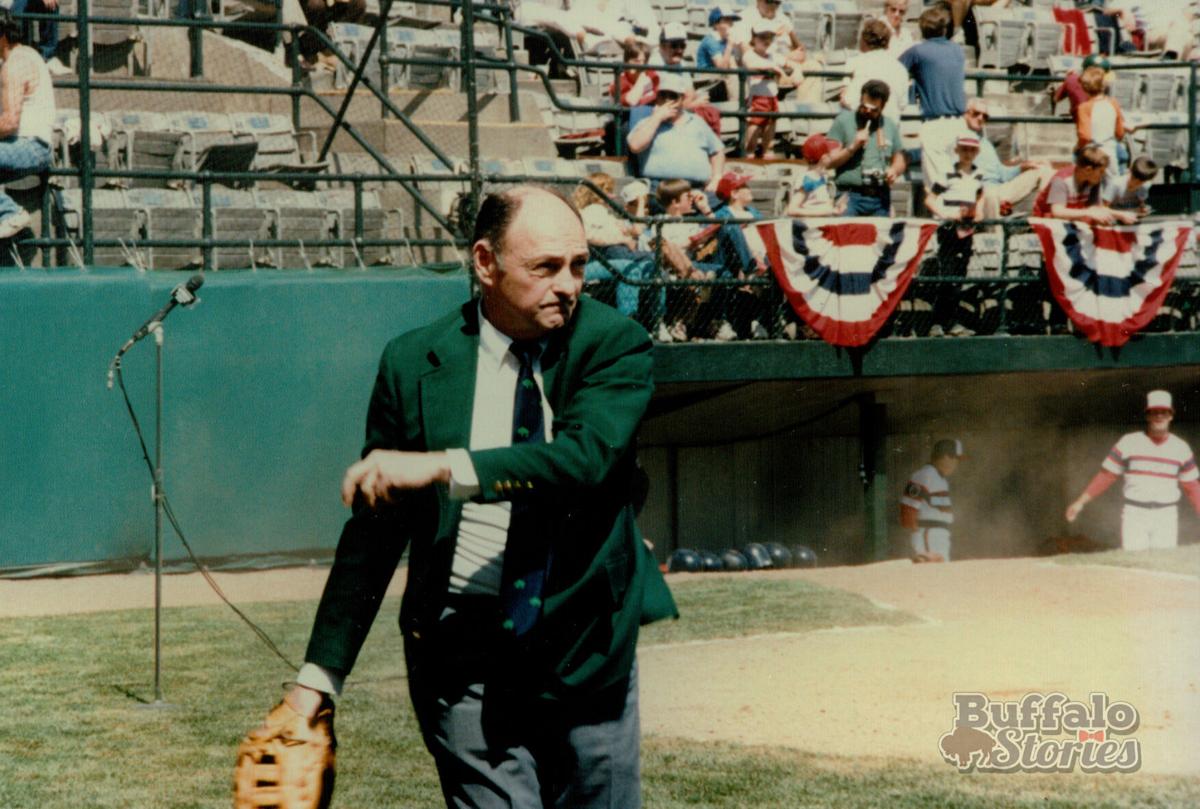
For most of the 1970s, there was no professional baseball in Buffalo.
War Memorial Stadium, “The Rockpile,” is glorious in our memories, but in reality it was a rotting hulk and a money pit after the Bills moved to Rich Stadium in 1973.
It was built in 1937 and had just sat there doing its job, not really impressing anyone particularly. In 1969, Western New Yorker Brock Yates infamously wrote in Sports Illustrated that it "looks as if whatever war (War Memorial Stadium) was a memorial to had been fought within its confines."
That was even after Ralph Wilson insisted on improvements for the 1967 season – which the city was still paying for in 1975 as they shelled out $141,000 a year in upkeep for the abandoned venue.
“Much of the plumbing has been ripped from the restrooms by scavengers, seats have been torn up and lie around the field and a small tree has sprouted near what used to be a 30-yard line,” observed Courier-Express reporter Dale English during a 1975 visit.
People are also reading…
As the Rockpile continued to erode, spring 1978 was tough for Buffalo sports fans. The NBA's Braves whimpered off the court with the expectation that the team probably wouldn’t return to Buffalo. Once the Sabres were eliminated from the NHL playoffs, there was to be no pro sports in town until Bills training camp.
“The Bills start training camp on about July 10 … leaving only 74 shopping days til training camp,” wrote Erik Brady in the Courier just after the Sabres hit the golf course, continuing, “All of which only means one thing: WE NEED A BASEBALL TEAM.”
But Brady wasn’t optimistic. In fact, he was not only pessimistic – but against pro baseball for practical reasons.
“How can a city which is decommissioning its fireboat, can't find the money for its school system to finish the year, is still paying off improvements on obsolete War Memorial Stadium, is in a county that will be paying off Rich Stadium for years to come and which owns a Memorial Auditorium that is used year round but which still loses money — how can such a city consider building another facility strictly for housing a sports team?” wrote Brady. "The answer, I submit, is that it can’t."
Clearly, baseball’s return to Buffalo and the Rockpile never seemed like a sure thing or even the right thing for some.
An Associated Press article calling War Memorial “the haunted house of professional sports” made papers all over the country, with memories of why the Bisons left town in 1970 still fresh for many.
Whether baseball might be played again at the Rockpile wasn’t even a question. Until it became the answer. On a cold Thursday morning in February 1979, Mayor James D. Griffin held a news conference announcing the return of pro ball in Buffalo, when an Eastern League AA team would take to the field at War Memorial Stadium in less than two months from that date.
There was less excitement for baseball’s return and more skepticism about the ballpark. The man in charge of the new team didn’t answer many baseball questions but had plenty to say about the facilities.
“What we must overcome is the stadium’s reputation,” said new Bisons General Manager Don Colpoys, who first arrived at his ballpark office to find a burst pipe and caked ice on every surface. But that was only the half of it, and he knew it.
“We must make people know they won’t be taking their lives in their hands when they go down there. We’re going to have lighted parking lots and security people both inside and outside the stadium. I don’t think the danger element will be there anymore. We’d like for people to give us a chance.”
A terrible blow to Buffalo baseball came only two weeks before the game’s return to Jefferson and Dodge, when all-time Bisons great Luke Easter was shot and killed in a robbery attempt in Cleveland. Buffalo Common Council Member Herbert Bellamy had a call into Easter inviting him to the rebirth of the sport he personified in the late '50s.
Even with that sad news, as opening day approached, the excitement began catching on a bit.
If fans took anything away from the Rockpile through the '60s and '70s, it was splinters. The seats hadn’t been painted since 1960 but about $10,000 in paint was slathered on those old wooden seats and nearly every other surface at the old stadium. Things were coming together.
“All in all, the people behind the rejuvenation of baseball in Buffalo have worked hard to create an intimate, friendly, homey type of structure,” wrote reporter Chip Draper.
Even once opening day had arrived, it would still take one more day. What was supposed to be Buffalo’s first professional baseball game in nine years was postponed by a muddy War Memorial infield.
But baseball did make it back. And so did the lousy stadium in two great ways. First, for Buffalo, the Rockpile helped prove Buffalo could sustain baseball, creating a pathway to one of Buffalo’s great community revitalization projects of the '80s – the downtown ballpark.
War Memorial Stadium’s rebirth in 1979 also helped Hollywood capture some of Buffalo’s crumbling greatness, as our crumbling, clumsy, concrete dungeon pretty much played itself in one of the greatest baseball stories ever told on film in 1983’s "The Natural."
And just like Roy Hobbs, the written-off and then born-again ballpark had a life that didn’t turn out the way anyone expected.
Steve Cichon writes about Buffalo's pop culture history for BN Chronicles, has written six books, and teaches English at Bishop Timon - St. Jude High School.


