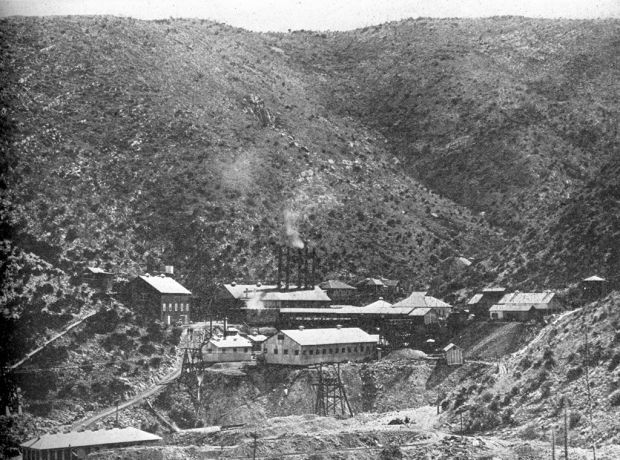
Since the late 1870s the Mule Mountains, where the mining town of Bisbee would be established, have been heavily prospected. By the early 1900s Bisbee was the premier mining camp in Arizona, producing 7,000 tons of copper ore a day.
Production at Bisbee mines was dominated by two companies that owned the most profitable claims in the district: Phelps Dodge and the Calumet & Arizona Mining Co.
But during the first decades of the 20th century two other companies, though small, proved highly successful as well - they were the Shattuck Arizona Copper Co. and the Denn-Arizona Copper Co.
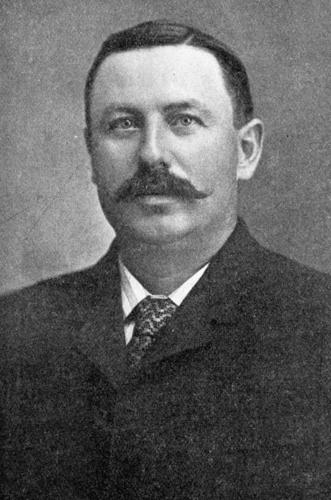
Lemuel C. Shattuck, a Pennsylvanian who arrived in Bisbee in 1888, was involved in several business ventures. He was founder and president of the Miners and Merchants Bank of Bisbee, was proprietor of the St. Louis Beer Hall in Brewery Gulch and was involved in cattle, lumbering, politics and water rights.
People are also reading…
Shattuck also was involved with Phelps Dodge President James Douglas in the layout of the smelter town site of Douglas.
His most renowned accomplishment, though, was the development of the Shattuck Mine.
The Shattuck Arizona Mining Co. was incorporated on March 22, 1904, with an initial investment of $3.5 million. Its main office was at Duluth, Minn., with a mine office at Bisbee.
Development of the Shattuck Mine began in August 1904 and ore shipment started two years later. A shaft fire in November 1907 at the 800-foot level was extinguished after an hour and a half by a water hose and the erection of bulkheads to smother the flames.
Located in the northeastern part of the Warren District, the Shattuck Mine was known for its production of high-grade copper oxide minerals. Lead, zinc, gold and silver were also found at the mine.
Because it lacked a railroad connection due to its remoteness, the Shattuck Mine had a 3,300-foot aerial tramway with an 18 percent grade supported by 14 towers of 12 to 18 feet in height. The tramway had 500 tons of daily capacity and transferred ore to the EP&SW spur.
The ore was then sent to the Phelps Dodge smelter at Douglas.
Another renowned Bisbeeite, Maurice Denn, also had valuable claims nearby. The Shattuck and Denn mines merged in 1925, becoming the Shattuck-Denn Mining Co.
Shortly after the merger the company discovered a large ore body at the 1,700-foot level. The mine's ore output and quality were phenomenal, with some of the ore running as high as 40 to 45 percent copper.
The mine also produced gold and silver. The Shattuck-Denn ore concentrator was treating ores by selective flotation in 1942.
Phelps Dodge acquired the Shattuck-Denn Mining Co. in 1947. Between 1906 and 1947 the Shattuck Mine produced more than 3 million tons of copper and lead-zinc ore along with some manganese oxide.
During its production life the Shattuck Mine became known as the "biggest little mine" in the Warren district.
It also was known for its diverse mineral composition: Shattuckite, a dark-blue and relatively rare copper hydroxide silicate mineral, was first reported at the Shattuck Mine in 1915. Shattuckite is a secondary mineral that occurs after an alteration with other secondary copper minerals.
Share your photos
"Mining Tales" writer William Ascarza is working on a book about the history of mining in Arizona, and he's looking for historical and modern-day photographs depicting mining operations, towns and camps to include in the book. If you'd like your photos included, email him at willascarza@gmail.com
William Ascarza is an archivist, historian and author of five books, including "Southeastern Arizona Mining Towns" and "Zenith on the Horizon: An Encyclopedic Look at the Tucson Mountains from A to Z." The books are available at Antigone Books, Cat Mountain Emporium and the Arizona-Sonora Desert Museum. Email him at mining@azstarnet.com
Sources: "Bisbee: Queen of the Copper Camps" (Lynn R. Bailey); "Copper: The Encompassing Story of Mankind's First Metal" (Ira B. Joralemon); Engineering and Mining Journal, Volume 85, Jan. 25, 1908; Index of Mining Properties in Cochise County, Arizona (Stanton B. Keith); Who's Who in Arizona, Vol. I, 1913 (compiled and published by Jo Conners); Mines Register, Vol. 14, 1920.