The archive of Pulitzer Prize-winning photojournalist Jack Dykinga includes some 4,000 film and around 50,000 digital images created over his 60-plus-year career.
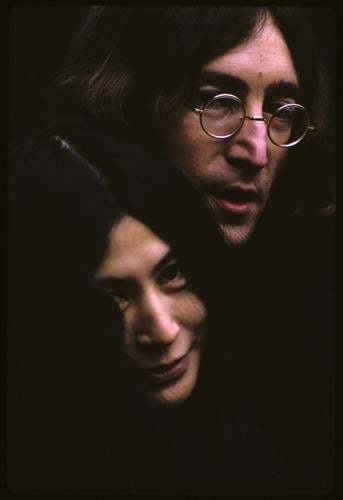
Famed Hollywood photographer Susan Wood's archive is filled with film stills, including Peter Fonda, cigarette dangling from his lip, taken in 1968 on the set of "Easy Rider." Her most iconic image, though, had nothing to do with Hollywood: it was the 1969 epochal portrait of John Lennon and Yoko Ono taken in London for Look magazine.
The two archives are among nine that the Center for Creative Photography at the University of Arizona announced Tuesday that it has acquired over a years-long process.
They join the CCP's renowned holdings that include those of iconic landscape photographer Ansel Adams, who cofounded the center in 1975; pioneering Mexican photographer Lola Álvarez Bravo; and self-professed "paraphotographer" Robert Heinecken, who founded the photography program at UCLA in the early 1960s.
People are also reading…
"When you're 50 years old, like the CCP is, you've got certain threads and certain themes that kind of emerge out of the archives," said Center for Creative Photography Director Todd J. Tubutis, who joined the center in 2023, years after work on the new acquisitions had begun.

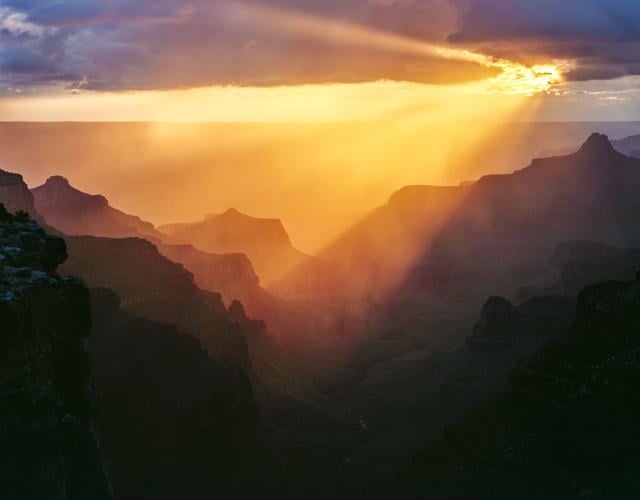
Sunset rays light up a passing rain storm and the ridges below Cape Royal inside Grand Canyon National Park, in this photo by Jack Dykinga, whose archives have been acquired by the Center for Creative Photography at the University of Arizona.
"You definitely have that tradition of landscape, which started certainly with Ansel Adams and other original archives. You've got the thread of fashion and commercial photography like Richard Avedon or Louise Dahl-Wolfe. Many of the people in our archives were educators, which would be like Mark Klett or Stephen Marc in the new acquisitions," he said.
Both Klett, a landscape photographer, and Marc, a documentary street photographer, teach at Arizona State University.
The CCP's collection is comprised of complete artist archives that include finished works alongside the artists' experiments and notes that shed light on their processes. The materials are housed in a 4,500-square-foot cold storage, "which is quite large for an institution our size," Tubutis said.
"We can store all of our negatives and materials like that, as well as our color photographs, because color photographs, when you keep them at colder temperatures, they don't fade or degrade as quickly," he said.

John Lennon and Yoko Ono, 1968, in photographer Susan Wood's portrait taken in London for Look magazine. The Center for Creative Photography at the UA now has Wood's archive.
Dykinga, who won the 1971 Pulitzer Prize for Feature Photography while working for the Chicago Sun-Times, was the Arizona Daily Star photo editor from 1976-81, when he left to pursue landscape photography. In the decades since, he has made a name for himself as a landscape and wildlife photographer and has published several books, including his 2017 memoir "A Photographer's Life: A Journey from Pulitzer Prize-Winning Photojournalist to Celebrated Nature Photographer."
He said he hopes "parking" his archive at the CCP will open the door for it to "be used as a teaching and a learning tool for future photographers or artists," particularly given that his career spans "small format form of journalism, and then large format landscape and then transition from that to digital."
"I'm 83 years old. Let's face it; that's realistically an important factor," Dykinga said about donating his archive to the CCP. "You want to park your images so they endure for some usage beyond the current status. It's a great institution and ... we should celebrate that."

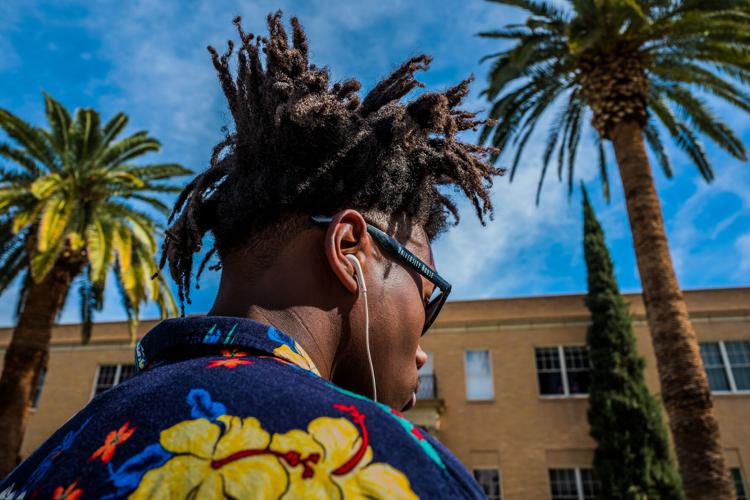
“Untitled,” from the book: American/True Colors, Tempe, 2017. The archive of the photographer, Stephen Marc, is now part of the UA's Center for Creative Photography.
Tubutis said the CCP takes its role seriously as caretaker of artists' archives.
"When you take on these archives, you're taking on legacies, too," he said. "It's not just keeping some photographs safe, but you might have family members and children who are just as invested as you taking care of that archive. So it's a very different thing than just bringing in a painting to a museum. This is a career, right? These are notes and negatives and work prints and things like that."
The new acquisitions also include:
- Latinx photographer Laura Aguilar, an essential figure in Chicano art history whose "powerful, quietly beautiful photographs explored the lived realities of members of various marginalized groups, including women, lesbians, Latinas, the working class, fat people and those with learning disabilities," according to a tribute published by ArtNews when Aguilar died in 2018.
- Jody Forster, an avid outdoorsman, captured the dramatic contrasts of the Sonoran Desert and cloud-swept skies over mountains and canyons, earning him a reputation for being a master of vision and technique.
- Texas landscape photographer Frank Gohlke trained his lens over a five-decade career on how Mother Nature changes the environment, including the aftermath of a 1979 tornado in his hometown of Wichita Falls, Texas; and the land surrounding Mount St. Helens during the decade following the volcano's 1980 eruption.
- Nathan Lyons helped shape the direction of contemporary photography in the late 1960s, advocating for photography as an art form and launching the Visual Studies Workshop in Rochester, New York, to foster photographic education and experimentation.
- Patrick Nagatani was a pioneering artist who staged scenes that blended narrative, myth and social critique to create fictional histories and challenge perceptions of reality. His archive includes maquettes, prints, research files, audio-visual recordings and installation materials that shed light on his layered, theatrical approach to photographic meaning.
The Center for Creative Photography, CCP, at the University of Arizona announced the acquisition of photography archives from nine photographers including former Arizona Daily Star photographer Jack Dykinga, a Pulitzer Prize-winning photographer who is a renown nature photographer.
The other photographers are Laura Aguilar, Jody Forster, Frank Gohlke, Mark Klett, Nathan Lyons, Stephen Marc, Patrick Nagatani and Susan Wood.
Contact reporter Cathalena E. Burch at cburch@tucson.com. On Bluesky @Starburch

Cathalena E. Burch
Reporter


 Linda McCartney's Tucson life is central to a new exhibit