

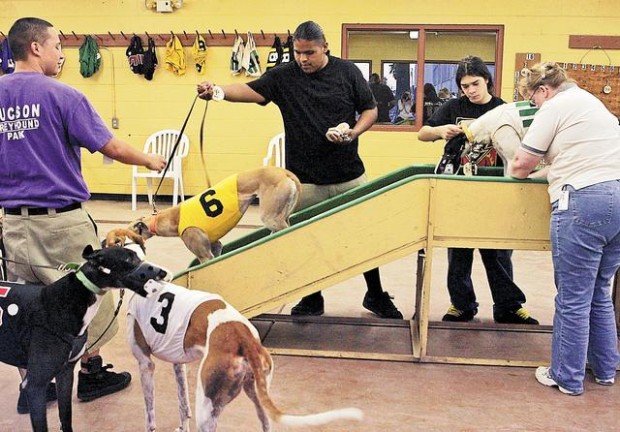
These days Tucson Greyhound Park looks more like a ghost town than a racetrack.
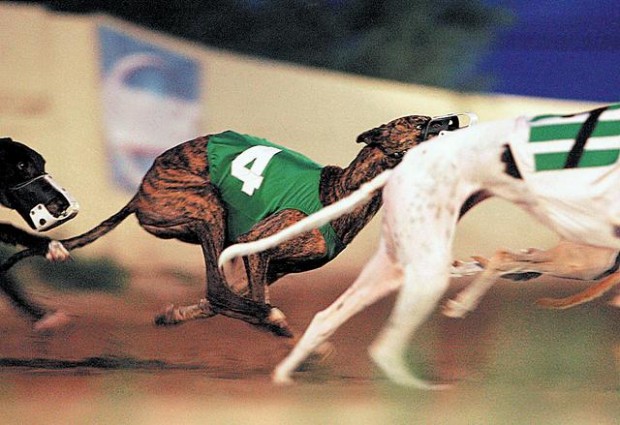
As racing began on a recent Thursday night, only a handful of people dotted the stands. A lull hung in the air until the first dogs burst from their gates, mercifully bringing a rush of energy.
In a little more than 30 seconds they circled the track.
Another night of racing was under way at the small park in South Tucson, which greyhound activists describe as the "end of the line" for the dogs. It's a place, they say, where many dogs end their racing careers before mostly empty stands.
When their racing days are over at the track, some of the dogs will return to their owners. Others go on to breeders or adoption groups, and others will extend their careers by racing at a track in Tijuana, Mexico.
People are also reading…
But other dogs just "disappear," said several greyhound activists, who fear unwanted dogs may have been euthanized.
These fears have been underscored by the state's investigation into the alleged disappearance of 100 to 200 greyhounds that had recently left the track for Colorado.
"The bottom line is that these dogs were no longer capable of making money in racing kennels, and they were consequently of no value to anyone at the dog track," said Susan Netboy, president of the California-based Greyhound Protection League, who wrote to the state about the missing greyhounds.
Netboy said her organization is offering up to $1,000 for information leading to the recovery of the dogs.
The dogs in question do not belong to Tucson Greyhound Park. Racing greyhounds are privately owned and many are housed at the track.
In this case, the track contracted with a trainer in Colorado to move the dogs to various adoption agencies. The dogs were taken from the track by the Colorado trainer, but Netboy said they were never delivered to adoption groups.
The trainer has not returned calls from the Star.
Geoffrey Gonsher, director of the Arizona Department of Racing, said two investigators have been assigned to the case.
Netboy and other activists view the track's place in the racing world as a catalyst for potential problems. The track has some of the lowest purses in the country, and as such its dogs are either beginning or ending their careers.
When a dog loses at Tucson Greyhound Park, she said, there is almost nowhere left to run. This creates a backlog of retired racers that take up space and resources for the kennels and sometimes the track.
Last summer, eight dogs being transferred by a trainer from the track to the now-closed Juarez Racetrack in Ciudad Juarez, Mexico, died of heat exhaustion.
The state has also recently investigated the park for minor issues ranging from resurfacing the track to repairing an exit gate and operating without a track superintendent. The track promptly resolved all of these issues.
Asked how he would describe the track's place in the racing world, Gonsher was diplomatic.
"Based on the quality of the animals and the purse structure, I would say it's not the same park as others across the country," he said.
Officials with the track dismiss such descriptions. They admit the track and its purse structure are relatively small, but they say the track is no different from any other in the country in terms of racing quality and dog conditions.
"I think it's totally false to say a greyhound ends its career here," said Chris McConnell, the park's general manager.
Adoption numbers unclear
Just how many dogs pass through the track is unclear. The track can hold about 700 dogs at its kennels, but the actual number fluctuates almost daily, McConnell said.
Michael Brimmer, the state's chief steward at the park, estimated there are about 360 dogs racing at the park. He estimated 20-25 dogs need to be adopted each month.
However, adoption groups dispute that number.
"There are so many dogs up for adoption all the time, the limited number of groups here can't handle them all," said Lorri Tracy, of the Tucson-based Greyhound Adoption League. Tracy and others said they believe about 500 dogs need to be placed, but she wouldn't say that's how many are adopted.
Each year hundreds if not thousands of greyhounds across the country are euthanized or can't be accounted for.
Gonsher said he's aware of the unclear adoption numbers. He said the state's Department of Racing is developing a database to track the locations of dogs that pass through the track. He said he would also like to see an investigator placed at the track full time. Right now, an investigator makes occasional visits.
While a report from the state describes complaints about dog backlogs as "unfounded," records also show the park has had issues with retired racers.
In October, McConnell issued letters to dog owners demanding they pick up their "abandoned" dogs within a week to make room for other racers.
The implication was the dogs, no longer able to race, were taking up space and costing the track. The track has at times been forced to care for dogs abandoned by their owners.
"Since your greyhounds have not been racing, Tucson Greyhound Park has been caring for your greyhounds, providing board, medical care, meat and feed," McConnell wrote.
The park also briefly pushed to create Grade E races as a way to extend racing careers and stymie the backlog.
Greyhound racing for the most part plays out in four different grades. The fastest dogs race in Grade A, the slowest in Grade D.
Grade E would have been for those dogs who had lost at the D Grade. However, kennel owners rejected the idea because the purse would have been nominal, McConnell said.
An industry in decline
Tucson Greyhound Park, 2601 S. Third Ave., opened in 1944 and was once a hot spot. There was a time, McConnell said, when gamblers had to follow a formal dress code to enter and the stands were packed. But in recent years, the industry has faltered.
There are about 40 dog tracks in 14 states, the bulk of them in Florida. In addition to Tucson Greyhound Park, Arizona also has Phoenix Greyhound Park.
"We've seen eight tracks close in this decade," said Gary Guccione, executive director of the National Greyhound Association, the registry of racing greyhounds in North America.
Guccione and McConnell attribute much of this decline to the advent of gambling on Indian reservations, which generated $1.6 billion in revenue in Arizona last year.
Between 2001 and 2005, Tucson Greyhound Park has seen a decrease in on-track attendance from 66,787 to 51,743, according to the state Department of Racing's 2005 annual report.
In turn, most of the park's revenue now comes from its handful of off-track betting sites where people gamble on races televised from across the country.
The park's handle — the amount of money bet — dropped from about $28 million to $21 million during the same time period.
This decrease is important, track officials and activists say, because it is the handle that determines purse sizes.
As the handle drops, so too does the payout to the dog's owners and trainers. "The handle is everything," Netboy said.
Said Guccione, "The greater the purse, the better quality of the greyhounds that will be racing there."
The size of Tucson Greyhound Park's purses can vary, but they are generally some of the lowest in the industry.
Marana-based breeder and trainer David Blair said a first-place finish in Grade A will usually net an owner $130 to $150.
In Phoenix, such a finish would net about $450. At Wheeling Downs, in West Virginia, the purse can be $2,000, he said.
That track, however, is augmented by slot machines, a luxury Arizona tracks do not have.
"If a dog can't make it at a major track, he ends up here," Blair said.
Blair holds a unique place in Tucson's greyhound-racing world.
With 76 dogs at Tucson Greyhound Park, Blair has the top kennel. He wins the most races and has the most dogs.
He also races about 70 dogs at Phoenix Greyhound Park and another 70 at other tracks across the country.
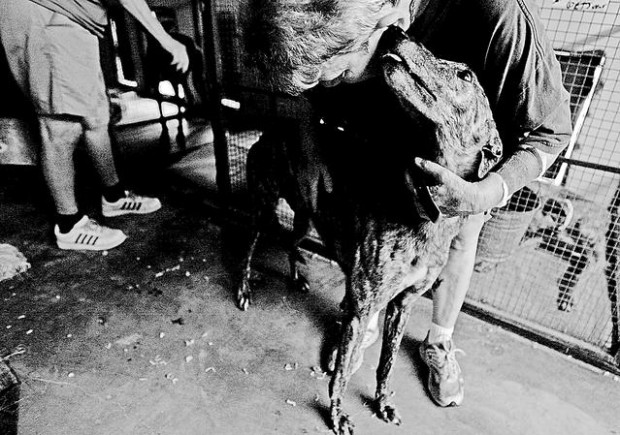
Despite his racing success, he has managed to stay well-respected by adoption and advocacy groups, providing about 35 kennel spaces to two adoption groups.
The situation at the Tucson track, he said, is more a product of the industry than poor ownership. Because of the track's handle, it's inundated with slow dogs.
"If you run a kennel at a major track, adoption is not a big issue because the dogs go to a lower track," he said. "Tucson Greyhound Park isn't the bad guy. It didn't create the problem. It's not really a Tucson thing, it's an industry thing."
Netboy, of the Greyhound Protection league, agreed the problems are systemic in the industry. What's missing, she said, is accountability between owners and tracks.
"Accountability is a primary ingredient that is missing at Tucson Greyhound Park and a number of other tracks around the country," she said.
● In recent years, Tucson Greyhound Park has seen a decrease in purse size, on-track betting and attendance:
l 2001: $1,986,871
l 2002: $1,824,413
l 2003: $1,156,900
l 2004: $1,037,578
l 2005: $1,042,756
l 2001: $12.7 million
l 2002: $11.3 million
l 2003: $9.8 million
l 2004: $8.4 million
l 2005: $5.9 million
l 2001: 66,787
l 2002: 65,468
l 2003: 53,842
l 2004: 49,346
l 2005: 51,743
Source: Arizona Department of Racing 2005 annual report.

 Tucson's El Güero Canelo for sale


