

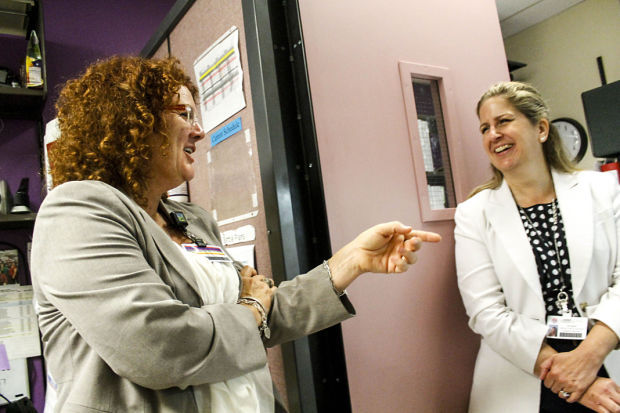
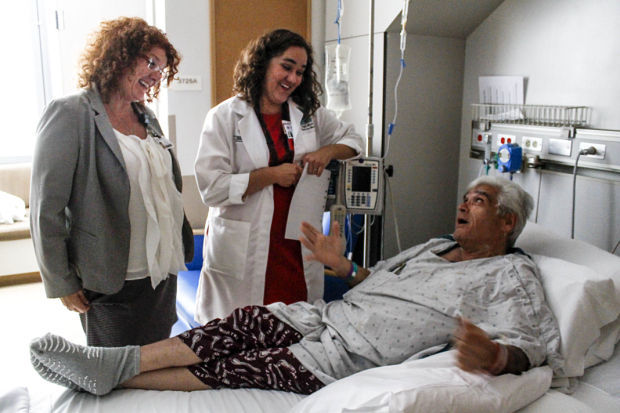
If patients at the University of Arizona Medical Center didn’t care for the food, the nurses or the noise on their floor, Julie KennedyOehlert wants to hear about it.
“I don’t know why, but health care in general doesn’t spend a lot of time listening to patients,” says KennedyOehlert, whose role at the UA Medical Center is similar to a hotel concierge.
She wants to make sure patients enjoy their hospital stay. And accomplishing that goal requires culture change.
“Fortunately when I got here, everyone was ready for a change,” she said in an interview last week. “I’ve watched it get better and better.”
It’s been a year since KennedyOehlert began her newly-created job as vice president of patient experience at Tucson’s only academic medical center, which includes two hospitals: the UA Medical Center’s university campus, 1501 N. Campbell Ave., and the UA Medical Center’s south campus at 2800 E. Ajo Way.
People are also reading…
Employees might say they are great at their job, and that their programs are doing well, but KennedyOehlert thinks the patients should weigh in on whether that is true. That’s why she relies so heavily on ongoing patient surveys.
“I like to say, ‘There’s no data to support how fantastic you are,’” she says.
A registered nurse who maintains her license and is completing a doctorate in nursing practice through the University of Minnesota, KennedyOehlert sees her job as an extension of nursing.
“Nursing is part of my identity. In my mind I’m still a nurse,” she says. “Nurses advocate for patients, so I have the coolest job ever.”
Having an employee in charge of patient experience is a relatively new but growing trend across the country. An intensified focus on patients began in recent years as the federal government began collecting data on patient satisfaction and docking hospitals with poor scores.
“The feds forced us to do the right thing,” KennedyOehlert says. “There are a whole bunch of right reasons for doing this. If health care doesn’t focus on the people being served, then we are so broken.”
There are both business and clinical reasons for improving patient experience.
The U.S. government’s Agency for Healthcare Research and Quality says patients with better care experiences often have better health outcomes.
The agency cites one study that found diabetic patients demonstrated greater self-management skills and quality of life when they reported positive interactions with their providers.
From a business standpoint, the government cites data showing a good patient experience is associated with a lower risk of medical malpractice lawsuits. It’s also associated with lower employee turnover.
During her first year on the job, KennedyOehlert has revamped the hospital menu to include selections by integrative medicine expert Dr. Andrew Weil, including items like Tuscan kale salad, curried cauliflower soup and turkey Bolognese pasta. The hospital cafeteria includes the same selections, plus a “cooking light” area and a wide selection of vegan, vegetarian and gluten-free foods.
She removed Funions from the hospital vending machines, replaced regular Fritos and chips with the baked versions and arranged the rows according to their health value, with the least healthy on the bottom row.
The lobby of the main UA Medical Center on North Campbell Avenue is about to be revamped and built out with a new gift shop/pharmacy that focuses on healing.
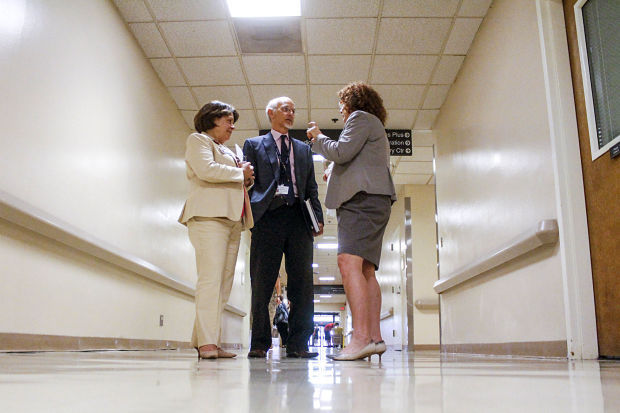
“I have no boundaries,” she says during a recent walk through the UA Medical Center hallway, where a majority of the people she passes know her by name.
She is particularly close to housekeeping and reminds them repeatedly that they are responsible for saving lives because they clean surfaces and prevent the spread of infection.
Since she speaks for patients, KennedyOehlert relies on surveys and input that comes directly from patients. She’ll speak in person to patients who were unhappy with their stay and recently asked one of them to join a volunteer hospital quality team.
When she’s not walking the halls, she is often crunching data from those surveys, which ask things like whether the patient had good communication with their doctors and nurses.
She’s also putting together a patient relations team that includes patient advocates and volunteer visitors who can visit longtime patients and those with no family or friends to visit them.
On her desk, KennedyOehlert has four stuffed animals she’s received as gifts while at UA Medical Center, and each has a special meaning to her:
• Kermit the Frog symbolizes the work she does with pediatric patients. Among other things, she expanded the therapy dog program for kids and has the dogs visit Diamond Children’s on a regular basis.
• Rainbow Dash from My Little Pony refers to the work she’s doing with improving the patient experience for Lesbian, Gay, Bisexual and Transgender patients. The hospital is working on an LGBT certification through the national Human Rights Campaign.
• A javelina stems from her fascination with the animal she’d never seen before moving to Tucson from Wisconsin a year ago.
• A Lorax, from the Dr. Seuss book, is included because one of her colleagues felt it represented her role at the hospital. The Lorax spoke for the trees in the face of corporate takeovers. KennedyOehlert says the patients are her trees.


 Nancy Guthrie's Tucson neighbors: Life with streamers 'unbearable'


