

Excavators went to work in mid-March on a 25-acre site in the Town of Niagara.
But this time it's environmental protection, not economic development, that brought out the heavy machinery.
Buffalo Niagara Waterkeeper, one of the region's leading environmental groups, began a $2.2 million project to cut a new channel for Cayuga Creek – one that the group says will reduce flooding in nearby neighborhoods while protecting native plants and animals.
The parcel "has great ecological value," Waterkeeper Executive Director Jill Jedlicka said. "It gets to the core of our mission."
The wetland property between Porter Road and Niagara Falls Boulevard belongs to the town, which acquired it from the owners of the Cayuga Village mobile home park.
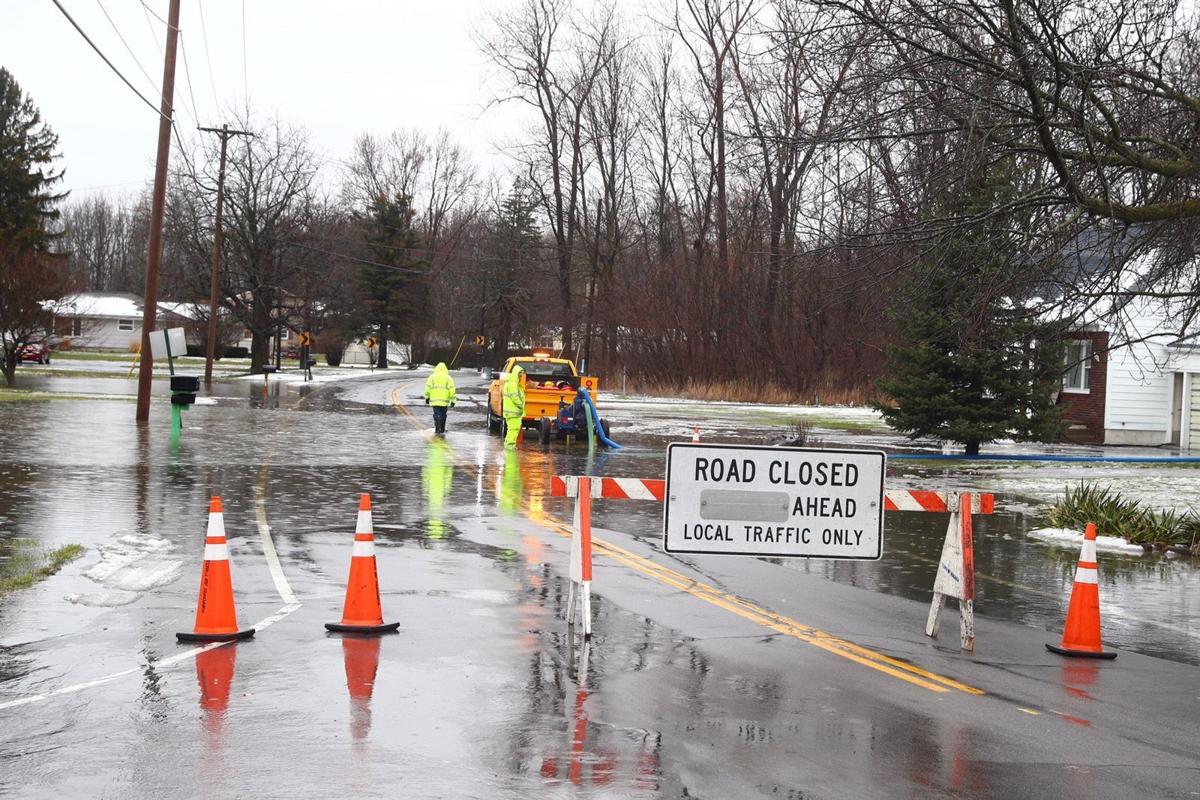
If all goes as planned, in about two months the redirected creek will drain the parcel better and prevent seasonal floods that closed nearby Tuscarora Road as recently as last month, affecting homes in that neighborhood as well as in Cayuga Village.
People are also reading…
“We’re trying to do two things: save some of the natural habitat there and help some of the flooding issues that have been plaguing the town for 50 years, 60 years," Town Supervisor Lee S. Wallace said.
The shallow creek, which runs from the Tuscarora Indian Nation to the Niagara River, has been shifted before, Jedlicka said. In the 1970s, the stream was redirected to allow for the construction of the mobile home park.
"We’ve been working on this for almost five years," Wallace said.
This time, the creek is to be shifted to the west and an earthen berm is to be built behind Cayuga Village as a means of flood protection.
"We didn't want to return the creek to its original route because it's so close to the homes," Waterkeeper Project Manager Emily Root said.
She expects that the new route and the reshaping of the wetlands will absorb rainwater and snowmelt better than the current creek bed does.
"The creek will be about as deep as it now," Root said.
That's about 2 feet during normal conditions, although Cayuga Creek can rise to as deep as 6 feet during especially wet weather.
"Reconnecting the creek to the flood plain is the overall goal," Jedlicka said.
"It’s basically turning the area back into a naturalized wetland, so the whole area the town purchased will act like a gigantic retention pond," Wallace said. "But it’s also going to be a naturalized park to protect some limited species that are in there that are native to this area but are not doing well in other spots.”
Funding for the project was gathered from a wide variety of sources, including the state Department of Environmental Conservation, the New York Power Authority, the National Fish and Wildlife Foundation, Coors Seltzer Change the Course Partnership, the Ralph C. Wilson Jr. Foundation and the Love Canal, 102nd Street and Forest Glen Mobile Home Natural Resources Damage Assessment and Restoration Trustees.
"The biggest part was the funding, which I can’t take credit for, because they did most of the legwork on that," Wallace said, referring to Waterkeeper. "But it’s been a joint effort and they’ve been great to work with. We’re hoping this will solve many of the problems over there. I don’t know if we can solve them all, but we’re going to hope it will make it better.”
Besides flood control, the project, the first of this scale for Buffalo Niagara Waterkeeper, will try to eradicate invasive plant species.
Ryan Greer, assistant project manager, said plants such as European buckthorn, phragmites, honeysuckle and purple loosestrife are on the hit list.
The area along the creek's new course will be planted with native grasses and other plants, Greer said.
"We're going to recycle the vegetative material," Jedlicka said.
The contractor, Ecological Restoration Inc., a Pennsylvania company, will not haul dirt away. It will fill in the old channel with onsite earth, before building the berm and working on the planting, Root said.
In the meantime, Dave Hails, the company's owner, said he and his crew will keep their eyes peeled for animals.
For example, wood frogs in the area are laying their eggs about now, and Hails said he will avoid digging up their pools, where possible, or move the frogs to another pond.
When the project is complete, "It will be very similar to Tifft Farm Preserve," Wallace said.
Cayuga Creek has been harmed by some of the Niagara Falls area's legacy of toxic trauma but, Jedlicka said, "This actually is a relatively clean place to preserve."
Nearby, Waterkeeper and the Buffalo Niagara River Land Trust plan to acquire two wooded parcels, totaling 11 acres, off Porter Road to the east of the creek.
Public access to those sites would be part of the plan, as it will be along Cayuga Creek, but Root said, "Right now, preservation is the main priority."
A public meeting for residents of the area is set for 6:30 p.m. April 4 in the Town of Niagara Community Center on Lockport Road, Wallace said. He will be joined by representatives from Waterkeeper and the Army Corps of Engineers.


