
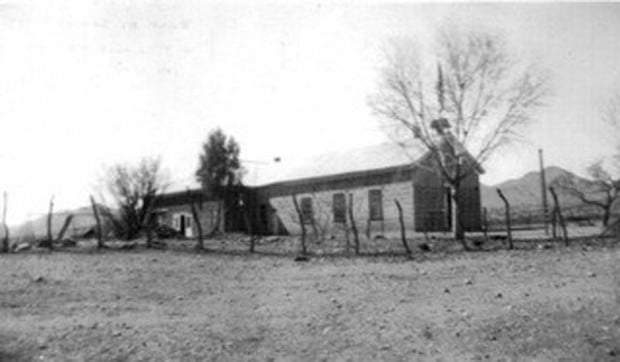
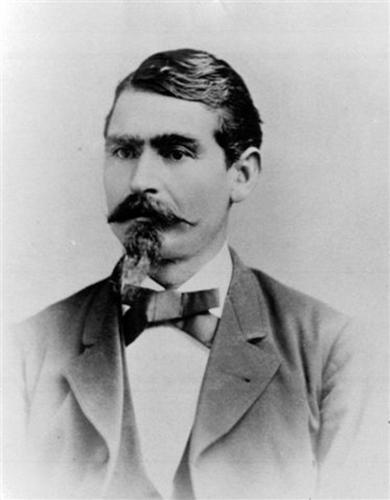
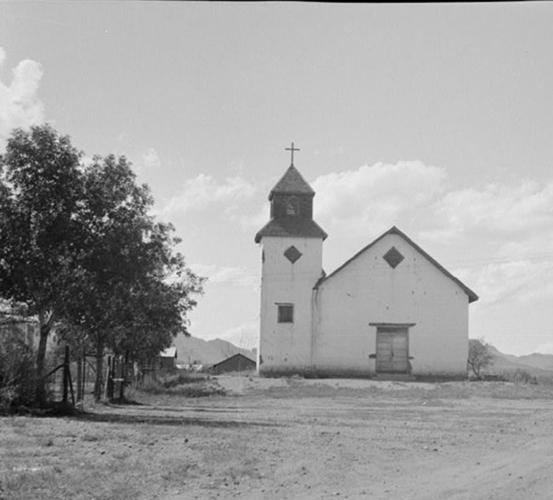
Members of the Otero family ranched, built a school, helped develop a hospital and allowed the creation of El Tiradito shrine downtown.
It's no wonder that a downtown street bears the family name. South Otero Avenue is south of the Tucson Convention Center between Congress and 18th streets.
Sabino Martinez de Otero was born in 1846 in Tubac. An ancestor, Jose de Otero, came from northern Spain in 1732 and managed mines in what is now Guadalajara, Mexico. Jose's son, Trevio (or Toribio), settled present-day northern Sonora and Southern Arizona.
Trevio received the first Spanish land grant in what is now Arizona in the late 1700s, with certain conditions attached - including that he had to ranch cattle, grow crops and build a school. The land grant stayed in the Otero family into the 1900s.
The main ranch was near the Presidio de Tubac and is part of the Tubac Golf Resort.
People are also reading…
Trevio's son, Atanacio, was the first mayor of Tubac; his son, Manuel, was the father of Sabino. Manuel died suddenly, making Sabino patriarch of a family of 12 when he was just 19 years old.
In 1861, when the Civil War began, soldiers were removed from Southern Arizona to fight back east, leaving Tubac and the Otero ranches to fend for themselves. Sabino suffered heavy cattle losses by Apaches.
The same year, he began trading from Tucson and built a house at 219 S. Main Ave. It was home to his family, wife Concepcion and son Manuel, as well as headquarters for his cattle business.
Members of the Otero family lived in the house until the late 1960s. The facade of the house is at the Arizona Historical Society.
Sabino helped maintain the Tubac school. He also helped the Sisters of Carondelet develop St. Mary's Hospital and the St. Joseph's Orphanage, formerly on 12th Avenue. His sister Gabriela joined the order.
He also financially supported St. Gertrudis Church, now St. Ann's Catholic Church, in Tubac. Finally, the Otero family gave the city of Tucson the land on which the historical landmark El Tiradito sits.
Sabino Otero died in 1914. His son Manuel had six children. A descendant, Olga Otero Litel, worked for more than 30 years to document family history.
Emmanuel Drachman officially recorded Otero Avenue with Pima County in October 1921.
Editor's note
Each week the Star tells the stories behind Tucson street names. If you have streets to suggest or stories to share, contact writer David Leighton at streetsmarts@azstarnet.com.
Special thanks to Lisa Aguilera and Valerie Kittell of the Arizona Historical Society Library. Sources • Historian Shaw Kinsley of the Tubac Historical Society. • Lydia R. Otero, "La Calle: Spatial Conflicts and Urban Renewal in a Southwest City," University of Arizona Press, 2010. • "Plaza of Pioneers," Tucson Museum of Art, 1982. • James H. McClintock, "Arizona Prehistoric - Aboriginal Pioneer Modern. The Nation's Youngest Commonwealth," SJ Clarke Publishing, 1916 • Tubac Golf Resort website: tubacgolfresort.com • Pima County Plat Map MP 03135

 U of A president declines to sign shared governance contract with faculty