

As Buffalo seeks to heal from the hate-fueled attack that left 10 Black people dead May 14 at Tops Markets on Jefferson Avenue, the city continues to reckon with its legacy of racism.
But leaders in the Black community say the response has been heartening. And they say there may be a chance to turn the tragedy into a turning point for a discussion on race in Buffalo.
The News spoke with the following community leaders about what is being done to combat racism in Buffalo: Samuel L. Radford III of We the Parents and former president of the District Parent Coordinating Council for the Buffalo schools; Rene Petties-Jones, president of the National Federation for Just Communities of WNY; Rose H. Sconiers, retired State Supreme Court justice and chair of the Greater Buffalo Racial Equity Roundtable; and Felicia Beard, senior director of racial equity initiatives at the Community Foundation for Greater Buffalo. The interviews were edited for length and clarity.
People are also reading…
How serious a problem do you think racism is in Buffalo?
SCONIERS: I think it's a very serious problem. White supremacy has been around for a long time, but people have not wanted to talk about it and have really swept it under the rug. I think now we are really at the point where people want to talk about it. We need to talk about it and then we need to take action.
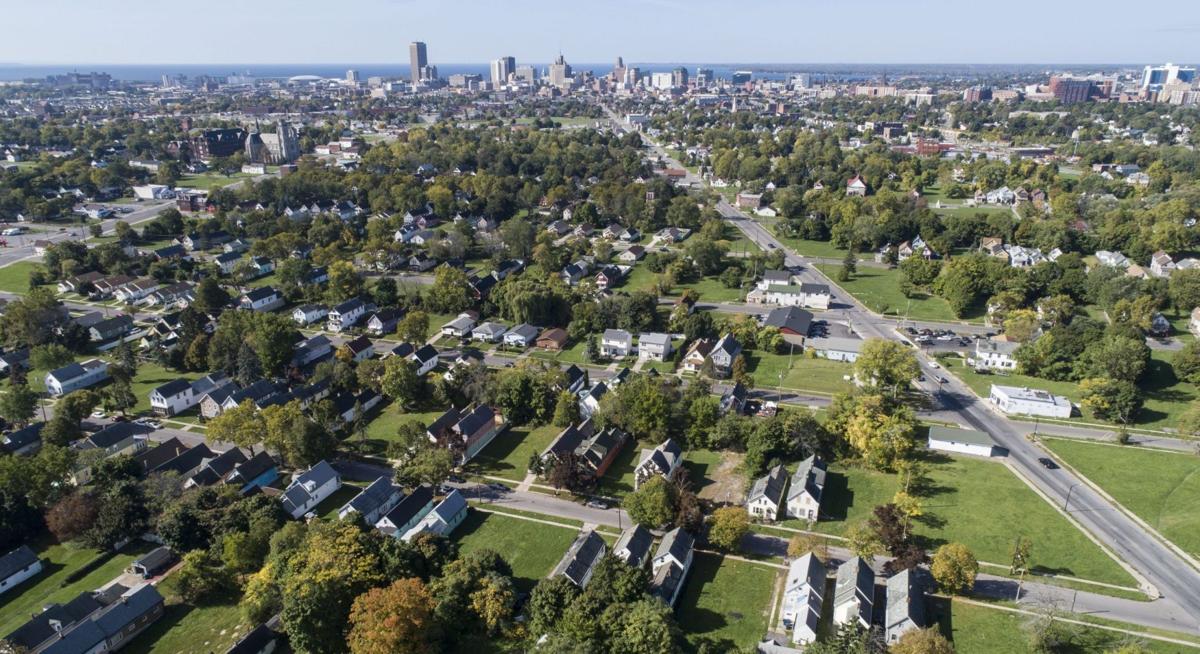
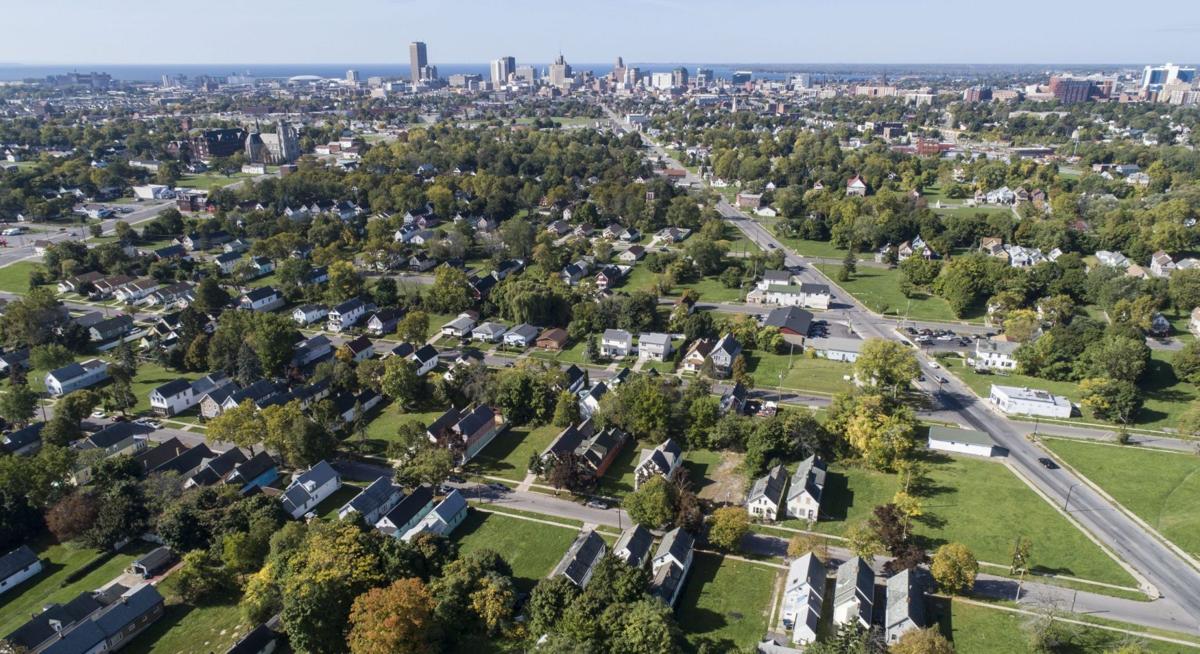
BEARD: We are the sixth-most segregated city in the nation. On any given day in Erie County a white person has a 90% probability of not having a meaningful interaction with a person of color.
RADFORD: I get out of Buffalo and I travel around the country quite a bit, and I see the difference. We have a serious problem. The well-meaning people don’t even perceive themselves as racist because they’re used to living this way in Buffalo, and it just is the way it is.
What is being done now to combat racism in Buffalo?
SCONIERS: We launched the Greater Buffalo Racial Equity Roundtable in 2015. We are now a group of more than 30 committed leaders from public, private, nonprofit and faith institutions, all working together to advance racial equity and to promote the change required to accelerate shared regional prosperity.
BEARD: We have several coalitions we’re working on in our community. The re-entry coalition works to reduce the number of individuals who are re-arrested after they’re released from jail.
Could the Tops shooting be a turning point in discussions on race here?
RADFORD: I think the good part of what came out of the mass shooting is that it brought attention to what’s going on in Buffalo, and it brought national support to doing something about it. But at the end of the day, people who are going to have to do something about it are the people who live here.
PETTIES-JONES: Sadly, I wish I could say that but I fear with each tragedy, we have this wonderful propelling of resources, information and energy that seems to plateau and then somehow take a nosedive. I think what we’re going to have to do is find a plateau that we can say is a successful one and stay on that plateau. Don’t allow that nosedive to happen here in our community. I’m very hopeful that can happen, but it’s going to take all of us to be dedicated to making sure that we don’t forget.
Buffalo is consistently ranked one of the most racially segregated cities in the nation. Is this an opportunity to change that?
RADFORD: It’s not just a high concentration of people of color – you also have a high concentration of poor people. That is in our face in a real way now and hopefully what will happen as a result of that is we’ll talk about the need to integrate our communities, and I’m not talking about just by race, but by class – build some more affordable housing. We’ve got to break up some of the concentrated poverty. I don’t think you can separate the fact that they’re Black and they’re poor, too. If they were Black and they had means and resources, I don’t think that community would look the way it looks.
PETTIES-JONES: As humans, of course, we want to be surrounded by people who look and feel like us. And we tend to do that and we gravitate to that and it takes us out of that comfort zone when you have to cross that line from one community into another community. And it became very hardened here in our city over the years. We didn’t address that. We didn’t try to start to blur those hard and fast lines between North Buffalo and South Buffalo and East Buffalo. We tended to make them darker and deeper divides. So what we’ve got to figure out now is to try to blend those communities so that people do again feel comfortable.
Black and white people seem to be coming together and speaking out about the needs of the East Side community. What needs to happen to turn this outpouring of compassion and support into something tangible and lasting?
RADFORD: We have to have a reckoning. I think May 14 may be the reckoning of the fact that we comfortably live with kids not getting an education. We comfortably live with people living in abject poverty. Now that poverty has led to people targeting us, to eliminate all the negative things that they associate with poverty, now that people are willing to come and just outright kill people based on all those stereotypes, now Buffalo has to reckon with that. Hopefully, the goodwill that has come from the country in the last 10 days or so will play itself out locally and people will understand the conditions that we’ve created and hopefully, we’ll do something differently.
BEARD: It takes time for systems to actually change. But this moment in time, with people coming to Jefferson Avenue and hugging and expressing love and connecting, we’re going to make sure that we don’t lose this opportunity … to make sure that this relationship development that we’ve seen is long-term.
PETTIES-JONES: We’ve got to start building and looking into the infrastructure of where that community is at this moment and uplifting that infrastructure so that people will feel welcomed always to be a part of that community and come and visit. So that it’s not just going on the East Side to plant flowers, you’re going on the East Side to go shopping. You’re going on the East Side because you want to see someone you’ve met. We don’t want to make this a destination for just prayers and thoughts. We want to make it a destination for business and commerce and energy and vibrancy.
In this Series
Complete coverage: 10 killed, 3 wounded in mass shooting at Buffalo supermarket
-
Updated
Hochul pledges pursuit of justice after shooting, calls on sites to crack down on white supremacist content
-
Updated
Sean Kirst: In Buffalo, hearing the song of a grieving child who 'could not weep anymore'
-
Updated
Recently retired police officer, mother of former fire commissioner both killed in Tops shooting
- 307 updates


