The Helvetia-Rosemont Mining District at the northern end of the Santa Rita Mountains is known for its copper deposits found in limestone, quartzite, and granite.
Some of the best-known mines in this district include the Copper World Mine, Heavy Weight Mine, Narragansett Mine, Omega Mine and Isle Royal Mine. Prospectors discovered copper ore here before the Civil War.
One of the oldest reported operating mines in the area was the Old Frijole Mine in the early 1880s, owned by John Weigle and William Hart. Ore was shipped by pack animals to the Mohawk smelter operated by the Rosemont Smelting and Mining Co. on the east side of the Santa Rita Mountains.
During the 1890s, the Helvetia Copper Co. of New Jersey invested $800,000 in a 5½-mile aerial tramway and smelter. A return profit of $400,000 mostly included copper ore averaging 8 percent to 10 percent, along with a byproduct of gold and silver. Adobe buildings including saloons, restaurants and a post office — along with some tents and makeshift grass buildings — dotted Helvetia, which reached a population of 500 by 1899.
People are also reading…
Transportation included a triweekly stage that connected Helvetia with the Southern Pacific Railroad in Tucson. However, a shorter route from Helvetia to the SP at Vail was soon established despite a failed attempt to link both points by a standard-gauge railroad due to a lack of ore. A narrow-gauge railroad running 8,000 feet was employed in 1900, connecting the mines in the Helvetia District 28 miles southeast of Tucson to a 175-ton smelter. The smelter was closed in 1907, and the ore was shipped to the Old Dominion smelter in Globe.
Despite fluctuating copper prices, World War I saw the production of 2 million pounds of copper in the district. The Narragansett Mine, owned by Harold Steinfeld & Co. of Tucson, yielded 6 million pounds from 1915 to 1920.
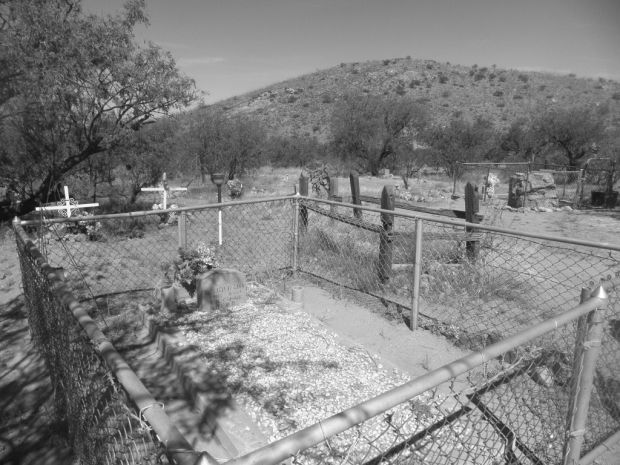
By 1950, the Helvetia-Rosemont Mining District produced $3.7 million, including more than 17 million pounds of copper. For the next decade, the Lewisohn Copper Co. continued to haul ore from the mines. However, the Helvetia townsite was destroyed by squatters, and the remaining buildings were removed by the Forest Service. Today, all that remains is the cemetery and the remnants of an adobe building.
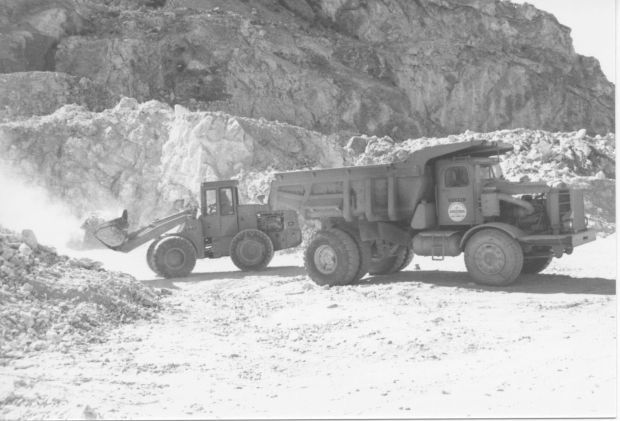
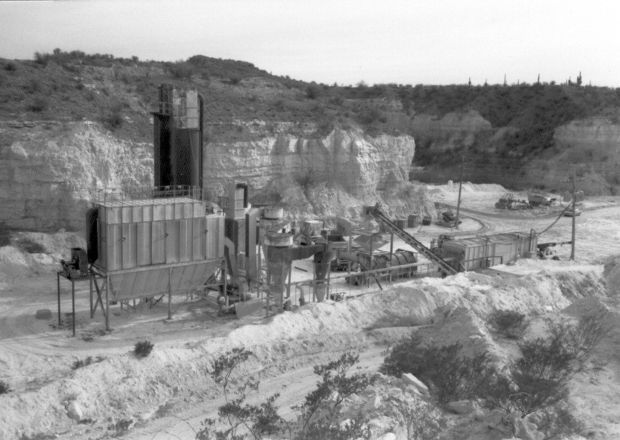
A signature reference point in the northwestern edge of the Santa Rita Mountains is the outcropping of calcium carbonate or limestone appearing as a white scar. Nearby are quarry operations consisting of 22 acres leased by Imerys Marble Inc. from Specialty Minerals. The quarry produces 217,000 tons a year of material used for decorative rock and other purposes such as fire retardant, paint, animal feed and dry-wall plaster. Although marble is classified as metamorphosed limestone, the limestone deposits here didn’t sustain the high temperatures and pressure needed for marble formation.
Drilling after World War II revealed low-grade copper ore deposits northwest of Helvetia. Additional discoveries included those on the eastern flank of the Santa Rita Mountains, including a massive porphyry copper deposit estimated at 4.2 billion pounds below Gunsight Pass in the vicinity of the old Rosemont Mining Camp. The Anamax Mining Co. had originally proposed an open-pit copper mine here in 1974.
Today, Hudbay Minerals Inc. is completing a permit process with the U.S. Forest Service that may lead to active open-pit mining at the same locality encompassing roughly 1,000 acres by 2017 while contributing 10 percent of total U.S. copper production.
Sources
S.C. Creasey and G.L. Quick, “Copper Deposits of Part of Helvetia Mining District,” Geological Survey Bulletin 1027-F U.S. Government Printing Office, Washington, 1955
David F. Briggs, “History of Helvetia-Rosemont Mining District,” Arizona Geological Survey, 2014
Imerys Quarry Viewed From Black Mountain Limestone: www.gvrhc.org/Library/LimestoneQuarry.pdf
F. C. Schrader, “Mineral Deposits of the Santa Rita and Patagonia Mountains, Arizona,” U.S. Geological Survey Bulletin 582. Washington, Government Printing Office, 1915
David F. Myrick, “Railroads of Arizona, Vol. 1,” North Howell Books, 1975

 Faculty concerned about changes to U of A admissions policy