
(Part 1 of 2) Mercury, also known as quicksilver, is found in multiple localities in Arizona, including Copper Basin district, seven miles southwest of Prescott; Dome Rock Mountains; Mazatzal; and the Phoenix Mountains.
It has the distinct characteristic as the only metal that at normal room temperature is liquid. A metal with many industrial uses ranging from thermometers, dental fillings, batteries, and medicines to the chlorine-caustic soda industry utilized in detergents and plastics.
Mercury is also used as a catalyst to capture gold and silver through a process called amalgamation.
Because of human health concerns mercury usage has declined in the United States. Digital thermometers and thermometers using galinstan — an alloy of gallium, indium and tin — have replaced mercury as have ceramic composites in the dental industry.
People are also reading…
Lithium, nickel-cadmium, zinc-air batteries now substitute for the traditional mercury-zinc batteries.
Only two mercury cell chlorine-caustic soda plants remain in operation in the United States compared to 14 in 1996, which have either converted over to membrane technology or closed.
Because of low-grade deposits, mercury production in Arizona was relatively low in comparison to the mercury mines found in the coastal ranges of California. Marketed in steel flasks the size of half-gallon milk bottles containing 76 pounds of mercury, total U.S. production reached a height of 3.5 million flasks by 1969 with Arizona credited with having produced about 8,000 flasks. At the time mercury was valued at $6.50 a pound.
The history of mercury usage in Arizona dates back to the Spanish explorers Cristobal Bernal and Juan Mateo Manje, who reported in 1697 overhearing Apaches describing its usefulness as war paint.
Mercury’s usage in the processing of gold and silver ore is well documented.
The Freiberg process, sometimes known as the Freiberg barrel process, for working silver ores involved the roasting of silver ore to burn off any sulfur and to amalgamate the crushed ore with mercury and copper sulphate in rotating wooden barrels, which produced an amalgam that when refined left silver bullion.
This process was used with the silver mines around Tubac in the late 1850s when the Sonora Exploring and Mining Co., hired Guido Kustel, a graduate from the Royal School of Mines, in Freiberg, Austria.
Although the technology proved successful, the process was impeded because of remote locality, labor challenges, high cost, and hostile Apaches.
The next innovation to arrive on the market was the Washoe process perfected on the Comstock lode in Nevada discovered by California miners in 1859.
The process would dominate silver milling from the 1860s until the turn of the century. It involved the treating of silver ores with grinding pans or tubs including a mixture of mercury and chemicals in the form of copper sulfate and salt.
This process increased mill silver recovery to 80 percent providing successful in Arizona during its silver boom in the 1870s with silver discoveries made at the Cerbat Mountains, along with the Tip Top mines south of Prescott, and the mines around Harshaw and Tombstone.
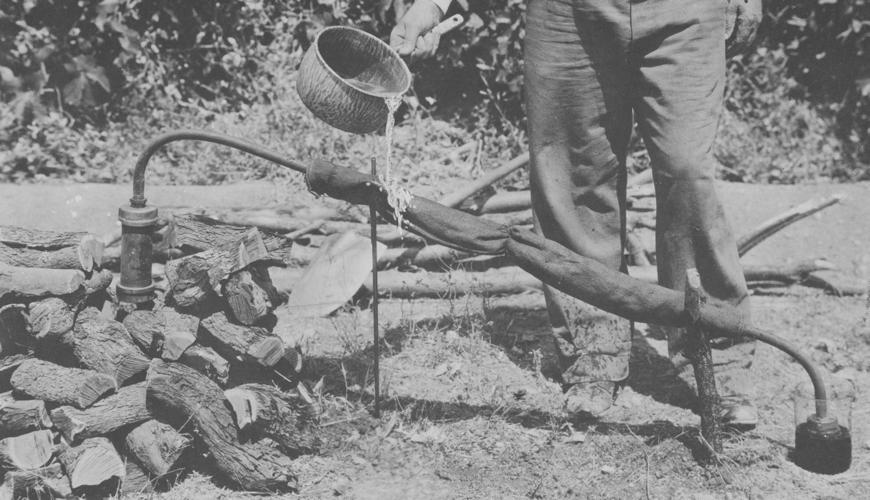
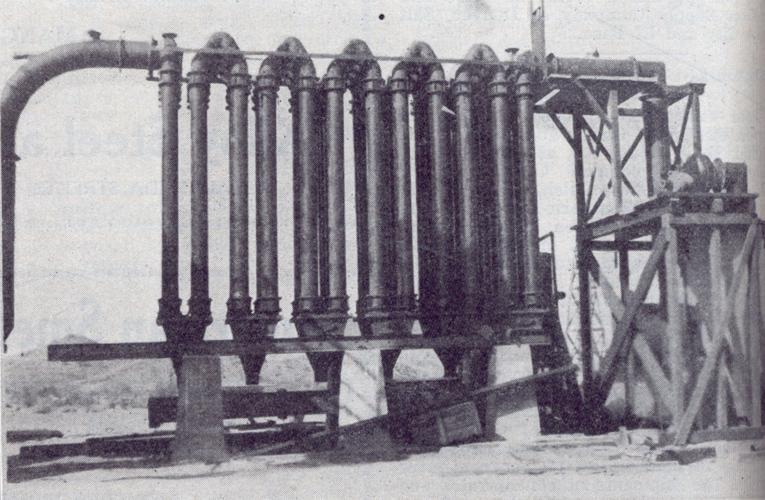
Mercury recovery in Arizona involved cinnabar, a brownish red or scarlet, soft, flaky rock, ground further into finer pieces then placed into a retort where it is heated with coke and water enough to vaporize and release the mercury. The vapor is transferred to a cool place to condense it to a liquid metal.
Retorts — small stills — are used to treat minor amounts of rich ore while furnaces are used to process large quantities of lower-grade ore.
Some mercury is also recovered through the leaching with a sulfide or chloride solution. The Mazatzal Mountains, which are 60 miles northeast of Phoenix, would be the focal point of mercury mining through the mid-20th century.
Archivist, historian and author William Ascarza’s forthcoming book is “In Search of Fortunes: A Look at the History of Arizona Mining.” For more information, contact M.T. Publishing Co. at 1-812-468-8022 or go to goo.gl/FS545A online