

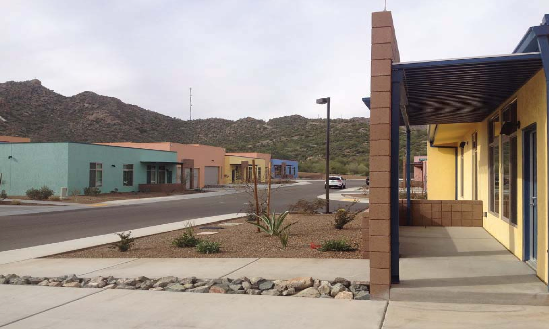
Customs and Border Protection paid nearly eight times more than the average cost of houses in Ajo to build employee housing at a total cost of $17 million and not all of them are being used, a government report found.
The Office of Inspector General’s report, “CBP did not effectively plan and manage employee housing in Ajo, Arizona,” found that the agency paid an average of $680,000 each to build 21 single-family homes in Ajo, where home prices average $86,500.
The office found that CBP:
• Paid a premium price for land.
• Built two- and three-bedroom family-style houses rather than the recommended one -bedroom apartment-style housing.
• Included nonessential items and amenities in the project without adequate justification.
People are also reading…
“This is a classic example of inadequate planning and management leading to wasteful spending,” said Inspector General John Roth in a news release. “This project could have been completed at much less cost to the taxpayers.”
In 2008, CBP identified a need for employee housing along the southwest border, particularly in Arizona and Texas given the remoteness and limited housing market, the report said, and began planning construction in Ajo. The project was finished four years later.
But the OIG said the agency did not effectively plan and manage employee housing in Ajo and made decisions that resulted in additional costs to the federal government. It increased project funding seven times without specifying the reason for the increase or how the funds would be spent. The report found at least $4.6 million that “could have been put for better use.”
Because CBP didn’t have the funds to fully develop the land where it was building the family-style homes, half of the land worth $183,459 remains vacant, the study found, and it has no plans to build additional houses on it.
The homes, which range in size from 1,276 to 1,570 square feet, have quartz countertops and stainless steel appliances in the kitchens, wireless ceiling fans and garages big enough to fit three cars.
As of March 2014, four of the 21 houses were vacant, which the study found can be in part due to rental rates of $1,075 to $1,314.
While it was building the 21 family-style homes, CBP also bought 20 mobile homes for $2.4 million to provide emergency housing for officers assigned to the Lukeville port of entry. For the majority of the time the mobile homes have been available for occupancy, half have been vacant, the report found. From October. 2013 through March 2014, 18 of the 20 were not occupied.
According to CBP, once funding becomes available, it plans to build more houses in Lukeville, close to Ajo. Money has already been set aside to conduct another feasibility study for dormitory-style housing there.
The office issued five recommendations to which CBP concurred, among them to:
• Establish procedures to determine and justify the necessity of all housing amenities and upgrades.
• Identify the amount of unspent funds from the Ajo and Lukeville housing projects, including about $3 million transferred to the General Services Administration and require the return of funds immediately.
• Postpone all activities for current and future housing projects until implementing recommendations in this report to ensure efficient use of funds.


