

NOGALES, Ariz. — Officials discovered two cross-border drug tunnels in the Nogales area over a 24-hour period, one of which contained more than 3,000 pounds of marijuana.
The Santa Cruz County Sheriff's Department says the marijuana seizure is one of the largest ever from a tunnel in the county.
Authorities were tipped off when they received a call about suspicious activity and a strong odor of marijuana coming from a warehouse in the 300 block of North Grand Avenue at 3 a.m Friday, said sheriff's Capt. Ruben F. Fuentes.
Members of a multiagency task force began watching the area until about 8 a.m. when they were able to obtain a search warrant, he said.
When they went into the warehouse, they found 428 bundles of marijuana, totaling more than 3,000 pounds, he said.
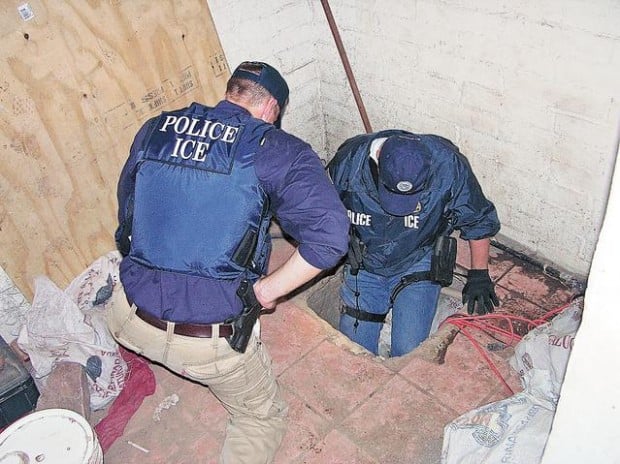
They also found the tunnel entrance, which was 1 1/2-feet-by-1 1/2-feet and dropped down to a drainage tunnel that leads to a wash.
People are also reading…
No one was at the warehouse at the time, Fuentes said. There was a washing machine inside and some carpet. There were also flashlights that can be strapped to the head and picks.
The owner of the warehouse is not believed to be linked to the tunnel or drugs, but investigators are looking into how the renter, who lives in Hermosillo, Sonora, is connected, Fuentes said.
Authorities sealed the tunnel with concrete.
Second tunnel likely unused
A day earlier, officials discovered a rudimentary 100-yard drug-smuggling tunnel east of downtown Nogales that they say has never been used.
The 3-foot-by-3-foot tunnel, barely large enough for broad-shouldered man to slither through, twisted and turned several times between two houses, officials said.
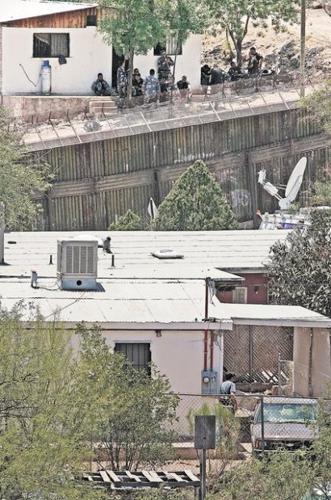
It originated in Mexico from a house about 30 yards south of the border in the first row of homes in the Buenos Aires neighborhood. It came out in the laundry room of a vacant, white, one-story house at 24 N. Escalada Drive in Nogales, about 1 1/2 miles east of the Dennis DeConcini port of entry and about 50 yards north of the border. One house sits between it and the steel landing-mat fence that marks the line.
The tunnel's length gives it the distinction of being one of the most significant underground passages discovered in Nogales since 2001. Its simplicity and crude engineering, however, keep it from reaching the status of well-known tunnels discovered in Nogales, Douglas and San Diego in the past that featured sophisticated lighting, pulleys and carts, and steel reinforcements.
This tunnel had limited electrical lighting, hardly any ventilation and no reinforcements. Dirt fell around and on top of Sonoran police officers who crawled through it Thursday afternoon. They were gasping for air when they came out on the U.S. side, officials said.
"Is this one as sophisticated as the one in California? No. The old tunnel (in 1990) in Douglas? No it isn't," said Terry Kirkpatrick, Immigration and Customs Enforcement acting assistant special agent in charge in the office of investigations in Nogales. "It's similar to half of the ones we are finding now. They are getting faster, cruder in their construction, and trying to just hurry up and get tunnels dug."
In simultaneous operations Thursday afternoon at about 3 p.m., investigators from the United States executed a search warrant at the house in Nogales, Ariz., while Sonoran state police broke into the Mexican house, officials said. Sonora police arrested five people who were found in the house.
No suspects were arrested on the U.S. side. Authorities learned that the house was being rented and know who the owners are but don't know yet if they knew about the tunnel, Kirkpatrick said.
Agents with Immigration and Customs Enforcement and the Drug Enforcement Administration had been watching the two houses and gathering intelligence since finding out about the tunnel in April, he said.
Agents found both tunnel entrances covered with plywood and sandbags. They temporarily closed the tops of both tunnels with cement and plan to fill the entire passageway.
The discovery of tunnels demonstrates a high level of enforcement at the ports of entry and the border, said Anthony Coulson, DEA assistant special agent in charge in Tucson.
"Where we see tunnels, we see a strong port of entry and strong enforcement emphasis and lateral enforcement along the border, which the Border Patrol has," Coulson said.
The tunnel builders, likely connected with a drug cartel, dug it at night using a jackhammer, officials said. They probably spent at least three months completing it.
U.S. authorities have discovered approximately 40 tunnels beneath the border between Arizona and San Diego since Sept. 11, 2001, Kirkpatrick said.
DID YOU KNOW. . .
One of the most sophisticated cross-border drug tunnels found to date was discovered in 1990. It linked a Douglas warehouse to a townhouse in Agua Prieta, Sonora. The concrete-lined tunnel was 30 feet deep and 200 feet long.
— Star archives


