

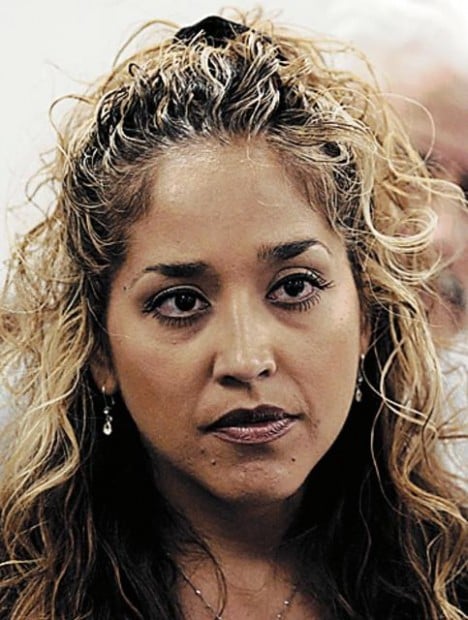
A former Pima County prosecutor who was once engaged to former murder suspect Bradley Schwartz says no words are adequate to describe how "remorseful, ashamed and embarrassed" she is about the events leading up to her possible disbarment.
Last November, the State Bar of Arizona filed a complaint against Lourdes Lopez, 38, saying she had engaged in criminal conduct that "reflects adversely on the lawyer's honesty, trustworthiness or fitness as a lawyer in other respects."
The bar alleges Lopez not only was indicted in September 2002 on prescription drug fraud charges along with Schwartz, but she continued having a relationship with Schwartz despite being ordered not to, and lied about it.
Schwartz is now serving a life sentence for conspiracy to commit murder in the October 2004 slaying of his former medical associate, Dr. David Brian Stidham.
People are also reading…
Monday was the first day of a two-day hearing before Bruce G. Macdonald, a hearing master who must file a report with the Arizona Supreme Court's Disciplinary Commission. Macdonald will decide if the complaint against Lopez is valid and, if necessary, what punishment is appropriate.
At best, Lopez could be placed in a diversion program or on probation. At worst, she could be disbarred.
Lopez, who now works as a defense attorney, told Macdonald that although she believes all lawyers should conduct themselves with the "highest degree of integrity," she also believes a distinction should be made between mistakes made in one's personal life and those made in one's professional life.
"I will agree I've done things in my personal life that I'm ashamed of, but I've always tried to conduct myself in my professional life in a way that I can be proud of," Lopez said.
The mistakes she's made have "nothing to do with" helping her clients or her respect for the criminal justice system, she said.
At the same time, Lopez said she wishes she had the words to express her deep remorse and shame.
"Anything I say would just fall short," she said.
Lopez admitted she allowed Schwartz to write two prescriptions for Vicodin in her name in the summer of 2001, and that she picked up one of the filled prescriptions — using her insurance to pay for it.
She further acknowledged that she lied to DEA agents about her relationship with Schwartz when they initially questioned her.
Lopez insisted that although she knew it was a crime to lie to the DEA, she didn't lie to protect her job or career.
Instead, she said, she lied to protect Schwartz.
It wasn't until May 2004 when they broke up for the last time, Lopez said, that she began to consider her needs above Schwartz's.
Schwartz and Lopez, who resigned from the Pima County Attorney's Office one month before being indicted, entered plea agreements with federal prosecutors to have the charges dismissed if they completed community service and stayed out of trouble.
Schwartz was arrested, accused of Stidham's murder, before he completed his diversion program — in part because Lopez went to the authorities to tell them Schwartz had often spoken of having Stidham killed.
The charges against Lopez were dismissed on Nov. 1, 2004, after she, her attorney and her pretrial services officer told U.S. Magistrate Judge Bernardo Velasco she had been fully compliant with everything that had been asked of her.
However, Lopez admitted Monday that was not true — she continued to see Schwartz during a 6 1/2-month time frame when she wasn't supposed to.
In fact, the couple got engaged two months before the "no contact" order was lifted.
State Bar attorney Bill Culbertson repeatedly asked Lopez how much contact she had with Schwartz during that time frame.
Lopez couldn't be specific, she said, but it was regular contact and included overnight visits and religion classes.
"Too much contact, sir — I don't know," Lopez said at one point.
Lopez also acknowledged it was during this time frame that Schwartz was "ranting and raving" about his desire to see Stidham dead.
During one conversation, Lopez admitted, she told Schwartz he shouldn't hire a drug addict to carry out the slaying because of the potential for blackmail.
Lopez insisted she was just trying to convince Schwartz how "ridiculous, outrageous and insane" the whole topic was.
When Culbertson asked Lopez if it was true she didn't call pretrial services about the threats, an emotional Lopez replied, "I could've phoned, faxed, said something in person or e-mailed, but I didn't do it and I should have, yes sir."
Under cross-examination by her attorney, Mark Harrison, Lopez said she and two friends discussed Schwartz's threats and discounted them.
"There was absolutely no way, absolutely no way on this Earth, those threats were going to come to fruition — they were just the ugly rant-ings of a man obsessed," Lopez said.
When pressed as to why she told Velasco — and later the State Bar — that she had been compliant with his orders when she had not been, Lopez said it didn't occur to her because eight months had passed since the order had been lifted.
In addition, it was a stressful time for her.
"I was thinking about the murder. Brad was in custody. I was thinking about how horrible the family must be feeling and I was thinking about finally being done with my community service and being able to move forward," Lopez said.
Harrison spent much of his cross-examination asking Lopez to describe her background, her relationship with Schwartz and how the events of the past few years have affected her life.
Lopez worked her way through college and the UA law school on scholarships, grants and loans, and is the sole support of her two children.
Since the bar complaint was filed, Lopez said, she has lost a defense contract with the county, a law partner and two-thirds of her business.
She's deeply in debt, getting psychiatric help and participating in the State Bar's Members Assistance Program, which helps lawyers deal with substance-abuse issues, stress, depression and family or money problems.
She's also being sued by Stidham's widow.
Lopez acknowledged she was arrested in July on suspicion of driving under the influence after a crash but said her doctor has told her she suffers from post-traumatic stress syndrome, not alcoholism.
Lopez said her doctor is working with her to address why she became so captivated by someone like Schwartz.
Lopez said she wasn't trying to shift the blame to Schwartz.
"I'm blaming myself for involving myself with someone like him," she said.
Culbertson is expected to wrap up his case with three law-enforcement officers. Harrison said he intends to call Velasco and Pima County Superior Court Judges Kenneth Lee and Michael Cruikshank.


