Pima Community College officials hope a new aircraft maintenance facility dedicated on Friday will help create high-tech jobs in the region and meet a growing need for highly skilled workers in the industry.
The new avionics program, part of PCC's aircraft technology campus at Tucson International Airport, teaches students how to install, maintain and calibrate aircraft electronics such as radios and global positioning systems.
The 2,800-square-foot expansion gives students an opportunity to build and design full flight systems, even allowing them to run tests in simulators and working airplanes.
Speaking at the event, local elected officials and PCC leaders said the new facility will give students an opportunity to learn cutting-edge skills that ultimately lead to high-paying jobs.
With industries such as aviation maintenance continuing to evolve with advances in technology, employers are clamoring for trained, certified employees, PCC officials said.
People are also reading…
It's a market that the local community college has embraced, expanding its educational offerings in several trade programs in recent years.
Roughly one-quarter of PCC's 31,000 students are taking a high-tech occupational training program in areas such as automobile maintenance, health care and aviation technology, enrollment figures show.
And, anecdotally, PCC officials said that their training classes — and student demand for them — are expanding at roughly the same rate as the technology itself.
"We are part of the infrastructure that's delivering education that a skilled work force needs," said Johnson Bia, president of PCC's Downtown Campus.
PCC is even seeing an enrollment boost in construction training, despite the economic downturn and housing-market slump, Bia said.
"Construction workers are retooling and upgrading their skills to make themselves more competitive," he said.
The days of workers being able to support families without specialized degrees or certifications are long gone, PCC Chancellor Roy Flores said.
"Digital technology is embedded in everything we have," he said. "We have to master that technology from early on."
Facilities such as the one dedicated on Friday go a long way toward helping students meet those challenges, Flores said.
Using part of a $2.84 million grant from the U.S. Department of Education, PCC officials added a workshop and classroom full of simulators dedicated exclusively to avionics.
The facility is adjacent to a 33,000-square-foot facility that PCC has used for several years to train people in aircraft maintenance.
The nine-month course in avionics was first offered in April, and it is designed for students who already have completed aviation maintenance training or are certified by the Federal Aviation Administration, said Pete Stogsdill, chairmen of the aviation department.
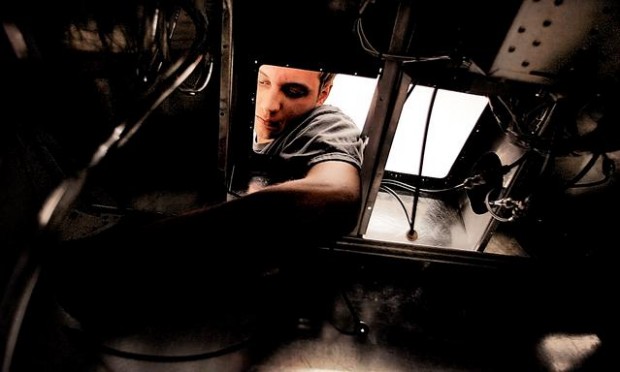
Once in the course, students learn how to wire and configure every piece of a plane's flight- control system, from an altimeter to a flight recorder commonly known as the "black box."
On top of that, students use flight simulators to familiarize themselves with how a person pilots a plane. That way, they know exactly how each instrument works and can learn to troubleshoot problems, Stogsdill said.
The hands-on approach — students can fire up a full-size passenger jet donated by FedEx to test their systems — already has earned the course accreditation by the National Center for Aircraft Technician Training.
"There are very few programs like this in the nation," said PCC's Desert Vista Campus President Christal Albrecht, whose campus oversees the program. "The technology is becoming so much more advanced, it provides much-needed training in the aviation industry."
The best part for the avionics students is that employers are practically banging down PCC's doors for qualified workers, despite the economy, Stogsdill said.
It's a fact that hasn't escaped several students' attention.
Alexandro Moreno said the constant sight of recruiters motivated him to consider avionics.
The 28-year-old is completing PCC's Aviation Technology program, which is 19-month precursor to avionics.
"They are always trying to get people to work for them, which makes me want to get my training done," Moreno said.
High-tech training center