

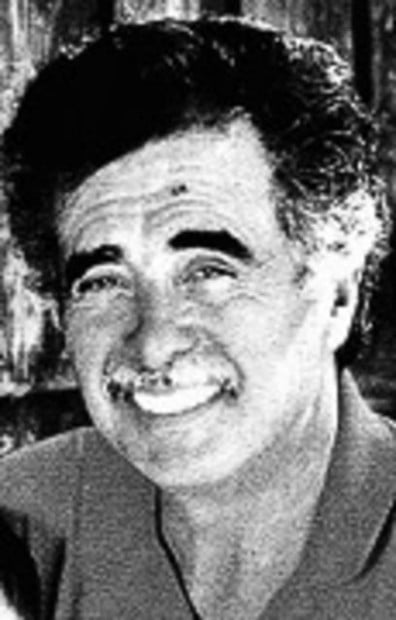
Surfing down the flooded Rillito on an old car hood with his high school pals, Art Apodaca was a fun-loving Tucson teen in the 1950s.
Given his risky behavior as a youth, it seemed implausible that Apodaca's future career would include preventing kids from drowning.
"Art was a goof-off," said Carrie Reitz, one of his classmates at Salpointe Catholic High School. "He was one of the good old boys, he and his buds he ran around with. He showed no signs of being a hero, but he certainly was."
After serving in the Navy after high school, Apodaca joined the Tucson Fire Department, where he spent much of his 25-year career advocating on behalf of fellow firefighters.
Even in retirement, Apodaca continued to serve the community by raising money for the families of firefighters who were injured or killed on the job and also by soliciting funds to send young burn victims to camp.
People are also reading…
Days before his death Feb. 7, after a heart attack, Apodaca, 67, took on a new challenge: helping generate donations for the Last Alarm Foundation, whose members are renovating a vintage firetruck that will be used as a hearse to transport Southern Arizona firefighters to their final resting places.
"Art was a good firefighter. He was involved in an awful lot of issues that involve firemen and firemen's health and well-being," said his former supervisor, retired TFD deputy chief Jim Russell.
Even when bureaucracy pitted the two against each other — Russell as management and Apodaca as a union representative — the men would end their discussions on good terms.
"We'd sit in my office, and we'd holler and point fingers at each other, but yet when we walked out and parted, we were friends. He never held any animosity toward me, and I never held any animosity toward him," said Russell, who worked with Apodaca more recently on the Last Alarm project.
Apodaca, a native Tucsonan, was at one time vice president of the Tucson Firefighters Association local and served as president of the Southern Arizona Central Labor Council.
"He was really involved with the betterment of all firemen throughout the state and with labor organizations," said his friend of 47 years, retired firefighter Bud Wray. "He was always concerned about his fellow brothers. He was a good guy and a good firefighter."
Apodaca didn't hesitate when someone was in peril.
"He was always first man on the line," said former classmate Reitz, who stayed in contact with the firefighter after high school through her work as an emergency room nurse.
"The one thing I really remember was him fighting the Pioneer fire. Not a single one of the fire departments in Tucson had ladders tall enough. Art was at the top of a ladder trying to save people, and he fell and badly injured his leg."
Apodaca was one of three firefighters on the extension ladder that collapsed while they were trying to rescue guests on the upper floors of the Pioneer International Hotel, Downtown, in December 1970. The arson-caused blaze resulted in the deaths of 29 people.
"He loved helping people," said one of his two sons, Chris Apodaca, a nurse in the pediatric intensive care unit at University Medical Center. "I remember hearing him tell us stories about when he would go out on calls and he'd try to rescue kids when they were drowning.
"He really did enjoy the human aspect of actually going out there and helping people. He saw people at their worst and helped them. I didn't realize until after he passed that I went into nursing because he passed that on to me as well."
Even when the victims could not be saved, his father felt an obligation to provide comfort, Chris said. He remembers his dad talking about one man who was so severely burned that he wasn't expected to survive. Art Apodaca went to the hospital and sat with him until he died.
"It was important for him to help others, but he was never boastful about it," Chris said.
In the early 1990s, after retiring from the Fire Department, Apodaca started a firemen's calendar in Tucson to raise money for local charities.
Marbeth Hill was a volunteer with the Southern Arizona Burn Association in the mid-'90s when she met Apodaca and began helping with the effort.
"He was tireless. He was always on the go, always getting people motivated, getting people to help with burn survivors," said Hill, who now lives in Tennessee.
One year, Apodaca used some of the money to fly young burn victims to California to visit Disneyland. He also allocated money to send children who were scarred by fire to Camp Courage in Prescott.
"He was impressed by so many of the kids in that burn camp," said his wife of 10 years, Joyce. She and Apodaca wed after the death of his first wife of 25 years, Rosalie.
"I went with him one year. Art always liked to tell the story of the little boy who had his leg injured and amputated and had a prosthetic," Joyce Apodaca said.
"We remember one time when this little boy was running and he fell down and he lost it (the prosthetic). It fell off and he got up and put it back on and took off."
It was the resiliency of the children that motivated her husband, Joyce said.
"He just had it in his heart to care," Hill said. "He truly cared and it showed in everything he did."
In His Memory
Art Apodaca's family suggests honoring him with donations to two of the organizations he supported:
• Last Alarm Foundation, P.O. Box 18408, Tucson, 85731
• Foundation for Burns and Trauma, P.O. Box 1329, Phoenix, 85001
Life Stories
This feature chronicles the lives of recently deceased Tucsonans. Some were well-known across the community. Others had an impact on a smaller sphere of friends, family and acquaintances. Many of these people led interesting — and sometimes extraordinary — lives with little or no fanfare. Now you'll hear their stories. Past "Life Stories" are online at go.azstarnet.com/lifestories


