

Spanish interest in what later became known as the American Southwest focused on discovering and acquiring mineral wealth. Economics drove exploration much like it does modern commerce.
The Regal Ordinances of 1584 and the 1783 Ordenanzas were early Spanish mining codes in the Southwest that encouraged mineral exploration, allotting individual mine ownership in exchange for the crown’s share of one-fifth of the profits.
Spanish explorers Álvar Núñez Cabeza de Vaca and Marcos de Niza believed in the existence of Cibola, the legendary “Seven Cities of Gold” rumored to exist in the Southwest. A two-year expedition initiated in 1540 and led by Francisco Vásquez de Coronado failed to find Cibola, but it did lead to the discovery of adobe pueblos and a plethora of turquoise jewelry used by the Zunis.
The early 1700s brought about discoveries of silver in Arizona including deposits found in the Santa Rita Mountains. Padre Eusebio Francisco Kino, who arrived in Arizona in 1691 and spent the next several decades converting the natives to Christianity, noted the mineral wealth of the Santa Cruz Valley.
People are also reading…
Not long thereafter, in 1736, Yaqui miner Antonio Siraume discovered silver deposits at Arizonac several miles southwest of Nogales in northern Sonora, Mexico. “Bolas” or “Planchas de Plata” — both meaning slabs of silver — were discovered by Siraume north of a mining settlement called El Real de Arizonac or Arizona.
One slab reported by Capt. Juan Bautista de Anza to Bishop Benito Crespo on a Spanish crown-sanctioned site visit weighed over 2,500 pounds.
Generating an influx of prospectors, this discovery of what was then known as Pimeria Alta (Land of the Upper Pima) was located from the Altar River in Sonora north to the Gila Watershed in what is now Arizona.
German explorer and geographer Alexander Von Humboldt would later declare Pimeria Alta the “treasure vault of North America.”
As the Spanish expanded into Arizona they discovered gold placers at Quijotoa in 1774. Some ore was shipped from the Quijotoa Mountains through the Port of Muleje, Baja California.
After Mexico’s independence from Spain in 1821 and the Treaty of Guadalupe Hidalgo effectively ended the war with Mexico in 1848, the United States government acquired jurisdiction of the region north of the Gila River. That enabled the establishment of a clear route to California gold fields, which were exploited by 10,000 or more gold seekers who crossed over the Colorado River unaware at the time of the abundant mineral deposits in the land that would become the territory and ultimately the state of Arizona.
After the Gadsden Purchase (sometimes referred to as the Treaty of Mesilla) in 1854, land south of the Gila River became part of the U.S., spurring more mining activity in the Patagonia, Santa Rita and Cerro Colorado mountains.
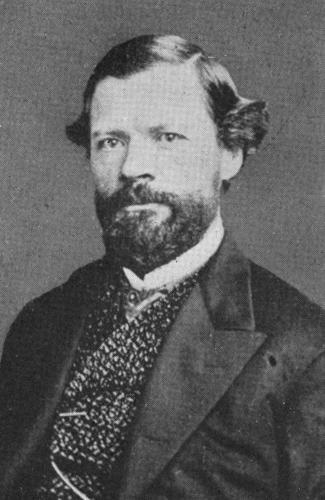
Early mining entrepreneurs included Charles D. Poston, who recognized the potential for mineral wealth in the Santa Cruz Valley. Arriving in Tubac in what was then known as New Mexico Territory in 1854, Poston was later known as the “father of Arizona” because of his desire to see the future territory autonomous from that of New Mexico territory.
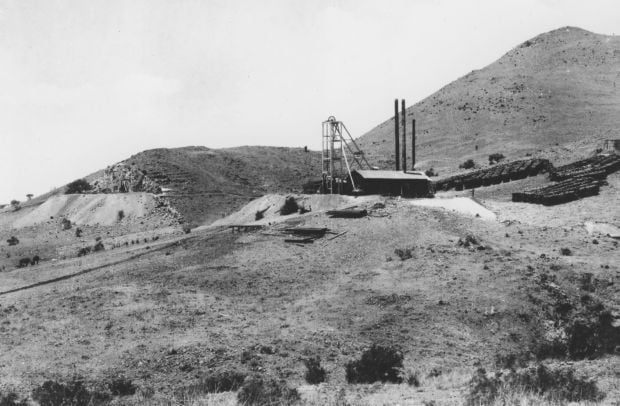
Poston also attempted to rediscover the Planchas de Plata while working the Heintzelman Mine in the Cerro Colorado Mountains, the Salero Mine in the Santa Rita Mountains and other silver mines associated with the Aribac land grant near Arivaca. Salero means “salt mine” in Spanish, and probably referred to a nearby salt deposit that supplied the Spanish missions in the Santa Cruz Valley.
In 1856, Poston organized the Sonora Exploring and Mining Co., with headquarters in Tubac. His influence over the next 10 years contributed to the Howell Mining Code.
Its officers included Gen. Samuel P. Heintzelman, Herman Ehrenburg, Samuel Colt and Salero mine manager John Wrightson.
Wrightson was later killed by Apaches; Mount Wrightson in the Santa Rita Mountains is named for him.
William Ascarza is an archivist, historian and author. His latest book, “The Chiricahua Mountains: History and Nature,” is available at Barnes and Noble online. Email him at mining@tucson.com
Sources:
Mary Noon Kasulaitis. (Fall 2002) The Village of Arivaca: A Short History. The Smoke Signal. Published by the Tucson Corral of the Westerners. No. 75.
John C. Lacy. (Summer 2009) The Mining Laws of Charles D. Poston, 1857-1865. The Journal of Arizona History, Vol. 50, No. 2.
James H. McClintock (1916), “Arizona, Prehistoric, Aboriginal, Pioneer, Modern: Vol. 1-3.”
Robert G. Raymer. (June 1935) Early Copper Mining in Arizona. Pacific Historical Review, Vol. 4, No. 2.


