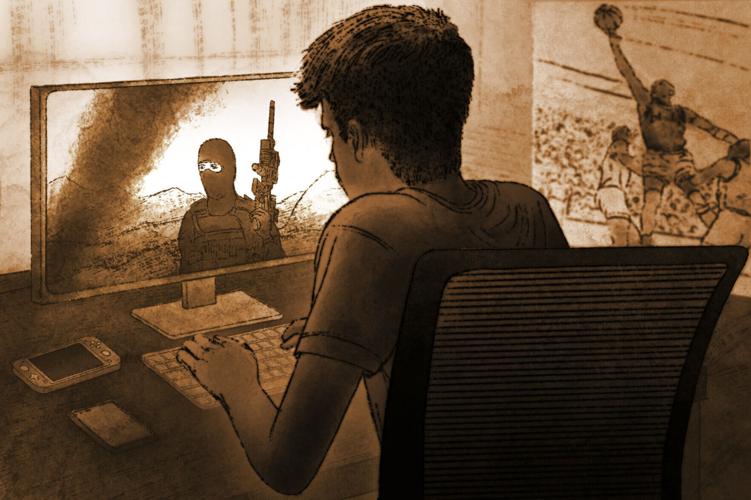
After the boy's arrest, his mother was stunned to discover her 12-year-old learned how to kill and gorged on videos of decapitation and torture so gruesome they made even case-hardened French court officials look away. The mother told criminal investigators that she thought her son was playing video games and doing homework during the hours he spent in his room.
The child's descent into the internet's darkest recesses started innocently enough, with online searches about Islam after an aunt gave him a Quran as a gift, says the boy's lawyer. From there, more searching, automated algorithms that steer users' online experiences and the boy's curiosity ultimately led him to encrypted chats and ultraviolent propaganda pumped out by Islamic State militants and other extremist groups that are worming their way via apps, video gaming and social media into the minds of the very young.

Paul-Edouard Lallois, the French prosecutor who secured the boy's conviction on two terror-related charges last August, said the thousands of images and other extreme content the child viewed so warped his understanding of the world and of right and wrong, "it will take years and years of work to enable this kid to recover normal bearings."
People are also reading…
The prosecutor believes the boy was on a trajectory to possibly become a "completely dehumanized soldier" who risked joining the ranks of digitally radicalized teenagers who hatch terror plots and express support for extremism. The huge library of violent content, the boy amassed included video tutorials on bomb-making, the prosecutor said.
Police analysis of the boy’s computer and phone found 1,739 jihadi videos, the prosecutor said, including one that appeared to show a tied-down man being methodically chopped into pieces.
"It is possible to completely upend the mental bearings of such a young child," he said. "Do that for a few years and, even before he has turned 18, he's already capable of, yes, committing an attack and the worst things with just a knife."

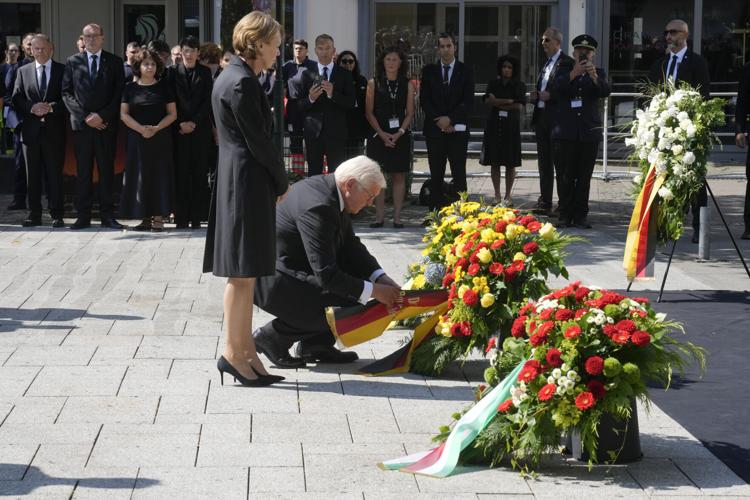
German President Frank Walter Steinmeier, right, and his wife, Elke Buedenbender, attend a Sept. 1 wreath-laying ceremony for victims of a knife attack the prior week that killed three people in Solingen, Germany.
Emerging threat
Across the globe, counterterrorism agencies grapple with a new generation of attackers, plotters and acolytes of extremism who are younger than ever and feed on ultraviolent and potentially radicalizing content largely behind their screens. Some appear on police radars only when it's too late — with knife in hand, carrying out an attack.
Olivier Christen, France's national anti-terrorism prosecutor who handles the country's most serious terror investigations, has a firsthand view of the surging threat. His unit handed terror-related preliminary charges to just two minors in 2022. That number leapt to 15 in 2023, and again last year to 19.
Some are "really very, very young, around 15 years old, which was something that was almost unheard of no more than two years ago," Christen said. It "demonstrates the strong effectiveness of the propaganda disseminated by terrorist organizations, which are quite good at targeting this age group."
The so-called "Five Eyes" intelligence-sharing network, comprising U.S., U.K., Canadian, Australian and New Zealand security agencies, usually shuns the limelight. It is so alarmed, it took the unusual step in December of calling publicly for collective action, saying: "Radicalized minors can pose the same credible terrorist threat as adults."
In France, the domestic DGSI security agency says 70% of suspects detained for involvement in alleged terror plots are under the age of 21. In Germany, an Interior Ministry task force launched after deadly mass stabbings last year focuses on teenagers' social networks, aiming to counter their growing role in radicalization.
In Austria, security services say a 19-year-old suspect arrested in August, with an 18-year-old and a 17-year-old, for an alleged ISIS-inspired plot to slaughter Taylor Swift concertgoers, was radicalized online. So, too, was a suspected ISIS supporter, aged 14, detained in February for an alleged plan to attack a Vienna train station, authorities say.
The VSSE intelligence agency in Belgium says almost a third of suspects detained there for plotting attacks from 2022 to 2024 were minors — the youngest only 13. Extremist propaganda "is just a click away for young people in search of an identity or a purpose," it said in a report in January, with radicalization occurring at speeds "nothing short of meteoric."

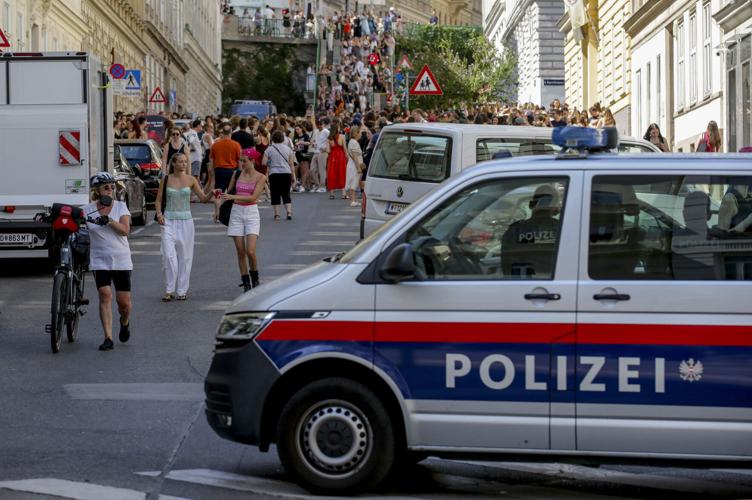
A police car sits near gathering swifties Aug. 9 in Vienna after organizers of three Taylor Swift concerts called them off and officials announced arrests over an apparent plot to attack an event in the city.
Path to propaganda
Counterterror investigators say the online radicalization of a child can sometimes take just months. Digitally nimble, kids are adept at covering their tracks and skirting parental controls. The 12-year-old's mother had no inkling her boy was consulting extremist content, said the family's lawyer, Kamel Aissaoui.
Unlike previous generations of militants who were easier for police to track and monitor because they interacted in the real world, their successors are often interacting only in digital spaces, including on encrypted chats to mask their identities and activities, investigators say.
"They live on their phones, their tablets, their computers, in contact with people they don't know," said a senior official from a European intelligence agency who spoke on condition of anonymity to discuss its work combatting illegal extremist activity.
Some start "to imagine who they would attack, how they would go about it, doing actual reconnaissance, hunting for a weapon, consulting tutorials on how to make explosives," the official said.
For some kids, the process starts with violent pornography or a fascination for gory images, counterterrorism investigators say. From there, more clicks can lead to grisly murder videos from Mexican drug cartels and ultimately to jihadi decapitations, throat-slitting and torture, in videos that are sometimes slickly produced with music and shared on chat groups.
"Often they're heavy consumers of everything that is broadcast on the Web and especially things that are forbidden," said Christen, the French national anti-terror prosecutor. "It's something of a chain reaction that gets them to the ultra-violence disseminated by jihadi movements."

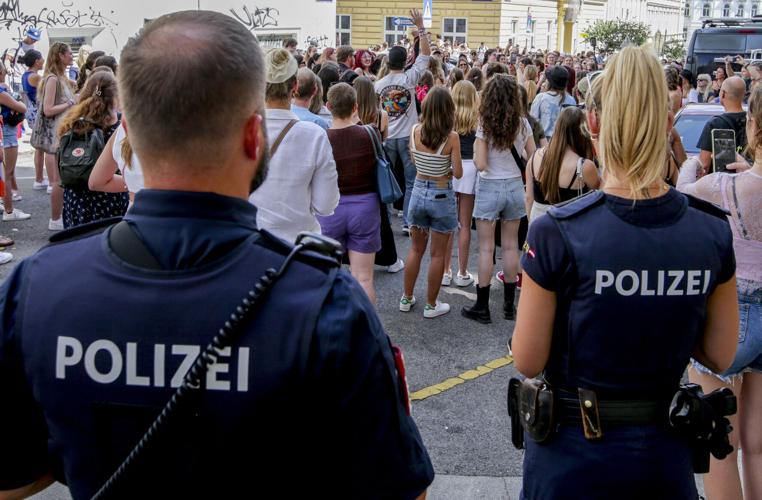
Police officers stand near gathering swifties Aug. 9 in Vienna after officials announced arrests in an apparent plot to attack an event in city such as the Taylor Swift concerts, which were canceled because of the threat.
Kids from all backgrounds
Aissaoui, the child's lawyer, said the trial was so tough on the 12-year-old that the hearing had to be paused twice because he was so distraught. He says the boy isn't violent and was simply a victim of apps and other digital tools that expose kids to extremist content.
"He was directed from site to site, and so on and so forth, until he came across things he should never have seen," the lawyer said.
The boy is now in residential care without access to social networks, with specialized educators and regular visitation rights for his parents, the prosecutor told AP.
Counterterrorism investigators say they're dealing with kids from an array of backgrounds. Some have behavioral difficulties and some tend to be loners whose social interactions are largely virtual, but others raise no concerns with their behavior before it draws police attention.
___