More ships than ever are abandoned around the world by their owners, according to the United Nations’ labor and maritime organizations, leaving thousands of workers stuck on board without pay or the means to travel home to their families.
Cases doubled in the past three years, affecting more than 3,000 seafarers on about 230 ships in 2024, according to an Associated Press analysis of U.N. data. Last year’s figures could rise even further, given the time that can elapse before vulnerable, frustrated workers reach out to report their plight.

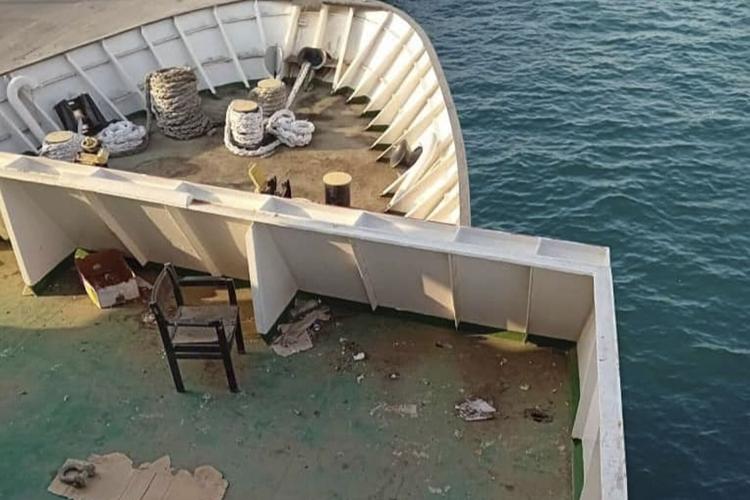
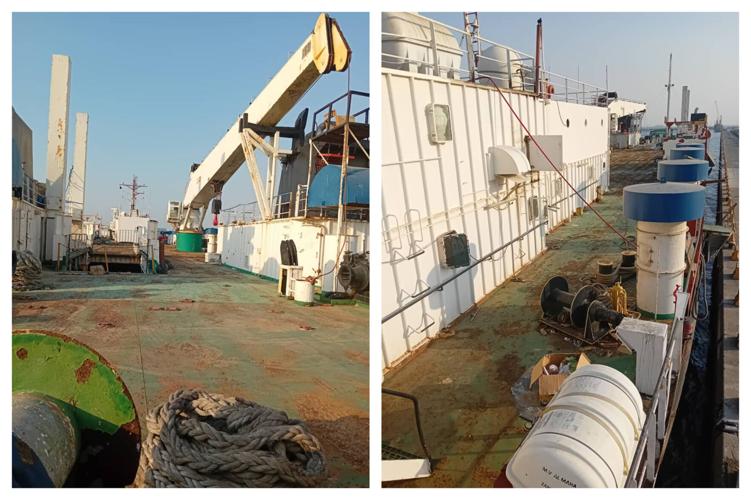
The deck of the cargo ship Al-Maha, abandoned by its owners, in January 2024 at the seaport of Jeddah, Saudi Arabia. Saleh lived and worked on the Al-Maha for nearly a decade without pay.
By international guidelines, workers are considered abandoned if shipowners fail to pay two or more months of wages or provide basic supplies, or otherwise stop communicating with the crew.
“The only leverage seafarers have sometimes is to stay on a vessel until they get paid,” said Helen Meldrum, a ship inspector with the International Transport Workers’ Federation, which advocates for ship workers’ rights.
People are also reading…
It’s a phenomenon rarely visible from shore, and one hitting hardest the smaller shipping companies servicing less profitable trade routes.
Many crews reporting a lack of pay are on corroded ships built decades ago. The top countries for cases last year were the United Arab Emirates, Turkey, Egypt and Saudi Arabia.
The worst cases saw entire crews suffering weeks without adequate food or fresh water, or living on dark ships without electricity. Some workers languish on board for years, such as Abdul Nasser Saleh, whom the Associated Press profiled last year in a story exploring abandonment in U.S. ports and abroad.

The deck of the cargo ship Al-Maha, abandoned by its owners, in January 2024 at the seaport of Jeddah, Saudi Arabia.
The AP found shipowners often stopped paying workers when their costs skyrocketed or business dried up. Owners commonly left ships docked in ports where crews lacked immigration paperwork to step foot on land or at anchorages only reachable by boat.
The number of abandonment cases in 2024 surpassed the earlier record set in 2023.
Governments and organizations like Meldrum’s can report abandoned ships to the U.N., which verifies the basic facts and petitions the owner and relevant authorities to find a resolution.
Meldrum recently appealed to authorities for help getting proper food, fuel and back-pay for crews on three cargo ships run by a company called Friends Shipping. Workers on the Sister 12, now moored off the coast of Yemen, have been confined to the ship for more than a year without receiving a paycheck, according to her review.
“They’re essentially imprisoned on these vessels,” Meldrum said. “It goes way beyond exploitation.”

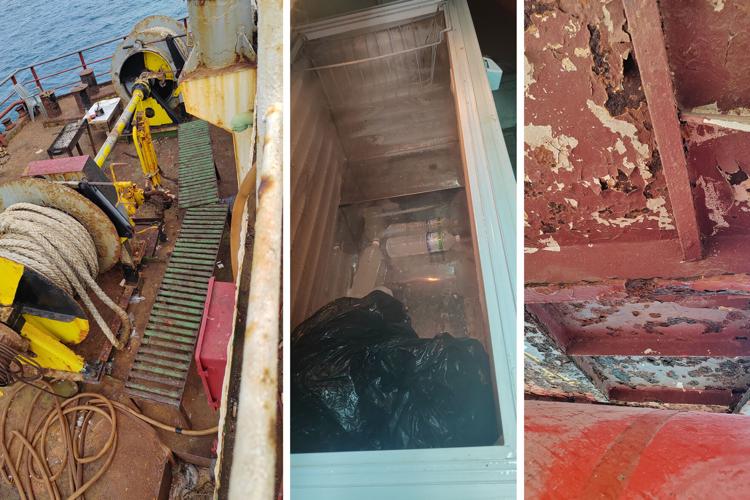
Conditions on the Sister 12, a cargo ship whose workers say they haven't been paid in more than a year.
Abdul Razzaq Abdul Khaliq, a Syrian sailor on board the Sister 12, wrote to AP over WhatsApp that the ship was full of insects and the crew had to use seawater for bathing. Photos and videos he shared show the faucets spewing cloudy brown water, rust blanketing the deck and only a few rotting pieces of produce in the pantry.
“(T)here is no food on the ship, there is no water, there is no life,” he wrote.
Friends Shipping, which has offices in Turkey and Dubai, has a pattern of abandonment linked to its fleet. Nineteen of the 22 ships listed on its website were named in abandonment cases, according to U.N. data, though some of those ships since may have been sold.
Meldrum said Friends Shipping hires workers who are unaware of the company’s reputation, then leaves them in such dire conditions that many are willing to go home at the first chance — even without pay. A new crew will be staffed and the same thing happens, she said.

The galley and dining area of the cargo ship Al-Maha, abandoned by its owners, in Jan. 2024 at the seaport of Jeddah, Saudi Arabia.
Friends Shipping didn’t respond to AP’s questions about abandonment on its fleet or the welfare of its crews. A person who responded to messages sent to the company’s WhatsApp number in Turkey said provisions were supplied to the crew on the Sister 12 and all workers on the ship would be disembarked, without providing details.
Despite global treaties on labor rights, there are few avenues for holding owners accountable in an industry where ships are often registered under nondescript shell companies and fly the flags of countries unrelated to their operations.
Flag registries are expected to act as first responders to help repatriate seafarers and ensure they have food and medical care, according to U.N. guidelines. A decade-old amendment to the Maritime Labor Convention signed by more than 90 nations also requires the flag states to vouch for the ships they register by requiring insurance to cover several months of wages if business goes south.
AP’s reporting found many flag states still don’t intervene. Panama, Palau and Tanzania each registered dozens of the ships reported as abandoned in 2024.

Captain of the cargo ship Monarch Princess, Ievgen Slautin of Ukraine, speaks Feb. 5, 2024, during an interview in Fort Lauderdale, Fla. He and his crew were left hanging when the ship's owners became insolvent and stopped paying wages or dockage fees.
The yearslong rise in abandonment cases could mean more seafarers are becoming willing to report abuse by their employers, but the overall figures likely underrepresent the true picture of worker exploitation at sea. Cases spiked during the COVID-19 pandemic and kept rising as shipowners are pinched by inflation and other rising costs.
The ITF, the group that advocates for workers, said it helped workers recover more than $10 million in back pay last year. Inspectors are still fighting for another $10 million they say is owed.
Photos: Sails make comeback in shipping industry

The sailboat 'Grain de Sail II' sails Nov. 6 off Saint Malo, western France. Seafaring pioneers are leading a comeback for wind power in the shipping industry in order to make a dent its huge carbon emissions.

Dockers load pallets onto the sailboat 'Grain de Sail II' at the port of Saint Malo, western France, Nov. 8, 2024. (AP Photo/Thibault Camus)

Sailors Tim Padellec, left, and Charles Mirassou stand on the deck of the sailboat 'Grain de Sail II' as he sails off Saint Malo, western France, Nov. 6, 2024. (AP Photo/Thibault Camus)

A sailor stands on the boom to check the folding of the mainsail of the sailboat 'Grain de Sail II' as it sails off Saint Malo, western France, Nov. 6, 2024. (AP Photo/Thibault Camus)

The sailboat 'Grain de Sail II' sails Nov. 6 off Saint Malo, western France.

A fenwick brings a pallet to be loaded on the sailboat 'Grain de Sail II' on Nov. 8 at the port of Saint Malo, western France.

Sailor Leo Jouglet folds the ropes aboard the sailboat 'Grain de Sail II' in western France.

Grain de Sail general manager Jacques Barreau speaks during an interview Nov. 8 in Saint Malo, France.

A sailor stands on the boom to check the folding of the mainsail of the sailboat ''Grain de Sail II' as it sails Nov. 6 off Saint Malo, western France.

Yann Jourdan, captain of the sailboat 'Grain de Sail II,' stands on the deck as he sails off Saint Malo, western France.

The sailboat 'Grain de Sail II' sails off Saint Malo, western France, Nov. 6, 2024. (AP Photo/Thibault Camus)

Sailor Goulwen Josse helps to place a pallet in the sailboat's 'Grain de Sail II' hold at the port of Saint Malo, western France, Nov. 8, 2024. (AP Photo/Thibault Camus)