While Twitter has always struggled with combating misinformation about major news events, it was still the go-to place to find out what’s happening in the world. But the Israel-Hamas war has underscored how the platform, now transformed into X, has become not only unreliable but is actively promoting falsehoods.
Experts say that under Elon Musk the platform deteriorated to the point that it’s not just failing to clamp down on misinformation but is favoring posts by accounts that pay for its blue-check subscription service, regardless of who runs them.
If such posts go viral, their blue-checked creators can be eligible for payments from X, creating a financial incentive to post whatever gets the most reaction — including misinformation.

Workers install lighting on an “X” sign atop the company headquarters, formerly known as Twitter, on July 8 in San Francisco.
Ian Bremmer, a prominent foreign policy expert, posted on X that the level of disinformation on the Israel-Hamas war “being algorithmically promoted” on the platform “is unlike anything I’ve ever been exposed to in my career as a political scientist.”
People are also reading…
And the European Union’s digital enforcer wrote to Musk about misinformation and “potentially illegal content” on X, in what’s shaping up to be one of the first major tests for the 27-nation bloc’s new digital rules aimed at cleaning up social media platforms. He later sent a similar, though toned-down, version of the letter to CEO Mark Zuckerberg of Meta, which owns Facebook and Instagram.
Rivals such as TikTok, YouTube and Facebook also are coping with a flood of unsubstantiated rumors and falsehoods about the conflict, playing the usual whack-a-mole that emerges every time a news event captures the world’s attention.
“People are desperate for information and social media context may actively interfere with people’s ability to distinguish fact from fiction,” said Gordon Pennycook, an associate professor of psychology at Cornell University who studies misinformation.
For instance, instead of asking whether something is true, people might focus on whether something is surprising, interesting or even likely to make people angry — the sorts of posts more likely to elicit strong reactions and go viral.

Supporters wave the Palestine flag Monday at a march in Toronto. Major social media sites are coping with a flood of misinformation about the Israel-Hamas war.
The liberal advocacy group Media Matters found that since Saturday, subscribers to X’s premium service shared at least six misleading videos about the war. This included out-of-context videos and old ones purporting to be recent — that earned millions of views.
TikTok, meanwhile, is “almost as bad” as X, said Kolina Koltai, a researcher at the investigative collective Bellingcat. She previously worked at Twitter on Community Notes, its crowd-sourced fact-checking service.
Emerging platforms, meanwhile, are still finding their footing in the global information ecosystem, so while they might not yet be targets for large-scale disinformation campaigns, they also don’t have the sway of larger, more established rivals.
Meta’s Threads, for instance, is gaining traction among users fleeing X, but the company has so far tried to de-emphasize news and politics in favor of more “friendly” topics.
“One of the reasons why you’re not hearing a lot about Facebook is because they have something called demotions,” said Alexis Crews, a resident fellow at the Integrity Institute who worked at Meta until this spring. If something is labeled as misinformation, the system will demote it and send it to independent fact-checkers for assessment.
Crews cautioned that if Meta — which cut costs and laid off thousands of workers — deprioritizes its fact-checking program, misinformation could flood its platforms again. The Associated Press is part of Meta’s fact-checking program.

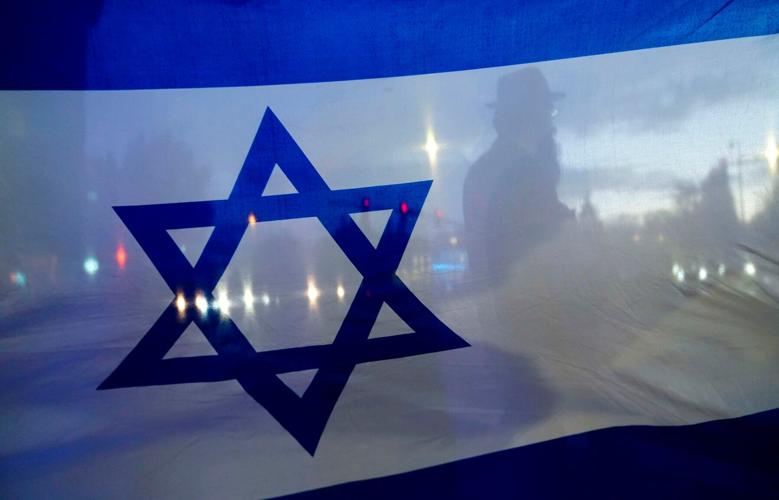
A demonstrator is silhouetted behind a flag of Israel during a rally in support of Israel on Monday in Bellevue, Wash.
Meta and X did not immediately respond to AP requests for comment. TikTok said it dedicated resources to help prevent violent, hateful or misleading content, “including increased moderation resources in Hebrew and Arabic.” The company said it also works with independent fact-checkers to help assess the accuracy of material posted to its platform.
A post late Monday from X’s safety team said: “In the past couple of days, we’ve seen an increase in daily active users on @X in the conflict area, plus there have been more than 50 million posts globally focusing on the weekend’s terrorist attack on Israel by Hamas. As the events continue to unfold rapidly, a cross-company leadership group has assessed this moment as a crisis requiring the highest level of response.”
Still, real imagery and accounts of the carnage were intermingled with social media users pushing false claims and misrepresented videos.
“Every time there is some major event and information is at a premium, we see misinformation spread like wildfire,” Pennycook said. “There is now a very consistent pattern, but every time it happens there’s a sudden surge of concern about misinformation that tends to fade away once the moment passes.”
“We need tools that help build resistance toward misinformation prior to events such as this,” he said.
Koltai recommended “going to your traditional name brands and news media outlets like AP, Reuters, who are doing things like fact checking” and active reporting on the ground.
In Europe, major social media platforms are facing stricter scrutiny over the war.
Britain’s Technology Secretary Michelle Donelan summoned the U.K. bosses of X, TikTok, Snapchat Google and Meta for a meeting Wednesday to discuss “the proliferation of antisemitism and extremely violent content” following the Hamas attack. She demanded they outline actions they’re taking to quickly remove content that breaches the U.K.’s online safety law or their terms and conditions.
How to take a break from social media
Be easy on yourself and ask for help about social media use

"If you're reading this article, kudos to you for thinking about reevaluating social media," Agarwal said Trying to meet your goals is all about celebrating the small wins.
At the least, set small benchmarks for yourself like spending 10 minutes less on social media than the day before. The right amount of social media time is different for everyone since some people actually use these apps to brand and help market themselves. Find your own social media sweet spot, and remember, even if you scroll too much on social media one day, you can try and meet your goal tomorrow.
Another way to keep you on track is to share your goal with someone you trust. A friend or loved one who can kindly nudge you when they notice you've been on social media for awhile.
Helpful exercise to remind you what you're missing by scrolling

Scrolling through social media while hanging out with friends isn't uncommon nowadays, but when you think about how unengaged you are in those moments, it can put social media use into perspective.
Agarwal suggests the next time you're in a room with others at a family or friends gathering and you see yourself scrolling through social media instead of engaging with others, take a minute to physically remove yourself from the room and isolate in another room. Listen and feel how much you may be missing out on.
"What that does is it gives your brain a signal. If you force yourself to leave the room, you realize how much you're using that app and missing out on other people," Agarwal said. "It's a good physical reminder of being present in the moment and not on your on your phone and scrolling through social media."
Use your phone's screen-time tracking feature and limit social media use

Most smart phones nowadays track your screen-time and usage already. It's a good idea to figure out your average screen time per day so you have a benchmark that you can work on.
On iPhone, you can go into your "Screen Time" settings, which displays the amount of time you spend on each app and allows you to put timers on specific apps to limit how long you're on them. Android phones have similar features in the "Digital Wellbeing" settings. Additionally, Facebook, Instagram and TikTok offer the same features within the app settings themselves.
Physically distance yourself from your phone and apps

When you're at home and have free time, put your phone in a drawer or somewhere you can't see it. Oftentimes limiting the ability to quickly and easily pick up your phone is enough to keep you off of social media, said Agarwal. If your phone is what keeps your hands from fidgeting, try to have some objects around the house that relieve stress, like a stress ball, fidget toy or yarn and crochet hooks.
Hide your social media apps on your phone by placing the app on the second or third page of your home screen or bury the app inside an "app folder" with a bunch of others. When you're waiting in line or have a free five minutes, instead of grabbing your phone — take in the view, practice some breathing exercises or read a book.
Benefits of taking a social media break

Ever hear of "text neck?" It's the result of looking down at our phones when scrolling or texting, straining the neck muscles over a long period of time. Taking a break from social media helps relieve neck pain and gives your eyes a break from bright screens.
People may also be more connected than ever through social media, but a 2018 University of Pennsylvania study found that people who limit their time on social media experience less depression and feelings of loneliness.
Taking a break from social media will give you better sleep, too. Research suggests that nighttime use of social media is driven by FOMO (fear of missing out), and keeps people scrolling longer at night instead of going to sleep.
Reevaluate what you want out of social media

What is the reason that brought you onto social media? This is the question Agarwal said to ask yourself when trying to figure out if it's time to take a social media break. If you're not getting the same satisfaction from the reason you use social media, it may be time to look for alternatives.
If you joined social media to...
1. Find community: Look for clubs and groups in your neighborhood where you can meet and interact with others IRL (in real life).
2. Be inspired: Consume other forms of media like magazines, books, podcasts, movies or live events.
3. Buy and sell things: Try using other apps, like OfferUp or NextDoor, or visiting local events and marketplaces in person.
Two and a half hours.

Two and a half hours — that's the average amount of time people spend on social media each day.
It may not sound like a lot, but that time can really add up — and at what cost? Social media has proven negative effects on mental health (especially for teens), self-image and for some is a huge time-waster.
University of Penn's Anish Agarwal, an emergency physician, researcher, and deputy director for the Center for Digital Health, said it's important to constantly be reevaluating the role social media plays in daily life.
The bottom line: taking a break from social media is healthy for you. Read on for guidance and tools to help you limit screen time on these apps.