Iranian sniper rifles. AK-47 assault rifles from China and Russia. North Korean- and Bulgarian-built rocket-propelled grenades. Anti-tank rockets secretly cobbled together in Gaza.
An Associated Press analysis of more than 150 videos and photos taken in the three months of combat since Hamas launched its Oct. 7 surprise attack on Israel shows the militant group has amassed a diverse patchwork arsenal of weapons from around the world — much of it smuggled past a 17-year blockade that was aimed at stopping just such a military buildup.

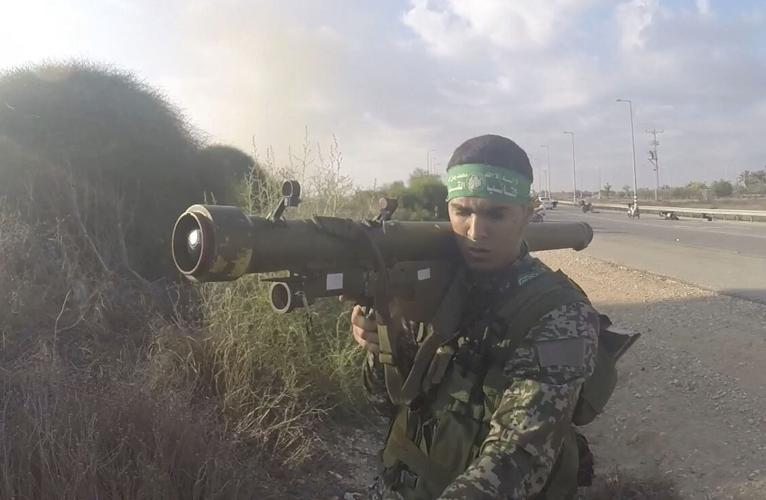
A Hamas fighter holds a Russian-designed 9M32 Strela anti-aircraft missile in this image from body camera video during the Oct. 7, 2023, surprise attack on Israel.
Those weapons have proved deadly during weeks of intense urban warfare in Gaza, where Hamas fighters are typically armed only with what they can carry and employ hit-and-run tactics against lopsided Israeli advantages in arms and technology. Hamas propaganda videos posted over the past few weeks appear to show the shootings of Israeli soldiers recorded through the scopes of sniper rifles.
People are also reading…
“We are searching everywhere for weapons, for political support, for money,” Hamas spokesman Ghazi Hamad recently said in an interview with the AP, declining to discuss specifically who has been providing its weapons or how they were snuck into Gaza.
Experts who reviewed the images for AP were able to identify distinguishing features and markings that show where many of the weapons wielded by Hamas fighters were manufactured. But such an analysis does not provide evidence of whether they were provided by the governments of those countries or purchased in a thriving Middle East black market, with weapons and components listed for sale on social media in such war-torn countries as Iraq, Libya and Syria.
What is clear, however, is that many of the images show Hamas militants toting weapons that appear to be relatively new, evidence the group has found ways of getting arms past the air-and-sea blockade of the Gaza Strip — possibly by boat, through tunnels or concealed in shipments of food and other goods.

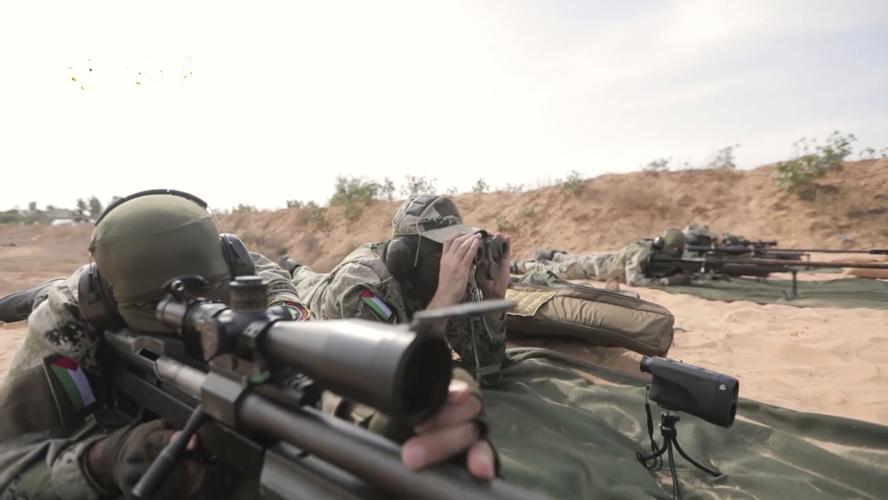
Hamas militants use domestic copies of the AM-50 Sayyad, an Iranian-made a sniper rifle, in this Dec. 20 image from video.
“The majority of their arms are of Russian, Chinese or Iranian origin, but North Korean weapons and those produced in former Warsaw Pact countries are also present in the arsenal,” said N.R. Jenzen-Jones, an expert in military arms who is director of the Australian-based Armament Research Services.
Despite the buildup, Israel maintains a massive advantage, with a powerful array of modern tanks, artillery, helicopter gunships and an air force of U.S.-made fighter jets. Israel’s military says it has killed more than 7,000 Hamas militants, compared to the deaths of at least 510 of its own soldiers, more than 330 of whom were killed in Hamas’ initial attack. The Health Ministry in Hamas-run Gaza says more than 23,000 Palestinians have died in the fighting, though it does not differentiate between civilians and combatants.
Imagery reviewed by the AP showed a Hamas arsenal featuring weapons ranging from small arms and machine guns to shoulder-fired surface-to-air missiles and craft-produced anti-tank projectiles.

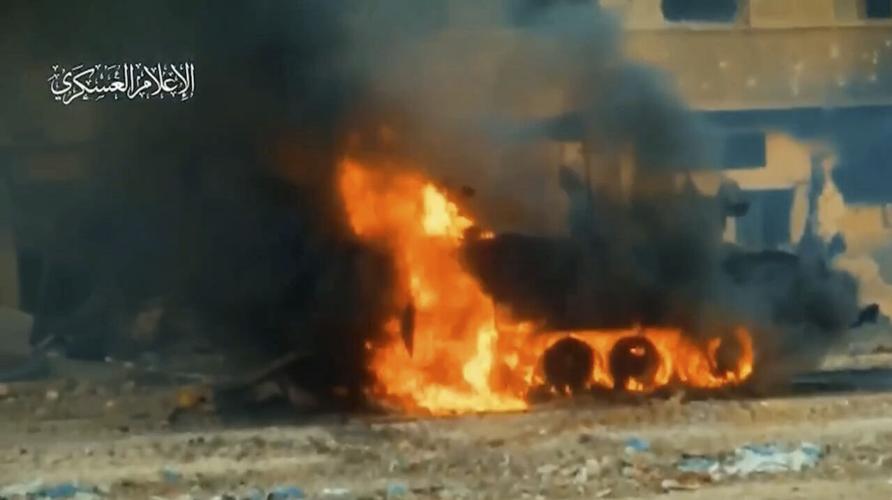
An Israeli armored vehicle burns following an attack by militants in Gaza City in this Dec. 6 image from video released by Hamas.
Among the most distinctive is the oversized AM-50 Sayyad (Arabic for “hunter”), an Iranian-made a sniper rifle that fires a .50- caliber round powerful enough to punch through up to an inch of steel. It has previously been spotted on battlefields in Yemen, Syria, and in the hands of Shia militias in Iraq.

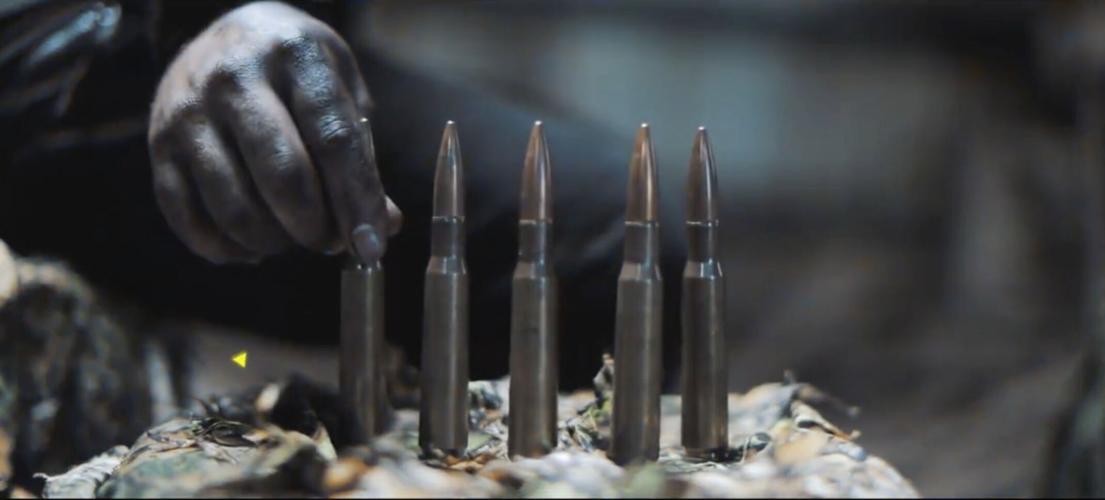
A fighter lines up cartridges for a large sniper rifle in this image from a propaganda video released by Hamas in October 2023.
Hamas fighters have also been seen carrying an array of Soviet-era weapons that have been copied and manufactured in Iran and China. They include variants of the Russian-designed 9M32 Strela, a portable heat-seeking anti-aircraft missile system.
Jenzen-Jones said a grip stock on one of the missile launchers a fighter was seen holding is distinctive to a variant manufactured in China and used by the Iranian military and its allies, including Hezbollah in Lebanon, a group closely aligned with Hamas.
Weapons recovered from Hamas fighters by the Israel Defense Forces include what appear to be Italian-designed TC/6 anti-tank mines. However, Seán Moorhouse, a former British Army officer and explosive ordinance disposal expert, said it too had been copied by Iran’s arms industry.
The Israel Defense Forces and U.S. officials have long accused Iran of supplying money, training and weapons to Hamas and allied militants in Gaza, including the Palestinian Islamic Jihad.
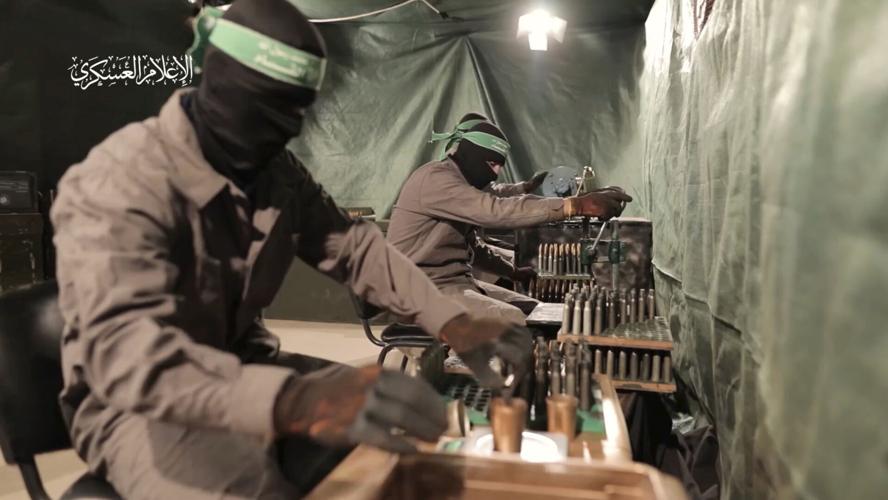
Iranian representatives at the United Nations did not respond to emails from the AP about whether their government supplied weapons to Hamas, including AM-50 Sayyad sniper rifles. However, a week after AP sought comment, Hamas posted a video purporting to show militants in Gaza using machining equipment to make their own copies of the rifle.
Master gunsmith Don Fraley reviewed that Dec. 20 video and said it would be nearly impossible for Hamas to manufacture a safe and accurate .50-caliber sniper rifle with the rudimentary equipment shown.

Hamas militants use machining equipment to make their own domestic copies of the AM-50 Sayyad, an Iranian-made a sniper rifle that fires a .50- caliber round powerful enough to punch through up to an inch of steel, in this Dec. 20 image from video.
“You’re going to have to be a rock star at machine shop work. And I didn’t see any of that," said Fraley, a former U.S. Army Special Forces soldier and sniper for the Kentucky State Police. "These folks are just trying to cover their tracks.”
An Israeli military official familiar with Hamas’ arsenal said the group uses a combination of smuggled “off-the-shelf” weaponry, including AK-47s, RPGs and anti-aircraft missiles, as well as a large collection of home-grown weapons often made with easily accessible civilian materials.
“There is a huge military/defense industry inside the Gaza Strip,” said the official, who spoke on condition of anonymity under military briefing rules.
Israel-Hamas war at 100 days

Police officers evacuate a woman and a child Oct. 7 from a site hit by a rocket fired from the Gaza Strip in Ashkelon, southern Israel.

Palestinians wave their national flag Oct. 7 and celebrate by a destroyed Israeli tank at the southern Gaza Strip fence east of Khan Younis.

Fire and smoke rise Oct. 8 following an Israeli airstrike in Gaza City.

Israelis evacuate a site struck by a rocket fired Oct. 9 from the Gaza Strip in Ashkelon, southern Israel.

An Israeli firefighter kneels to compose himself Oct. 9 after he and his colleagues extinguished cars set on fire by a rocket fired from the Gaza Strip in Ashkelon, Israel.

Palestinians inspect the rubble of the Yassin Mosque on Oct. 9 after it was hit by an Israeli airstrike at Shati refugee camp in Gaza City.

An Israeli soldier walks Oct. 11 by a house destroyed in fighting with Hamas militants in kibbutz Be'eri.

Antonio Macías' mother cries over her son's body covered with the Israeli flag Oct. 15 at Pardes Haim cemetery in Kfar Saba, near Tel Aviv, Israel. Macias was killed by Hamas militants Oct. 7 while attending a music festival in southern Israel.

Mourners gather around the five coffins of the Kotz family during their funeral Oct. 17 in Gan Yavne, Israel. The family was killed by Hamas militants on Oct. 7 at their house in Kibbutz Kfar Azza near the border with the Gaza Strip.

Rockets are fired from the Gaza Strip toward Israel over destroyed buildings Oct. 19 following Israeli airstrikes on Gaza City, central Gaza Strip.

An Israeli soldier hugs his partner Oct. 20 near the border with the Gaza Strip, southern Israel.

Palestinians walk Oct. 20 by buildings destroyed in an Israeli bombardment on al-Zahra, on the outskirts of Gaza City.

Palestinians evacuate a building hit Oct. 22 in an Israeli bombardment of the Gaza Strip in Rafah.

Palestinians inspect the rubble of destroyed buildings Oct. 26 following Israeli airstrikes on the town of Khan Younis, southern Gaza Strip.

Israeli security forces on Nov. 1 inspect charred vehicles burned in the Oct. 7 cross-border attack by Hamas militants outside the town of Netivot, southern Israel.

Kenzi al Madhoun, a 4-year-old wounded in an Israeli bombardment, lies Nov. 1 at Al Aqsa Hospital in Deir al Balah City, Gaza Strip.

An Israeli soldier stands in an apartment Nov. 8 during a ground operation in the Gaza Strip.

Palestinians flee Nov. 11 to the southern Gaza Strip on Salah al-Din Street in Bureij, Gaza Strip.

Palestinians wounded in an Israeli bombardment of the Gaza Strip wait for treatment Nov. 15 at a hospital in Khan Younis.

Palestinians displaced by the Israeli bombardment of the Gaza Strip seek cover from a winter rainfall Nov. 19 at a U.N. tent camp in the southern town of Khan Younis, Gaza Strip. Hundreds of thousands of Palestinians fled their homes in northern Gaza as Israel moved ahead with a ground offensive against the ruling Hamas militant group.

Palestinians flee to northern Gaza as Israeli tanks block the Salah al-Din road Nov. 24 in the central Gaza Strip, as a temporary cease-fire begins.

A Red Cross vehicle carrying Israeli hostages drives by Nov. 25 at the Gaza Strip crossing into Egypt in Rafah.

An Israeli soldier looks at Palestinians fleeing south Nov. 26, the third day of a temporary cease-fire between Hamas and Israel, at Salah al-Din road in central Gaza Strip.

Israelis embrace Nov. 28 next to photos of people killed and taken captive by Hamas during militants' Oct. 7 rampage through the Nova music festival in southern Israel, at the site of the event near kibbutz Re'im.

A Palestinian woman gestures Dec. 7 following Israeli airstrikes in Khan Younis refugee camp, southern Gaza Strip.

Israeli soldiers on Dec. 8 stand by a truck packed with bound and blindfolded Palestinian detainees rounded up for interrogation in northern Gaza during a search for Hamas fighters.

Palestinians mourn Dec. 20 outside a morgue in Khan Younis for relatives killed in the Israeli bombardment of the Gaza Strip.

Palestinians line up for a free meal Dec. 21 in Rafah, Gaza Strip. International aid agencies say Gaza is suffering from shortages of food, medicine and other essential supplies as a result of the war.

A makeshift tent camp Jan. 1 where Palestinians displaced by the Israeli bombardment of the Gaza Strip are staying in the Muwasi area.

With the U.S Capitol in the background, demonstrators rally Jan. 13 during the March on Washington for Gaza at Freedom Plaza in Washington. The protest was part of a global day of action ahead of the Israel-Hamas war's 100-day mark.