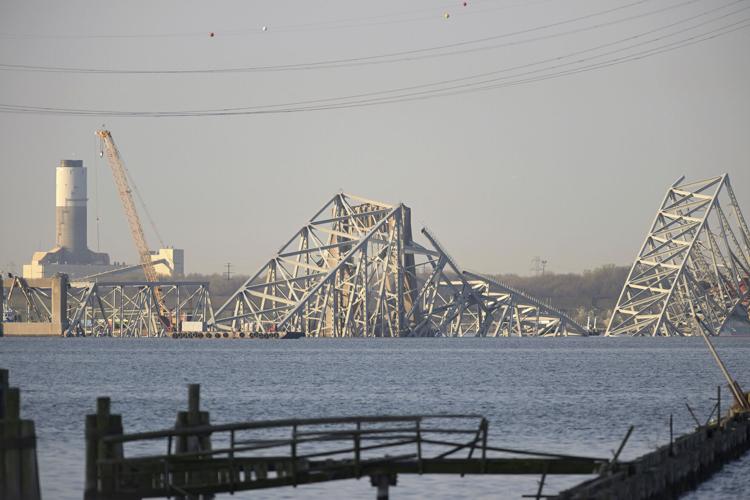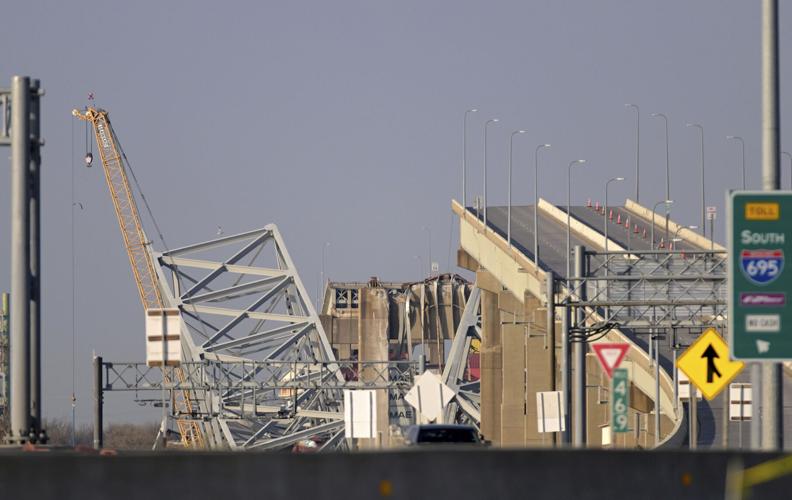
BALTIMORE — A crane that can lift 1,000 tons, described as one of the largest on the Eastern Seaboard, appeared Friday near the site of a collapsed highway bridge in Baltimore.
A second crane that can lift 400 tons was expected to arrive Saturday, officials said earlier, as crews prepare to begin clearing wreckage that stymied the search for four missing workers who are presumed dead and blocked ships from entering or leaving the city’s vital port.
Maryland Gov. Wes Moore called the Francis Scott Key Bridge’s collapse following a freighter collision this week an “economic catastrophe” and described the challenges ahead for recovering the workers’ bodies and clearing tons of debris to reopen the Port of Baltimore.
“What we’re talking about today is not just about Maryland’s economy; this is about the nation’s economy,” Moore said at a news conference, the massive crane standing in the background. “The port handles more cars and more farm equipment than any other port in this country.”
People are also reading…

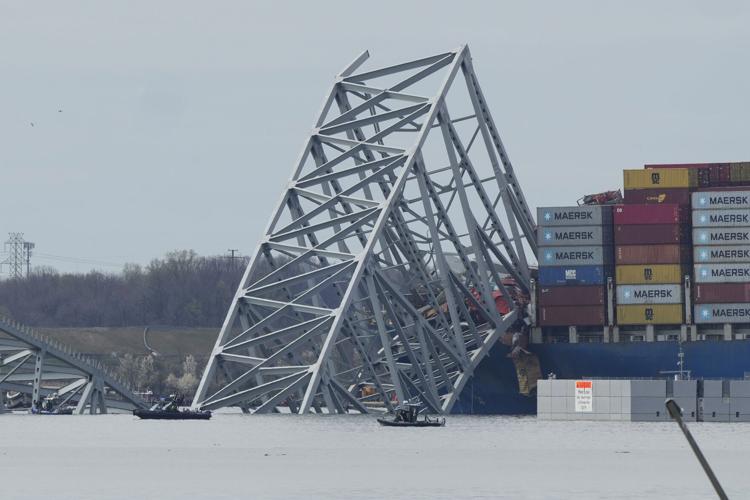
A crane is seen Friday near the wreckage of the Francis Scott Key Bridge in Baltimore.
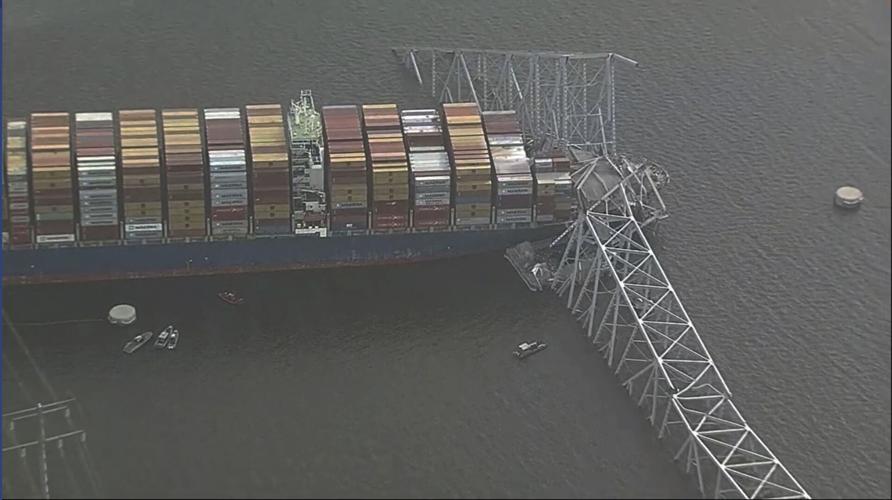
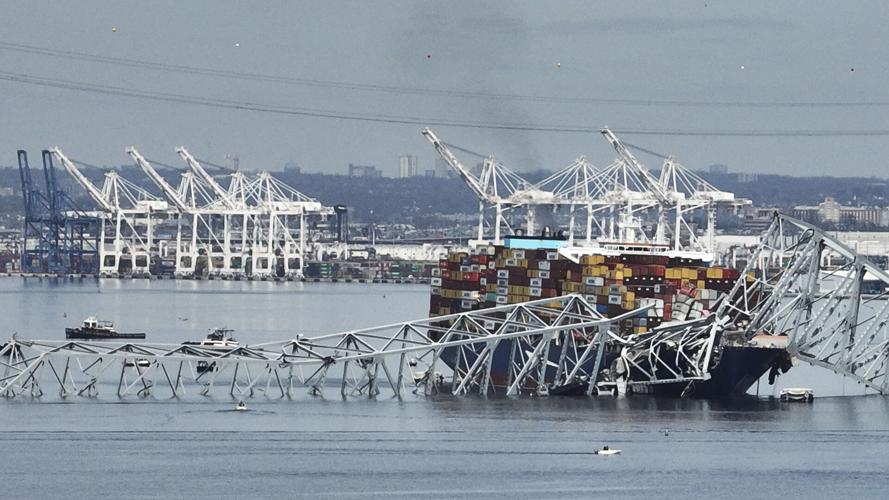
Moore went to the scene Friday and said he saw shipping containers ripped apart “like papier-mache.” The broken pieces of the bridge weigh as much as 4,000 tons, Moore said, and teams will need to cut into the steel trusses before they can be lifted from the Patapsco River.
Equipment on hand will include seven floating cranes, 10 tugboats, nine barges, eight salvage vessels and five Coast Guard boats, Moore said. Much of the vessels are coming from the Navy.
“To go out there and see it up close, you realize just how daunting a task this is. You realize how difficult the work is ahead of us,” he said. “With a salvage operation this complex — and frankly with a salvation operation this unprecedented — you need to plan for every single moment.”
Water conditions prevented divers from entering the river, Moore said. When conditions change, they will resume efforts to recover the construction workers, who were repairing potholes on the bridge when it fell early Tuesday.
“We have to bring a sense of closure to these families,” Moore said.

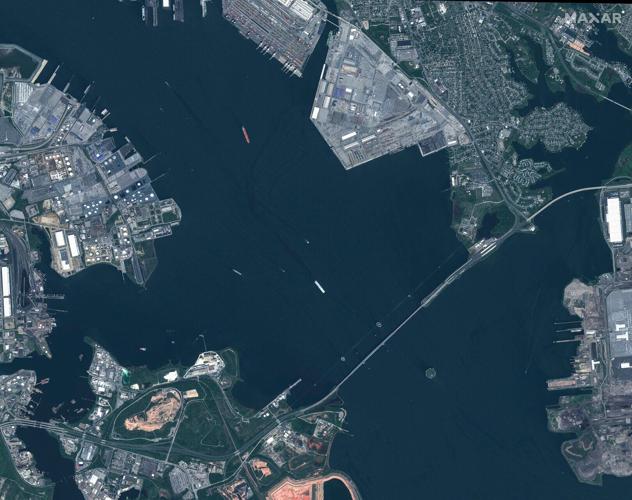
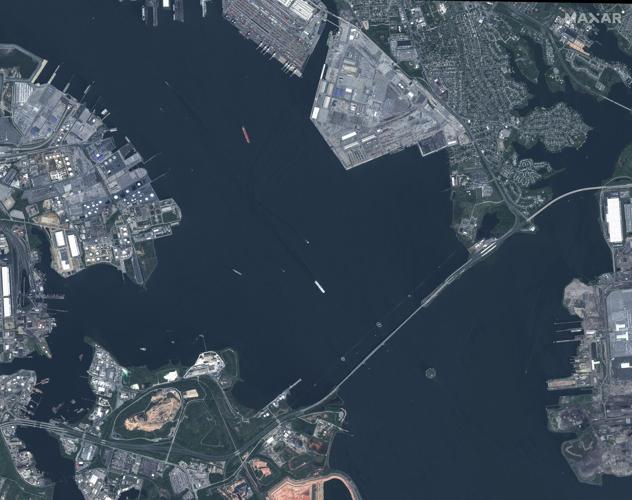
This satellite image shows the Francis Scott Key Bridge on May 6 in Baltimore.
The Coast Guard is focused on removing what’s left of the bridge and the container ship that struck it in order to clear the port’s shipping lanes, Rear Adm. Shannon Gilreath said.
Teams of engineers from the Army Corps of Engineers, the Navy and the Coast Guard — along with some private-sector experts — are assessing how to “break that bridge up into the right-sized pieces that we can lift,” Gilreath said.
Maryland’s Department of Transportation is already focused on building a new bridge and is “considering innovative design, engineering and building methods so that we can quickly deliver this project,” Secretary Paul J. Wiedefeld said.
Adam Ortiz, the Environmental Protection Agency’s mid-Atlantic Regional Administrator, said there is no indication of active releases from the ship, nor of the presence in the water of materials hazardous to human health.
The victims of the bridge collapse were from Mexico, Guatemala, Honduras and El Salvador, officials said.
At least eight people initially went into the water when the ship struck the bridge column, and two of them were rescued.

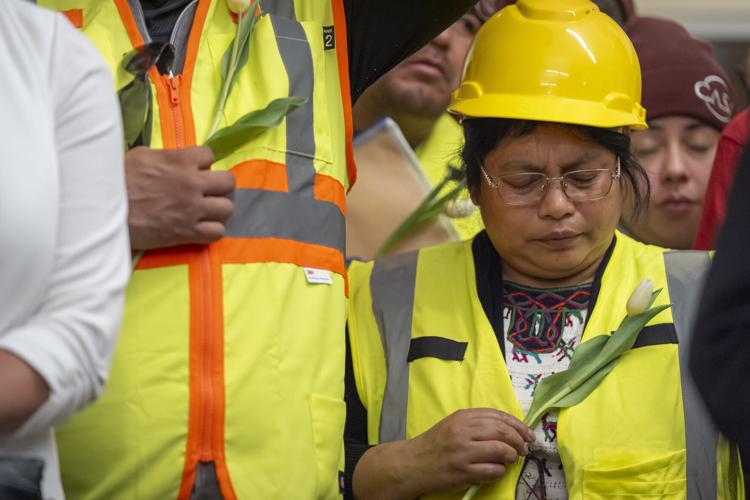
Construction workers and supporters hold flowers Friday during a moment of prayer at a vigil and news conference by CASA of Maryland, a community advocacy group, to remember the six workers killed in the collapse of the Francis Scott Key Bridge and to highlight the difficult conditions faced by immigrant construction workers, in Baltimore, Md.
Divers later recovered the bodies of two men from a pickup truck in the river, but the debris complicated efforts to find the other four workers.
“The divers can put their hands on that faceplate, and they can’t even see their hands,” said Donald Gibbons, an instructor with Eastern Atlantic States Carpenters Technical Centers. “So we say zero visibility. It’s very similar to locking yourself in a dark closet on a dark night and really not being able to see anything.”
Baltimoreans made morning stops at vantage points to watch for the cranes.
Ronald Hawkins, 71, who could see the bridge from his home, recalled watching its construction in 1972. It opened in 1977.
Now, with sadness, he stopped by an overlook in search of closure.
“I’m going to come up here every day, because I want to see the bridge coming up out of the water,” Hawkins said. “It’s a hurtin’ thing.”

A crane is seen Friday near the wreckage of the Francis Scott Key Bridge in Baltimore.
President Joe Biden’s administration approved $60 million in immediate aid, and Biden previously said the federal government will pay the full cost of rebuilding the bridge, which carried Interstate 695.
Ship traffic at the Port of Baltimore remains suspended, but the Maryland Port Administration said Friday that trucks were being processed at marine terminals.
Federal and state officials said the collision and collapse appeared to be an accident that came after the ship lost power. Investigators are still trying to determine why.
The crash caused the bridge to break and fall into the water within seconds. Authorities had just enough time to stop vehicle traffic but were unable to alert the construction crew.
The cargo ship Dali, managed by Synergy Marine Group, was headed from Baltimore to Sri Lanka. It is owned by Grace Ocean Private Ltd. and was chartered by Danish shipping giant Maersk.
The loss of a road that carried 30,000 vehicles a day and the port disruption will affect not only thousands of dockworkers and commuters, but also U.S. consumers, who are likely to feel the impact of shipping delays.
Scott Cowan, president of the International Longshoremen’s Association Local 333, said the union was scrambling to help its roughly 2,400 members whose jobs are at risk of drying up.
“If there’s no ships, there’s no work,” he said. “We’re doing everything we can.”
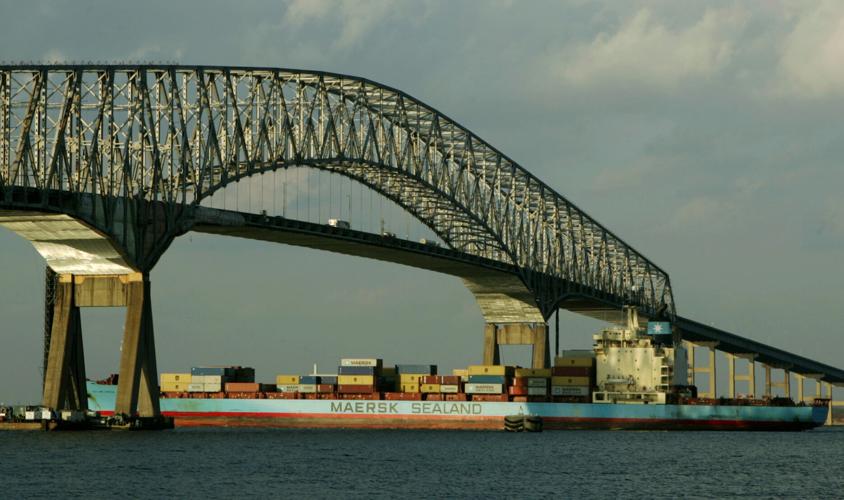
What to know about collapse of Baltimore’s famed Francis Scott Key Bridge
A cargo ship rammed into Baltimore’s Francis Scott Bridge early March 26, causing the conic span to collapse and the presumed deaths of six people. Here's what is known so far about the disaster:
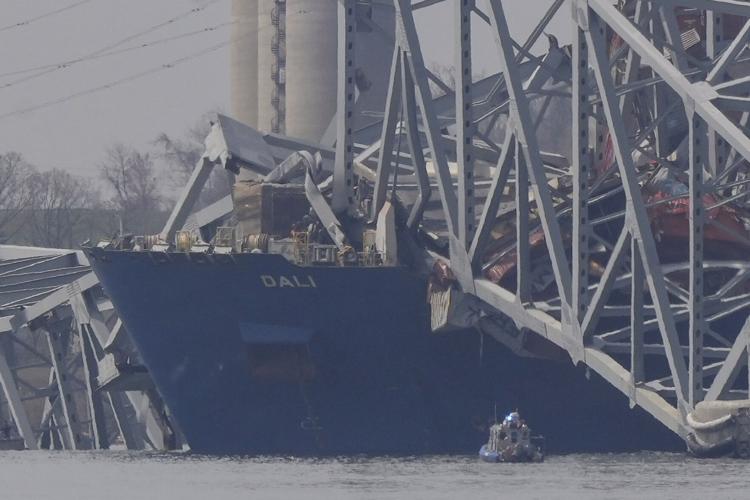
The operators of the Dali cargo ship issued a mayday call that the vessel had lost power moments before the crash, but the ship still headed toward the span at “a very, very rapid speed," Maryland Gov. Wes Moore said.
The 985-foot-long vessel struck one of the 1.6-mile bridge’s supports, causing the span to break and fall into the water within seconds.
Six construction workers who were filling potholes on the bridge were still missing Tuesday afternoon and presumed dead. Jeffrey Pritzker, executive vice president of Brawner Builders, said they were working in the middle of the span when it came apart.
An inspection of the Dali last June at a port in Chile identified a problem with the ship’s “propulsion and auxiliary machinery,” according to Equasis, a shipping information system. The deficiency involved gauges and thermometers, but the website’s online records didn’t elaborate.
The most recent inspection listed for the Dali was conducted by the U.S. Coast Guard in New York in September. The “standard examination” didn’t identify any deficiencies, according to the Equasis data.
The ship was moving at 8 knots, which is roughly 9 mph.
Given the vessel’s massive weight, it struck the bridge support with significant force, said Roberto Leon, a Virginia Tech engineering professor.
“The only way the post can resist it is by bending,” Leon said. “But it cannot absorb anywhere near the energy that this humongous ship is bringing. So it’s going to break.”
Last June, federal inspectors rated the 47-year-old bridge in fair condition. But the structure did not appear to have pier protection to withstand the crash, experts said.
“If a bridge pier without adequate protection is hit by a ship of this size, there is very little that the bridge could do,” Leon said.
Pictured: A container rests against wreckage of the Francis Scott Key Bridge on Tuesday, March 26, 2024, as seen from Sparrows Point, Md. (AP Photo/Matt Rourke)