

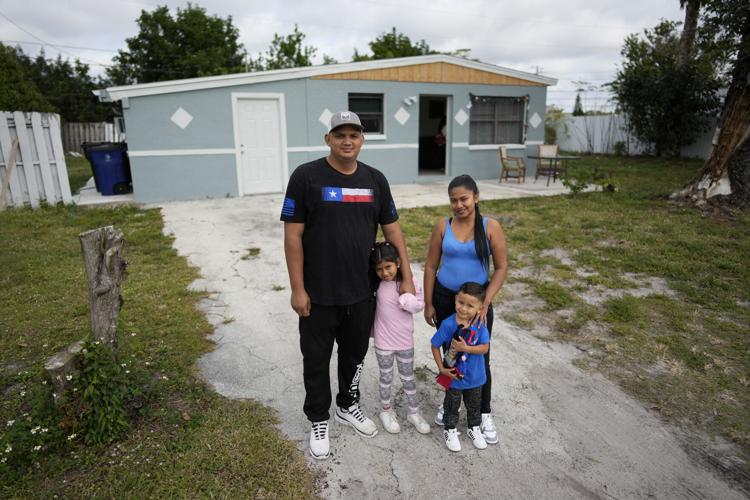
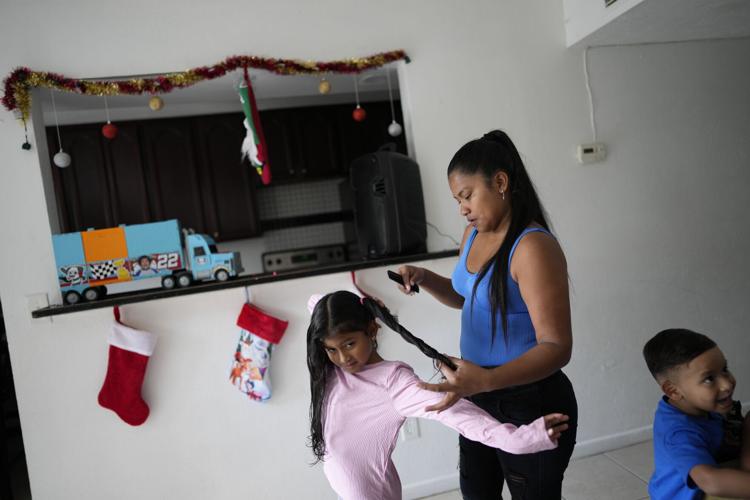
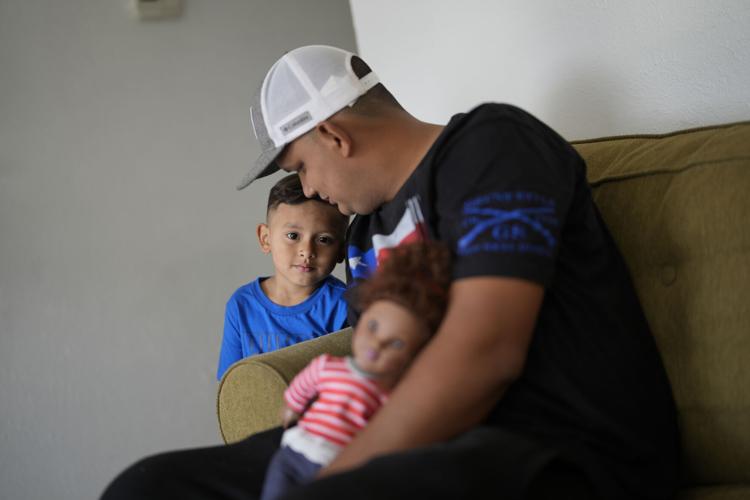
LEHIGH ACRES, Fla. — Five years ago, Alexis Llanos and his family fled Venezuela for Colombia, escaping death threats and political persecution. The family then planned to make the dangerous and deadly journey north, through the Darien jungle leading through Panama, with hopes of eventually crossing illegally into the United States.
Their plans changed when a friend mentioned a new migration program from the U.S. government that would allow them to stay put while they pleaded for a chance to come legally. It worked. After a four-month process that included medical exams and interviews with the United Nations and the U.S., Llanos, his partner and their 7-year-old girl and 3-year-old boy arrived in Florida.
“It was a unique opportunity, a miracle that God prepared for me,” Llanos, 27, said from his new home. “I feel blessed, grateful. … I did not want to take the risk. I would not have forgiven myself if something had happened to them because of me,” crossing the jungle.
People are also reading…
The Llanos family is among the first migrants allowed into the U.S. under the Biden administration's new “safe mobility offices,” set up in Colombia, Guatemala, Costa Rica and Ecuador beginning in the fall. The program is designed to streamline the U.S. refugee process so migrants don't give up and pay smugglers to make the journey north, further straining the U.S.-Mexico border, which has seen record-high numbers of crossings.
So far, 3,000 refugees have arrived in the U.S., and 9,000 have been approved. But it's a small number compared with what's happening at the U.S.-Mexico border, where there were more than 10,000 arrests for illegal crossing per day over several days in December alone. In cities including Chicago, New York and Denver, migrants who have no access to work permits sleep in police station foyers and in airports.
These are the scenes that dominate the early phase of the 2024 presidential campaign, with Republicans excoriating President Joe Biden and considering whether to impeach his Homeland Security secretary.
Republicans are also pushing the Democratic president to back more restrictive policies that would dramatically reduce asylum protections, among other things, and they believe they have leverage if he wants to see another infusion of tens of billions in aid to Ukraine.
The Biden administration has worked to crack down on illegal crossings but has also sought to broaden legal pathways through efforts like the safe mobility initiative, to provide alternatives for migrants in the hope they don't journey north.
Those who do arrive on foot to the U.S.-Mexico border and ask for asylum get a court date and must prove they are eligible to stay. The system is badly backlogged, so they often end up waiting years for a court date while they sit in limbo in the U.S. without authorization to work.
With the safe mobility initiative, they're arriving as refugees who have already met the requirements and will be legally allowed to live and work in the U.S. The process takes only months, while more traditional refugee screening is a yearslong effort. Immigrant advocates laud the new pathways but don't think they replace asylum.
“It is absolutely critical that these pathways now exist,” said Hannah Flamm, policy counsel at the International Refugee Assistance Project. But, “no enhancement of access to refugee resettlement can ever come at the expense of the rights of asylum seekers at the border.”
To implement its plan, the Biden administration is working with the U.N. High Commission for Refugees and with the U.N.'s International Organization for Migration. To apply, migrants answer questions online to screen for eligibility, and then the U.N. agencies refer cases to the U.S., which makes the final decision. If they're denied, the government could evaluate them for different, more temporary programs.
“This process facilitates and reduces time” for refugees, said Luiz Fernando Godinho Santos, a UNHCR spokesman for the Americas.
Jefferson Castro, who first told Llanos about the program, also applied to come to the U.S. from Colombia, after arriving from Venezuela in 2018, when he said he was threatened by police. In September, he traveled nine hours by bus with his wife and their two children, ages 8 and 4, from Medellín to Bogota, where U.S. officials interviewed them, examined them medically and provided U.S. cultural immersion courses.
He knew at least three other families had been approved and assumed he would be, too. So he took his children out of school and sold his refrigerator, beds and motorcycle, which he used to work as a delivery person. But they heard nothing for weeks.
“I was left without a job, without money, without answers,” Castro, 28, said from Medellín.
In late December, he finally received good news. They have one hurdle left: His daughter, born in Colombia, needs a passport. But he lacks the $100 to cover the costs.
Immigrant advocates say the safe mobility initiative needs work — it can be confusing, isn’t advertised well so enough migrants aren’t aware of it, and it isn’t open to enough people. For example, in Colombia, only Cubans, Haitians and Venezuelans present in Colombia before or on June 11 are eligible right now.
Still, they say, it’s a start. And when families do make it, they are usually handed off to a non-governmental organization that helps resettle them into the U.S.
“It is certainly a step in the right direction in terms of providing people mechanisms to seek asylum safely rather than relying on coyotes and undertaking a dangerous trip," said Lee Williams, chief programs officer at Lutheran Immigration and Refugee Service.


