NATIONAL RENEWABLE ENERGY LABORATORY, Colo. — In Colorado’s quest to transition to renewable energy, the state’s leaders want to take an old-school approach: Drill, baby, drill.
They won’t be prospecting for oil, though, but instead mining the Earth’s underground heat to power geothermal electricity plants. Other Western states are paying close attention.

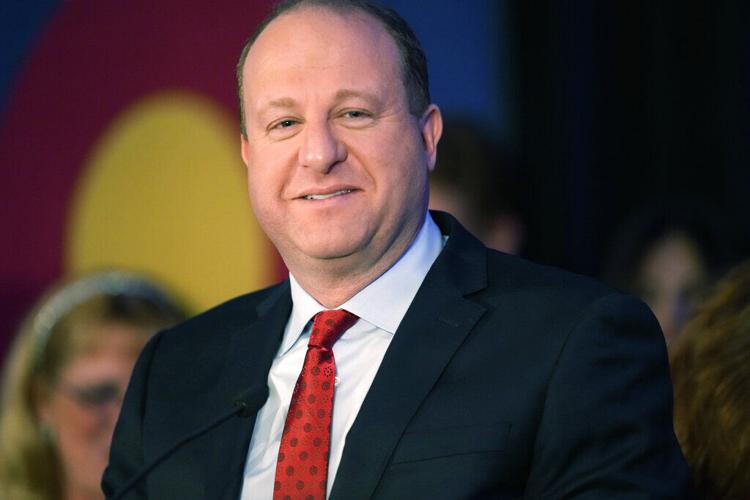
Colorado Gov. Jared Polis is spearheading an initiative to increase the use of geothermal energy in the West.
“Anything we can do to reduce time and cost associated with being able to drill for the purposes of geothermal energy is something that we're very excited about,” said Colorado Gov. Jared Polis, a Democrat, in an interview with Stateline. “There's been great interest from other governors in the West.”
Polis, who chairs the 22-member Western Governors’ Association, is spearheading an initiative to increase use of geothermal energy in the region. Last month, the group convened a workshop at the federal National Renewable Energy Laboratory in Golden, Colorado, bringing together several dozen state and federal officials, industry leaders and utility representatives to discuss the future of geothermal energy.
People are also reading…
Backers think geothermal can play an important role in the clean energy transition, but they say its potential won’t be unlocked without government investments, utility regulations and other policies to encourage development and help the industry become more cost-competitive over time. Most of the industry’s U.S. potential for power generation — which relies on underground permeable rock with fractures that contain hot fluid — is in Western states.

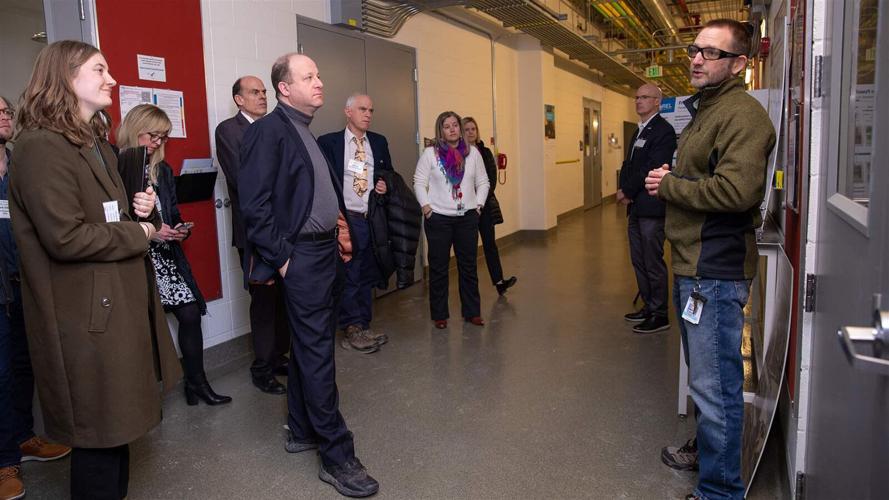
Colorado Democratic Gov. Jared Polis, foreground, left, tours the Energy Systems Integration Facility at the federal National Renewable Energy Laboratory last month in Golden, Colo.
The industry has drawn significant interest from oil and gas companies, which see the potential to convert existing fossil fuel wells into geothermal sites and transition their drilling expertise, equipment and workforce to clean energy projects. Development of geothermal projects is currently more expensive than other renewables, but backers note that wind and solar became commercially competitive after decades of government support.
Geothermal plants provide a steady, on-demand source of electricity, known as dispatchable generation. They pump steam or hot water from wells hundreds or thousands of feet underground to power turbines. Some leaders think such projects will complement wind and solar farms, whose production can vary based on weather conditions or the time of day.
“To go all the way to 100% clean at the same time that we're electrifying transportation, buildings and industry — if you wanted to do it purely through wind and solar, you'd have to overbuild the system pretty significantly,” said Will Toor, executive director of the Colorado Energy Office. “You need something to complement that, to close that last gap, and geothermal is one of the very promising technologies there.”
Energy experts also note that the expansion of wind and solar projects can create land-use conflicts, while geothermal — with a footprint that’s mostly underground — can produce power without threatening forests and farms. However, geothermal drilling has raised some environmental concerns, including the depletion of underground reservoirs and increased risk of earthquakes.

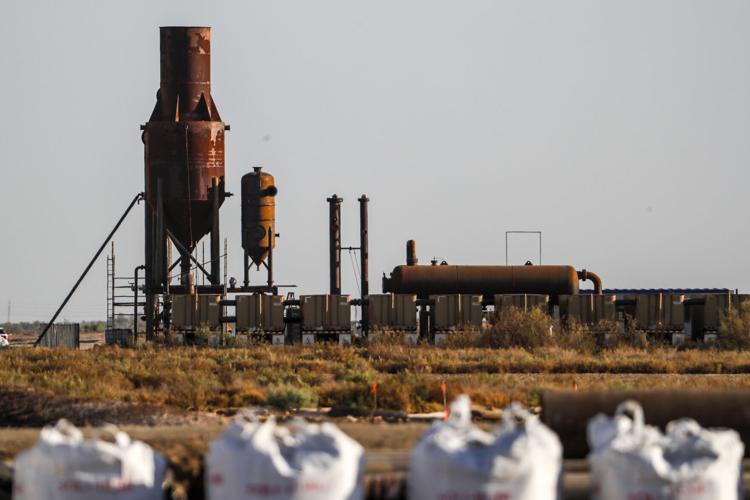
Controlled Thermal Energy is working to build the first geothermal power plant by the Salton Sea in more than a decade. It would supply lithium as well as round-the-clock clean power in Imperial Valley, Calif.
Geothermal plants currently provide less than half a percent of the nation’s power, mostly concentrated in California and Nevada. At present, building new geothermal projects is much more expensive than building other renewables such as wind and solar farms.
But some state and industry leaders think geothermal will have to grow significantly to meet the need for steady, dispatchable power that’s currently provided by natural gas and coal plants. And they point out that geothermal has not enjoyed the same level of government subsidies and investments that helped wind and solar get off the ground.
“No energy technology has scaled up or commercialized without government support,” said Bryant Jones, executive director of Geothermal Rising, a trade association that advocates for the industry. “Geothermal is playing catch-up, and we need policymakers to think about the specific needs of geothermal when they're looking at energy policy.”
Colorado is taking a stab at those needs, Toor said, with a suite of legislative proposals that will be filed in the coming weeks. Among the state administration’s proposed bills is a “clean firm” standard that would direct utilities to invest in dispatchable low-carbon generation, such as geothermal.
The Colorado bill follows a 2021 order from the California Public Utilities Commission that directed utilities in that state to build out more clean energy projects from “firm,” on-demand resources, calling for 1,000 megawatts of dispatchable power projects like geothermal, in addition to cheaper wind and solar.
“With all of these states driving toward 100% grid decarbonization, at some point reliability becomes a massive issue,” said Sarah Jewett, vice president of strategy with Fervo Energy, a geothermal developer. “The rest of the states in the West haven’t felt the pain on reliability in the way California is, but at some point, they will.”
Jewett said the Colorado bill is the first new proposal outside of California to mandate development of “24/7” carbon-free electricity, but she hopes to see similar requirements throughout the region.
Colorado lawmakers will consider another bill this year to establish a regulatory process for approving geothermal wells.
“We basically want to approach geothermal permitting in a way that’s more analogous to oil and gas permitting than it is to traditional power plant permitting,” Polis said.