

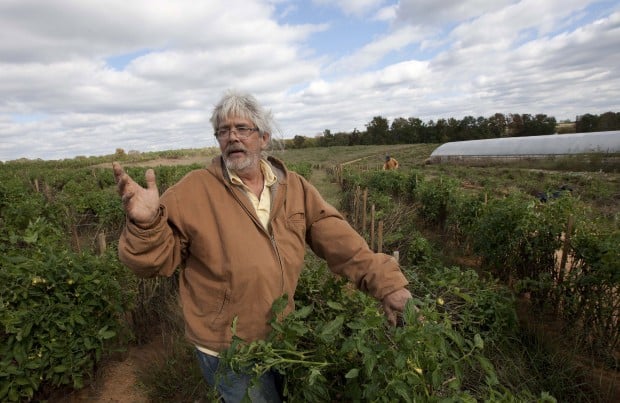
ONEONTA, Ala. - Potato farmer Keith Smith saw most of his immigrant workers leave after Alabama's tough immigration law took effect, so he hired Americans. It hasn't worked out: They show up late, work slower than seasoned farmhands and are ready to call it a day after lunch or by midafternoon. Some quit after a single day.
In Alabama and other parts of the U.S., farmers must look beyond the nation's borders for labor because many Americans simply don't want the backbreaking, low-paying jobs immigrants are willing to take. Politicians who support the law say over time more unemployed Americans will fill these jobs. They insist it's too early to consider the law a failure, yet numbers from the governor's office show only nominal interest.
"I've had people calling me wanting to work," Smith said. "I haven't turned any of them down, but they're not any good. It's hard work, they just don't work like the Hispanics with experience."
People are also reading…
Alabama passed its law in June and it was immediately challenged by the Obama administration as it has been in other states. Unlike those states' measures, Alabama's law was left largely in place while challenges played out in court, frightening Hispanics and driving many of them away.
The agriculture industry suffered the most immediate impact. Farmers said they will have to downsize or let crops die on the vine. As the season's harvest winds down, many are worried about next year.
In south Georgia, Connie Horner has heard just about every reason unemployed Americans don't want to work on her blueberry farm. It's hot, the hours are long, the pay isn't enough and it's just plain hard.
"You can't find legal workers," Horner said. "Basically, they last a day or two, literally."
Horner, who runs an 8 1/2-acre organic blueberry farm, said she tried to use the government's visa program to hire foreign workers, but it was too costly and time consuming.
She plans to stop growing organically and start using a machine to pick the berries.
"I did everything I possibly could to be legal and honest and not part of the problem," Horner said. "Morally, I can't knowingly hire illegal workers."
Gov. Robert Bentley, a Republican who signed the law, started a program last week to help businesses, particularly farmers, make up for the lost labor. So far, about 260 people interested in temporary agricultural jobs have signed up. About three dozen of them have been hired, said Tara Hutchison, a spokeswoman for the Alabama Department of Industrial Relations. She didn't know whether any had quit.
Over the past two weeks, The Associated Press has reached out to the governor's office and other officials to provide the names of Alabama residents who have taken immigrant jobs. Either they were not made available, or didn't want to speak publicly.
Relatively high unemployment rates - about 9 percent in the U.S. and 9.9 in Alabama - are not likely to push Americans toward farm work, said Demetrios Papademetriou, president and co-founder of the Migration Policy Institute. He suggested the problem may be more deeply rooted.
"This is a sector and an industry ... that a long time ago, going back to the 1940s and probably before that was abandoned," Papademetriou said. "It was abandoned to foreign workers."
On StarNet: Find extensive coverage of immigration issues at azstarnet.com/border


