



NEW YORK - The 2012 Pulitzer Prize winners in journalism, with comments from judges:
Public service: The Philadelphia Inquirer for its exploration of pervasive violence in the city's schools, using powerful print narratives and videos to illuminate crimes committed by children against children and to stir reforms to improve safety for teachers and students.
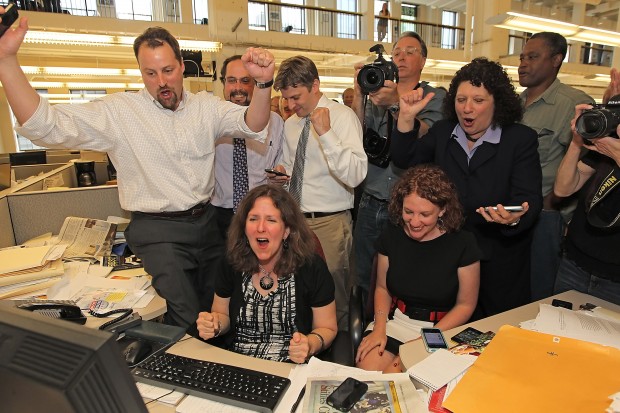
Breaking news reporting: The Tuscaloosa (Ala.) News staff for its enterprising coverage of a deadly tornado, using social media as well as traditional reporting to provide real-time updates, help locate missing people and produce in-depth print accounts even after power disruption forced the paper to publish at another plant 50 miles away.
Investigative reporting: Matt Apuzzo, Adam Goldman, Eileen Sullivan and Chris Hawley of The Associated Press for their spotlighting of the New York Police Department's clandestine spying program that monitored daily life in Muslim communities, resulting in congressional calls for a federal investigation, and a debate over the proper role of domestic intelligence gathering; and Michael J. Berens and Ken Armstrong of The Seattle Times for their investigation of how a little known governmental body in Washington state moved vulnerable patients from safer pain-control medication to methadone, a cheaper but more dangerous drug, coverage that prompted statewide health warnings.
People are also reading…
Explanatory reporting: David Kocieniewski of The New York Times for his lucid series that penetrated a legal thicket to explain how the nation's wealthiest citizens and corporations often exploited loopholes and avoided taxes.
Local reporting: Sara Ganim and members of The Patriot-News staff, Harrisburg, Pa., for courageously revealing and adeptly covering the explosive Penn State sex scandal involving former football coach Jerry Sandusky.
National reporting: David Wood of The Huffington Post for his riveting exploration of the physical and emotional challenges facing American soldiers severely wounded in Iraq and Afghanistan during a decade of war.
International reporting: Jeffrey Gettleman of The New York Times for his vivid reports, often at personal peril, on famine and conflict in East Africa, a neglected but increasingly strategic part of the world.
Feature writing: Eli Sanders of The Stranger, a Seattle weekly, for his haunting story of a woman who survived a brutal attack that took the life of her partner, using the woman's brave courtroom testimony and the details of the crime to construct a moving narrative.
Commentary: Mary Schmich of the Chicago Tribune for her wide range of down-to-earth columns that reflect the character and capture the culture of her famed city.
Criticism: Wesley Morris of The Boston Globe for his smart, inventive film criticism, distinguished by pinpoint prose and an easy traverse between the art house and the big-screen box office.
Editorial writing: No award.
Editorial cartooning: Matt Wuerker of Politico for his consistently fresh, funny cartoons, especially memorable for lampooning the partisan conflict that engulfed Washington.
Breaking news photography: Massoud Hossaini of Agence France-Presse for his heartbreaking image of a girl crying in fear after a suicide bomber's attack at a crowded shrine in Kabul.
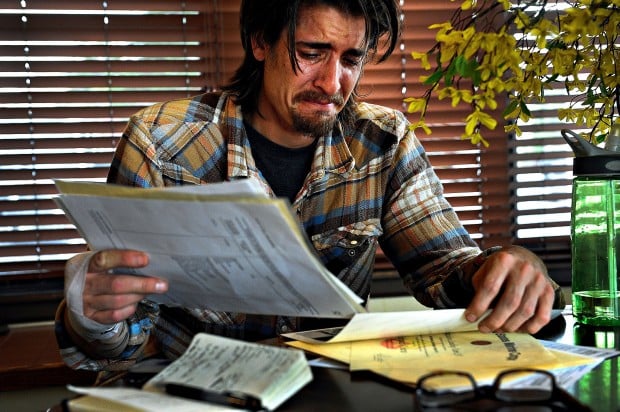
Feature photography: Craig F. Walker of The Denver Post for his compassionate chronicle of an honorably discharged veteran, home from Iraq and struggling with a severe case of post-traumatic stress, images that enable viewers to better grasp a national issue.


