

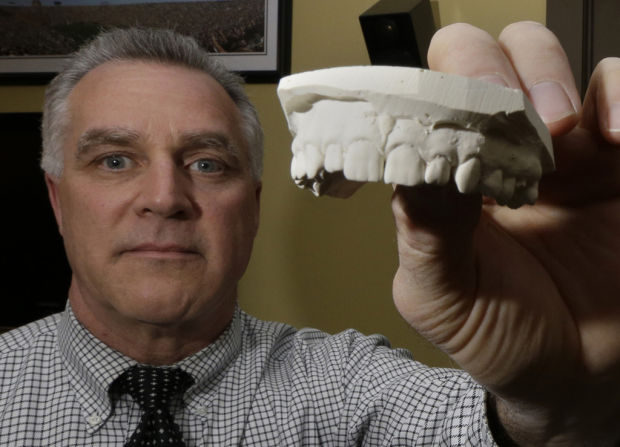
At least 24 men convicted or charged with murder or rape based on bite marks on the flesh of victims have been exonerated since 2000, many after spending more than a decade in prison. Now a judge's ruling later this month in New York could help end the practice for good.
A small, mostly ungoverned group of dentists carries out bite-mark analysis, and its findings are often key evidence in prosecutions, even though there is no scientific proof that teeth can be matched definitively to a bite into human skin.
DNA has outstripped the usefulness of bite-mark analysis in many cases: The FBI doesn't use it, and the American Dental Association does not recognize it.
"Bite-mark evidence is the poster child of unreliable forensic science," said Chris Fabricant, director of strategic litigation at the New York-based Innocence Project, which helps wrongfully convicted inmates win freedom through DNA testing.
People are also reading…
Supporters of the method, which involves comparing the teeth of possible suspects to bite-mark patterns on victims, argue it has helped convict child murderers and other notorious criminals, including serial killer Ted Bundy. They say problems that have arisen are not about the method, but about the qualifications of those testifying, who can earn as much as $5,000 a case.
"The problem lies in the analyst or the bias," said Dr. Frank Wright, a forensic dentist in Cincinnati. "So if the analyst is ... not properly trained or introduces bias into their exam, sure, it's going to be polluted, just like any other scientific investigation. It doesn't mean bite-mark evidence is bad."
The Associated Press reviewed decades of court records, archives, news reports and filings by the Innocence Project in order to compile the most comprehensive count to date of those exonerated after being convicted or charged based on bite-mark evidence. Two dozen forensic scientists and other experts were interviewed.
The AP analysis found that at least two dozen men had been exonerated since 2000, mostly as a result of DNA testing. Many had spent years in prison, including on death row, and one man was behind bars for more than 23 years.
Two court cases this month are helping to bring the debate over the issue to a head. One involves a 63-year-old California man who is serving a life term for killing his wife, even though the forensic dentist who testified against him has reversed his opinion.
In the second, a New York City judge overseeing a murder case is expected to decide whether bite-mark analysis can be admitted as evidence, a ruling critics say could kick it out of courtrooms for good.
One notable case of faulty bite-mark analysis was in Arizona.
Ray Krone, the so-called "Snaggletooth Killer," who was convicted in 1992 and again in 1996 after winning a new trial in the murder of a Phoenix bartender found naked and stabbed in the men's restroom of the bar where she worked. Krone spent 10 years in prison, three on death row.
Raymond Rawson, a Las Vegas forensic dentist, testified at both trials that bite marks on the bartender could only have come from Krone, evidence that proved critical in convicting him. At his second trial, three top forensic dentists testified for the defense that Krone couldn't have made the bite mark, but the jury didn't give their findings much weight and again found him guilty.
In 2002, DNA testing matched a different man, and Krone was released.
Rawson, like a handful of other forensic dentists implicated in faulty testimony connected to high-profile exonerations, remains on the American Board of Forensic Odontology, the only entity that certifies and oversees bite-mark analysts. Now retired, he didn't return messages left at a number for him in Las Vegas.


