

This has been a good year for science at the University of Arizona - and for Tucson.
We continue to be international leaders in space and earth sciences.
The UA-led OSIRIS-REx mission will travel to a nearby asteroid in 2016 and bring back a sample. The mission, which is funded by the largest planetary exploration grant given by NASA to a university for such a mission, will help us learn about planetary exploration and the origin of life.
The UA has also just finished the first of seven complex mirrors for the largest next-generation telescope, the Giant Magellan Telescope. Once built, this telescope will see fainter celestial objects than any telescope currently in existence.
At the end of the month, we will commission the Landscape Evolution Observatory, the world's largest artificial watersheds, inside Biosphere 2. The LEO experiment will inform us of the fate of water in semiarid environments as climate and vegetation change.
People are also reading…
All these projects are examples of what we do best: very large experiments aimed at addressing present-day grand challenges in science and technology.
As UA College of Science researchers continue to enrich our understanding of our world, we also disseminate that new knowledge to our community in a variety of informal ways.
Our College of Science Lecture Series will focus on genomics this year. The six-lecture series, which begins the last week of January, will track two decades of astonishing advances in our understanding of the genetic code that makes up all living things.
Some of the other ways the public can learn about College of Science research and researchers are science cafés held in SaddleB˚rooke and in downtown Tucson and the lecture series held on Tumamoc Hill.
The College of Science also has programs and tours that are open to the public at Biosphere 2, the Flandrau Science Center and Planetarium, Steward Observatory Mirror Lab, the Mt. Lemmon SkyCenter, the Laboratory of Tree-Ring Research and Tumamoc Hill.
We are also working with community leaders, including those of the city of Tucson and Pima County, to highlight the extraordinary richness of the region's ecology, geology and astronomy and its potential for a new sophisticated geotourism industry. Those regional and scientific riches will be the basis for a "Sense of Place" program aimed at educating our community and our visitors of the uniqueness of our region.
Tucson is a unique city with a rich history in science. We are glad to be part of this wonderful place. I hope you will join me in learning more about the special place we call home and in sharing it with others.
Chat with the dean
Join Joaquin Ruiz at azstarnet.com on Jan. 17 at 11 a.m. to talk about the world-class science and discoveries at the University of Arizona College of Science.
Stay informed
Go to cos.arizona.edu to subscribe to the UA Science biweekly e-newsletter. Sign up on the bottom left-hand side of the web page.
About the dean
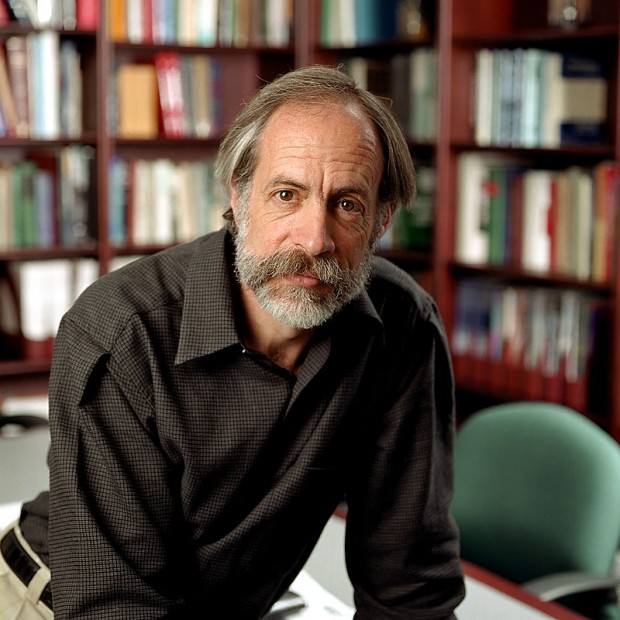
Joaquin Ruiz is the executive dean of the University of Arizona Colleges of Letters, Arts and Science and the dean of the UA College of Science. One of the largest colleges at the UA, the College of Science has nearly 7,500 undergraduate and graduate students. Its 21 academic departments and schools encompass the range of physical, mathematical, environmental, cognitive and life sciences.
Ruiz was honored in 2010 by Mexico's president as an outstanding Mexican researcher, one of the first Mexican scholars living abroad to be so recognized. He is also a member of the Mexican Academy of Sciences. Ruiz was president of the Geological Society of America for 2010-11.
Ruiz joined the geosciences department in 1983, was named department head in 1995, dean of the College of Science in 2000 and executive dean in 2008. Ruiz's lab discovered in 2002 that more than 40 percent of the world's gold is 3 billion years old.


