

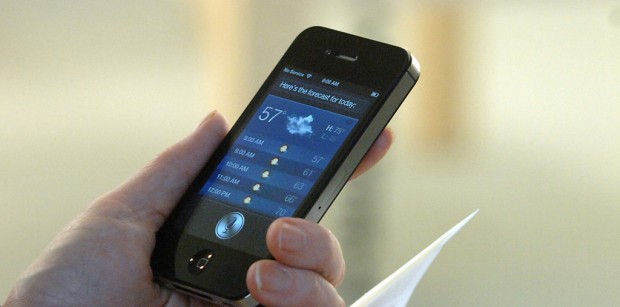
At Camp Blessing in Afghanistan's Pech Valley, some American soldiers played "Angry Birds" on their iPhones when off-duty. Jonathan Springer decided to put his device to a different use: building an app to help fight the Taliban.
"I wanted to give something back to soldiers that might help save their lives," Springer, 32, said in an interview from his base at Fort Bragg, N.C.
The result is Tactical Nav, an iPhone application the U.S. Army captain built with $30,000 of his savings and a maxed-out credit card a year ago. The $5.99 app uses GPS technology and the iPhone's camera to chart coordinates and guide artillery fire.
It has been downloaded about 8,000 times by U.S., Canadian and Australian soldiers, as well as hunters and hikers, Springer said. From emails he has received from soldiers who have gone on patrol with it, the app has been used in both combat and training, Springer said.
People are also reading…
If Teri Takai gets her way, American soldiers, sailors and Marines may all soon be able to download Tactical Nav and other military programs through a dedicated Defense Department app store. Takai, the department's chief information officer, wants to build a secure network of smartphone apps to help soldiers fight in new ways, from more precise maps to better manuals. If security challenges get resolved, the project will result in a revenue source for app developers and a potential boon for iPhones, iPads and Android devices.
"We would like a full range of devices to be able to securely operate with a DoD app store, but also be able to utilize commercial app stores," Takai said in an interview in a small, windowless conference room at the Pentagon.
The Pentagon is turning to technologies developed by civilians as it seeks to make its fighting force more nimble. Takai's challenge is to create an environment in which soldiers can improvise on devices like Apple's iPhone and iPad without letting the Pentagon's security standards slip.
Soldiers "in a fight innovate and use all the technologies they have," said Kenneth Minihan, who was director of the National Security Agency from 1996 to 1999. "It's a very natural phenomenon to come out of troops in combat.
"If you go back to the Cold War, it was government-developed technology that we would introduce into the commercial sector," Minihan said. "Today, most of those technologies come from the private sector and get introduced to the public sector - it's the reverse."
A wide selection of consumer apps has fueled the popularity of Apple's iPhone and devices built on Google's Android software at the expense of Research In Motion's BlackBerry, which offers fewer apps. For the moment, said Takai, the Defense Department will continue to issue only BlackBerrys, which rose to prominence in Washington a decade ago because of the security they offer. If Apple and Android devices can be built to be more secure, the Pentagon is open to the notion of deploying those alongside BlackBerrys, particularly if that will save money, she said.
Still, getting iPhone and Android approved for official Defense Department use will probably take "years rather than months," Minihan said.


