

ROME — Archaeologists have unearthed a sprawling country villa believed to be the birthplace of Vespasian, the Roman emperor who built the Colosseum, they said Friday.
The 2,000-year-old ruins were found about 80 miles northeast of Rome, near Cittareale, lead archaeologist Filippo Coarelli said.
The 150,000-square-foot complex was at the center of an ancient village called Falacrine, Vespasian's hometown.
Even though there are no inscriptions to attribute it for sure, the villa's location and luxury make it likely it was Vespasian's birthplace, Coarelli said.
"This is the only villa of this kind in the area where he most certainly was born," the archaeologist said.
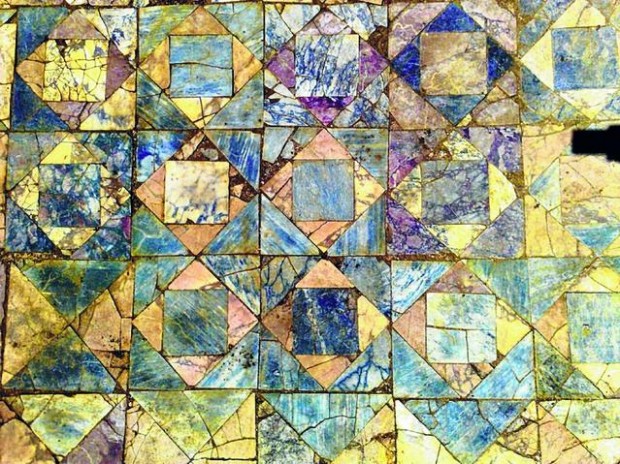
The first-century residence featured "a well-preserved huge floor, decorated with luxurious marble coming from the whole Mediterranean area," he said.
People are also reading…
"It's clear that such things could only belong to someone with a high social position and wealth. And in this place, it was the Flavians," the dynasty to which Vespasian belonged.
The four-year excavation, which also turned up other ruins, was carried out by Italian and British archaeologists.
Vespasian, whose full name was Titus Flavius Vespasianus, brought stability to the empire following turmoil under the extravagant Emperor Nero and a civil war among his successors.
Born in A.D. 9 into a family of country nobility, Vespasian rose through the army, becoming the general in charge of putting down a Jewish revolt in Judea.
After being acclaimed emperor by his troops in A.D. 69 and eliminating his rivals, Vespasian found Rome facing a deep economic crisis and still recovering from the fire that consumed it under Nero.
Using plunder from Jerusalem and proceeds from increased taxes, he launched a major public-works program and started building the Colosseum — the most ambitious of his projects.


