Skip to main contentSkip to main content
Register for more free articles.
Log in Sign up
Back to homepage
Subscriber Login
Keep reading with a digital access subscription.
Subscribe now
You have permission to edit this collection.
Edit
Arizona Daily Star
85°
  • Sign in
  • Subscribe Now
  • Manage account
  • Logout
    • Manage account
    • e-Newspaper
    • Logout
  • News
    • Sign up for newsletters
    • Local
    • Arizona
    • Business
    • Crime
    • Nation & World
    • Markets & Stocks
    • SaddleBrooke
    • Politics
    • Archives
    • News Tip
  • Arizona Daily Star
    • E-edition
    • E-edition-Tutorial
    • Archives
    • Special Sections
    • Merchandise
    • Circulars
    • Readers' Choice Awards
    • Buyer's Edge
  • Obituaries
    • Share Your Story
    • Recent Obituaries
    • Find an Obituary
  • Opinion
    • Submit a Letter
    • Submit guest opinion
    • Letters to the Editor
    • Opinion & Editorials
    • National Columnists
  • Sports
    • Arizona Wildcats
    • Greg Hansen
    • High Schools
    • Roadrunners
  • Lifestyles
    • Events Calendar
    • Arts & Theatre
    • Food & Cooking
    • Movies & TV
    • Movie Listings
    • Music
    • Comics
    • Games
    • Columns
    • Play
    • Home & Gardening
    • Health
    • Get Healthy
    • Parenting
    • Fashion
    • People
    • Pets
    • Travel
    • Faith
    • Retro Tucson
    • History
    • Travel
    • Outdoors & Rec
    • Community Pages
  • Brand Ave. Studios
  • Join the community
    • News tip
    • Share video
  • Buy & Sell
    • Place an Ad
    • Shop Local
    • Jobs
    • Homes
    • Freedom RV AZ
    • Marketplace
    • I Love A Deal
  • Shopping
  • Customer Service
    • Manage My Account
    • Newsletter Sign-Up
    • Subscribe
    • Contact us
  • Mobile Apps
  • Weather: Live Radar
  • Facebook
  • Twitter
  • Bluesky
  • YouTube
  • Pinterest
  • Instagram
© 2026 Lee Enterprises
Terms of Service | Privacy Policy
Arizona Daily Star
News+
Read Today's E-edition
Arizona Daily Star
News+
  • Log In
  • $1 for 3 months
    Subscribe Now
    • Manage account
    • e-Newspaper
    • Logout
  • E-edition
  • News
  • Obituaries
  • Opinion
  • Wildcats
  • Lifestyles
  • Newsletters
  • Comics & Puzzles
  • Buyer's Edge
  • Jobs
  • Freedom RV AZ
  • 85° Widespread Dust
Share This
  • Facebook
  • Twitter
  • Bluesky
  • WhatsApp
  • SMS
  • Email

Read more: San Pedro River in Southern Arizona

  • Arizona Daily Star
  • Mar 28, 2022
  • Mar 28, 2022 Updated Aug 2, 2022

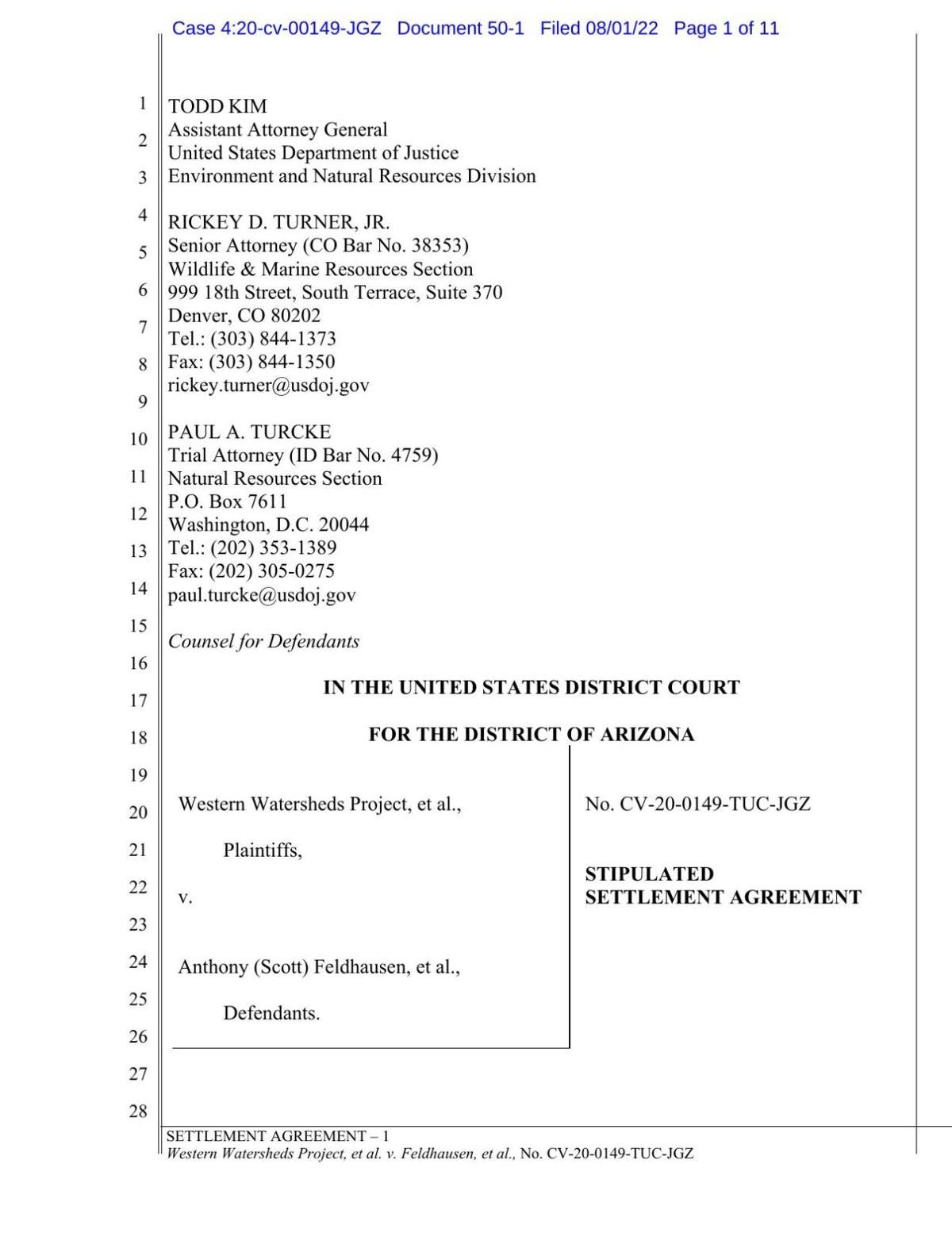
Read the San Pedro livestock settlement

Download PDF Read the San Pedro livestock settlement

Rare wildflower could boost efforts to preserve San Pedro River

Federal officials last week declared the Arizona eryngo, a rare wildflower, an endangered species, a move advocates hope will also help boost efforts to save the San Pedro River where the plant is found.

The action Thursday by the U.S. Fish and Wildlife Service follows years of efforts by conservation groups to save the eryngo, a cream-colored flowering wetland plant native to Arizona, New Mexico and Mexico.

But the plant only grows in cienegas, a type of wetland created by natural springs, and those are being depleted by over-pumping of groundwater in the region, the service and environmental groups said.

“I’m so glad these big, beautiful plants and the rare cienega habitats where they live are getting these badly needed protections,” Robin Silver, a cofounder of the Center for Biological Diversity, said in a statement. “The eryngo gives us one more reason to save the San Pedro River.”

In addition to declaring the plant endangered, the government designated a total of 12.7 acres of critical habitat for it, at sites in Pima and Cochise counties. The endangered species designation takes effect July 11.

The Arizona eryngo is a member of the carrot family that can grow to 5 feet tall and live for up to 10 years. It reproduces through pollination and is frequented by a range of pollinators, including butterflies and hummingbirds.

It has historically been found at six sites — three in Arizona and one each in New Mexico and the Mexican states of Sonora and Chihuahua. It is currently only found at the two Mexican sites and at two locations in Arizona.

The service designated critical habitat for the eryngo in Arizona at Lewis Springs in Cochise County and La Cebadilla in Pima County. La Cebadilla Cienega is adjacent to the Tanque Verde Wash and Lewis Springs Cienega is just east of the San Pedro River.

But groundwater levels in the San Pedro River Basin have been dropping for decades due to excessive pumping in the Upper San Pedro River Basin by residents living around Fort Huachuca, Silver said.

The eryngo relies on water from the springs that are fed by the deep aquifers in the San Pedro River Basin. But the Center for Biological Diversity said there is currently a groundwater overdraft of more than 5,000 acre-feet per year in the Fort Huachuca-Sierra Vista area, and studies predict the San Pedro Riparian National Conservation Area will disappear if current practices continue.

Advocates hope the endangered species designation for the eryngo will give added impetus to larger efforts to save the San Pedro.

“The San Pedro is one of the last undammed, free-flowing rivers in the desert southwest,” said Emily Thomas, president of the Maricopa Audubon Society. “That’s why it is … so imperative.”

Silver called the endangered species designation a “game changer … for San Pedro protection,” since it could lead to reductions in pumping in the basin.

“Protection of the plant offers protection against the lowering of the water tables from groundwater pumping,” Silver said.

The Center for Biological Diversity and the Maricopa Audubon Society first petitioned for endangered species status for the Arizona eryngo in April 2018. The groups, along with Earthjustice, sued the Trump administration in March 2020 after the service’s consideration of the petition stalled.

This week’s announcement did not include Agua Caliente, a one-time home to the Arizona eryngo, after on-going efforts to reintroduce the species there failed. The Fish and Wildlife Service said Thursday that it, the Bureau of Land Management, the Desert Botanical Gardens and Pima County “have begun conservation efforts to establish additional populations.”

Thomas is worried that with just two areas designated as critical habitat, the government is “not giving room for the species to recover.” But government officials said they are committed to continuing to work toward the plant’s preservation.

“The Service looks forward to continuing our work with conservation partners in Arizona to protect and recover this rare native plant,” Amy Lueders, the Fish and Wildlife Service regional director, said in a statement. “Partnerships will be central to addressing the threats to the Arizona eryngo and putting it on the path to recovery.”

In the meantime, Silver said, the center plans to continue fighting to protect the San Pedro River; it currently has three active lawsuits related to the river.

Developer's lawyer wants hearing to rebut charges about Benson project

A congressional committee that wants a criminal probe of the Trump administration’s handling of a proposed Benson development ignored or glossed over key events as part of “an attempt to select facts to fit a predisposed narrative,” an attorney for the project’s developer told reporters this week.

Longtime D.C. attorney Lanny Davis is seeking a public hearing to rebut allegations of potentially criminal behavior made by a House committee chaired by Tucson Democratic Rep. Raúl Grijalva.

“I ask Rep. Grijalva, Rep. Porter, to give me a chance to respond to what in my opinion are false and misleading allegations,” Davis said at a a press conference Thursday.

Grijalva chairs the House Natural Resources Committee, while Rep. Katie Porter, a California Democrat, chairs the Natural Resources Subcommittee on Oversight and Investigations.

On May 11, the full committee sent Attorney General Merrick Garland a 37-page letter citing what it calls strong evidence of an illegal “quid pro quo” between senior Trump administration officials and Michael Ingram, chairman of the Phoenix-based company seeking to develop the 28,000-home Villages at Vigneto.

The committee wrote Garland that it has documented private meetings and personal communications in 2017 over the fate of that project between Ingram and top administration officials, including Interior Secretary Ryan Zinke, Deputy Interior Secretary David Bernhardt, EPA Administrator Scott Pruitt and their staff members.

The committee alleged these meetings and communications directly led to political pressure being applied by Interior higher-ups on U.S. Fish and Wildlife Service official Steve Spangle to reverse his long-held stance that the project needs a full-scale review of its potential to dry up the nearby San Pedro River.

Eighteen months later, Spangle told the Arizona Daily Star and then, other media, that he was “rolled” into changing his stance on the project by pressure from “a high-level politico” to back off on the case.

The committee also documented that Ingram and several other Arizona residents linked to him made what the criminal referral letter describes as “highly unusual out-of-cycle donations” totaling $241,600 to the Trump Victory Fund and the Republican National Committee in October 2017. That was the same month Spangle reversed himself on the need for a Vigneto analysis.

Spangle’s reversal cleared the way for the U.S. Army Corps of Engineers to reissue a federal Clean Water Act permit for the project that it had previously suspended.

Obama administration support cited

At his press conference, Davis accused the committee of failing to pay adequate notice to several important events that he said showed Spangle’s reversal wasn’t the result of top-down political pressure, as the biologist alleged to the Star in April 2019, after he retired from the wildlife service.

First, Davis said, the Obama administration’s Army Corps of Engineers had issued a Clean Water Act permit for the project back in 2006 and stood behind it during the rest of Obama’s tenure, through January 2017.

“Is there anyone who believes the Obama administration was influenced by Republican donations?” Davis said.

Second, in June 2019, the wildlife service’s Jeff Humphrey wrote a letter saying that after a review of the case done with no supervision by the service’s regional or Washington, D.C. offices, the agency saw no reason to change its 2017 decision not to require the detailed analysis of Vigneto, Davis noted. Humphrey had replaced Spangle as field supervisor of the agency’s Arizona Ecological Services office.

“Why wasn’t that quote included in the letter? Is that getting in the way of the narrative?” asked Davis, referring to the Natural Resources Committee letter to Garland.

Third, Davis said the House committee confused correlation with causation in linking Interior’s change of position on Vigneto to big campaign donations to the Trump administration.

“The rooster crows and the sun rises. That doesn’t mean just because one happened after the other that the rooster caused the sun to rise. Donations and political meetings occur all the time,” Davis said.

Davis repeatedly made the point that he, like Grijalva and Porter, is a “progressive Democrat,” one who represented President Bill Clinton in the late 1990s when Clinton was under a federal investigation for his affair with Monica Lewinsky, a White House intern.

“Of all things a progressive Democrat doesn’t do, one is to ignore the presumption of innocence,” Davis said. “What harm is there? If the committee chair or staff disagrees with me, fine. Let’s have it out in public. Let’s prove we can agree to disagree civilly.”

“Smelled bad then ... and now”

In a statement, Grijalva didn’t respond directly to Davis’ request for a hearing. But he said, “The question before the committee was whether sufficient evidence exists of potentially criminal behavior that further investigation by the Justice Department is warranted. The committee determined that it did. It is my hope Mr. Ingram will cooperate fully with DOJ” (the Department of Justice).

“Mr. Ingram’s attorney wants to talk about everything except the main issue: a quarter of a million dollars in donations was given at the same time the permit was opened for re-evaluation. The other details he has referenced are fully addressed in the 37-page referral. We encourage DOJ to investigate the primary question at hand,” Grijalva added.

For his part, Spangle told the Star he hadn’t expected anything like the House committee’s letter seeking a criminal investigation of the Vigneto case.

“I had one goal in mind, to let American people know there were people in the administration neglecting their trust responsibility,” Spangle said Thursday in a telephone interview, explaining his decision to go public on the case. “That’s all I had in mind. I never thought it would go anywhere like where it would go.

“Professional investigators like yourselves and the committee dug a lot deeper than I had intended to do,” Spangle told the Star. “I just wanted the public to know that decisions were made that were politically driven, that smelled bad then and smelled bad now.”

“I will be happy if justice is done. If it’s appropriate it should be done. If not it shouldn’t be done,” Spangle said of the committee’s request for a criminal probe of this case.

“I’m not versed in the law. I don’t know who said what to whom, but it’s pretty evident that the Natural Resources Committee did a through look at it,” he said.

When a reporter at Davis’ press conference also said he thought this case didn’t smell good, Davis replied, “The Constitution doesn’t allow a criminal referral based on smell.”

Group finds damage, dangers from border wall work, urges action

The border wall in Arizona needs immediate remediation in sensitive areas to avoid serious public safety issues and significant damage to native wildlife that is likely to compound over time, according to a new report by conservation group Wildlands Network.

“Irreparable damage” has already taken place, said Myles Traphagen, borderlands program coordinator for the Wildlands Network.

“We’re never going to see Montezuma Peak at Coronado National Memorial the way that Coronado saw it in 1542,” Traphagen said. “We’re not going to see Guadalupe Canyon in the condition it was when Roger Tory Peterson, the noted birder, and Robert Stebbins, the noted herpetologist, visited these places to note rare species of birds and reptiles that only occur in that part of Arizona.”

On the day that President Joe Biden took office and halted most construction on the border wall, the nonprofit organization began assessing environmental effects of the wall and related construction in Arizona and New Mexico.

Several “crucially important wildlife corridors were saved at the last minute” when construction was halted, says the report, released Monday. However, the report continues, numerous national wilderness areas suffered “an incredible amount of damage.”

During the Trump administration, 263 miles of pedestrian fencing/border wall were built in Arizona and New Mexico, the report says. Along with the fencing that was already there, that comes to at least 391 miles of border wall, equaling about 70% of the land along the two states’ southern borders.

The report highlights some of the environmental damage and mitigation it says is needed in five protected wilderness areas in Coronado National Forest on the Arizona-Mexico border, which Traphagen says are the “most dramatic examples,” including:

Cerro del Fresnal, about 1 mile east of the Buenos Aires National Wildlife Refuge.

Pajarito Mountains, 6 miles west of Nogales.

Western Patagonia Mountains, 1 mile east of the Santa Cruz River.

Coronado National Memorial, at the southern terminus of the Arizona Trail.

Guadalupe Canyon, about 4 miles west of the New Mexico-Arizona state line.

Mitigation plans called insufficient

The report says threats to some of these areas include: rockfall, erosion, invasive plant species, choking out springs and cattle watering tanks, the risk of catastrophic flood damage, serious public safety issues, and threats to critical habitat for the endangered jaguar.

Some of the places highlighted in the report also still have construction materials on site, like Cerro del Fresnal, a prominent peak in Coronado National Forest in Pima County.

Federal contractor Fisher Sand & Gravel blasted the peak with dynamite, leaving behind construction material and debris such as rebar and steel mesh, the report says. There is no fencing or signage to warn people or to keep out animals. A commercial generator left there slid down a slope, slammed into the border wall, and was left there for at least a week, the report says.

“Cerro del Fresnal has essentially become an unmitigated mining site,” the report says, adding that the Mine Safety and Health Administration should take custody of the site.

As well, the record-breaking heat and lack of rain for the Southwest in 2020 highlights the added dangers to animal species, Wildlands Network says. In arid environments animals often need to migrate long distances in order to find water, meaning with a hotter and drier climate, animals need more space to access food and water, not less, the report says.

Using the 2005 REAL ID Act, which contains a provision that allows the secretary of Homeland Security to waive laws that interfere with construction of physical barriers at the borders, the Trump administration waived dozens of laws to speed up wall construction, including the requirement to review environmental impacts.

Noting little robust government oversight of environmental impacts, Wildlands Network began a wildlife monitoring program in late 2019 at San Bernardino National Wildlife Refuge, in southeastern Cochise County, to measure the effect of the border wall on wildlife movement across the border, setting up dozens of trail cameras in busy wildlife corridors.

Detections of wildlife on the trail cameras along the border have declined over the last year in places where a wall was built.

While the report recommends that the wall be fully removed in order to fully restore the region, it makes recommendations on ways the wall could be modified to create openings for wildlife passages.

Traphagen is doubtful the government will remove sections of wall for animals.

“Wildlife passage for large mammals is diametrically opposed to the objective of trying to keep large mammals like humans from crossing, so it’s almost like an irreconcilable difference between people who are advocating for wildlife and people who are advocating for border security,” he said. “However, the crucial difference is that most large mammals cannot get over the wall, whereas humans are still able to do that. And they do that on a daily basis using ladders, ropes and reciprocating saws.”

Incidents of people climbing the border wall are not uncommon and sometimes lead to injury and death, including a Mexican woman who choked to death on climbing gear on the border wall in Cochise County in April.

Remediation measures to start this fall

The government is planning remediation measures for wall construction areas, which have been pushed back in Arizona to the fall. They include adding more barriers rather than taking some down.

Biden’s 2023 budget request includes authority for the Homeland Security secretary to transfer up to $225 million to the Interior Department or the Forest Service for environmental mitigation activities related to the construction of the border wall.

Custom and Border Protection’s remediation plans “didn’t identify the real problem locations,” Traphagen said. The measures it outlined “serve for the protection of the border wall infrastructure,” without much consideration to environmental harms, he said.

“They never presented any photographs with descriptions of the most egregious damage,” he said.

Customs and Border Protection did not respond to questions from the Star about the Wildlands report in time for the print deadline.

The government’s remediation plans include cleaning up and repairing damage in Pima, Cochise and Santa Cruz counties, including environmentally sensitive areas in Organ Pipe National Monument, Buenos Aires and Cabeza Prieta wildlife refuges, San Pedro National Riparian Area and Coronado National Memorial.

The plans include environmental remediation like revegetation of disturbed areas as well as the installation of 8-by-11-inch wildlife passages in parts of the border barrier. Also planned are gap closure and gate installation, which is something environmental groups say will further impede the movement of wildlife.

The remediation has yet to start, but the government has begun clearing construction materials away from sites, including areas in Buenos Aires National Wildlife Refuge, where piles of gravel and dirt remain.

The Wildlands report comes on the heels of Arizona allocating $355 million for a border wall, which is unlikely to be an actual wall but rather a “virtual” one, which could include motion sensors, infrared cameras, mobile towers and aerial drones.

Razor wire can be taken down swiftly

Another significant aspect of the border barrier that the Wildlands report highlights is the 180 miles of razor wire, also called concertina wire, which was installed on the wall in border cities including Nogales, Douglas, San Diego, Calexico and El Paso in 2019 and 2020.

The report documented 64 miles of razor wire in Arizona, 46 in California and 70 in Texas.

While some of the natural places are beyond repair, “razor wire is something we can do something about,” Traphagen said.

The razor wire “threatens the residents of these cities and places children at risk to severe lacerations” and inflicts “psychological damage” to residents of border cities, the report says.

“That can be taken down swiftly,” Traphagen said. “I’m really concerned about the impact to people who live in border communities and especially children and young people who grow up in a place that is very militarized, that resembles the Berlin Wall, resembles a prison, and what is going to be the long term effect upon these young people who become normalized to that type of brutal setting.”

Wildlands Network sent the report to members of Congress and made it available to the public at wildlandsnetwork.org/news/priority-restoration-areas-border.

“We’re essentially destroying our land, our protected lands that Congress … decided to set aside for cultural and environmental resource preservation,” Traphagen said. “The border wall has so many levels. We need to reflect upon where our values are now, and is it really worth destroying our own home for trying to deal with a human socioeconomic problem.”

RELATED:

Arizona, Texas migrant busing programs 'overwhelm' D.C. services

Arizona, Texas migrant busing programs 'overwhelm' D.C. services

For Star subscribers: The mayor of Washington, D.C., says Arizona Gov. Doug Ducey’s migrant busing program is overwhelming migrant services in the nation’s capital and filling up D.C. homeless shelters.

AZ's $335M border wall likely to be virtual, not on actual border

AZ's $335M border wall likely to be virtual, not on actual border

For Star subscribers: The Arizona Legislature has budgeted $335 million for border barrier construction. But what will actually be built might be a combination of a virtual wall and barriers around critical infrastructure not directly on the U.S.-Mexico border, the Governor's Office says.  

Number of migrants at Arizona-Mexico border continues to increase

Number of migrants at Arizona-Mexico border continues to increase

For Star subscribers: The number of migrants showing up at the entire U.S. border with Mexico continues to break records, as does the number who pass through Pima County needing assistance. Arizona's May numbers were also higher than previous months, though not a record.  

Fort Huachuca's water savings are exaggerated, environmentalists claim

Environmental groups asked a federal judge Tuesday to order the federal government and the Army — which they accuse of misstating evidence — to take another look at how Fort Huachuca is affecting the San Pedro River.

The Army base is claiming that its reduction in water use, coupled with recharge efforts and buying former farmland, show there is no detrimental impact on the river, one of the last free-flowing rivers in the desert Southwest and the home of various endangered and threatened species.

Attorney Stuart Gillespie, representing the Center for Biological Diversity, the Sierra Club and the Maricopa Audubon Society, told U.S. District Judge Raner Collins in Tucson that the Army is playing fast and loose with its claims.

And he said the U.S. Fish and Wildlife Service, whose blessing is needed for continued base operations at current levels, has accepted the military’s findings.

At the very least, the environmental groups want the federal agency to go back and recompute whether the operation of Fort Huachuca, both on- and off-base, is harming the river.

Gillespie said Collins cannot allow the base to operate as it is under findings by Fish and Wildlife that are based on “illusory water credits.” He said the fort is essentially claiming it is saving or replenishing more water than it pumps, which the environmentalists dispute.

But John Martin, an attorney with the U.S. Justice Department, told Collins that what the environmental groups claim is science and law is not supported by evidence. He said Fish and Wildlife made the right decision in concluding the Army is doing enough to offset its water use.

The San Pedro Riparian National Conservation Area, created by Congress in 1988, is home to the Western yellow-billed cuckoo, the Southwestern willow flycatcher, the Northern Mexico gartersnake and the Huachuca water umbel, a plant. All of those depend on the flow of the river.

The environmental groups say groundwater pumping is drying up sections of the stream and damaging the vegetation around it. That, in turn, has led to declines in the species by eliminating riparian habitat and food for things like nesting, migrating, good, cover and shelter, they say.

What makes this a federal case is that Fort Huachuca, as a federally funded operation, is legally prohibited from making the situation worse.

Fort Huachuca is claiming water-savings credit for retiring agricultural operations on two ranches, including a 480-parcel near the Mexican border where there used to be alfalfa farming.

But farming stopped there in 2005, with an eye at the time to creating residential lots. And much of the irrigation system had been removed.

“There’s nothing in the record, there’s absolutely no plans and no evidence that anyone was going to irrigate this property immediately, let alone at any point in the future,” Gillespie said.

Yet he said Fish and Wildlife concluded that immediately saved 2,588 acre-feet of water a year, “which turned the fort’s net groundwater deficit into a purported net surplus.”

Martin estimated current fort-attributable water usage at about 4,660 acre-feet a year. An acre-foot is about 326,000 gallons and is considered enough for two to three homes per year.

“It’s self-evident that there is no water savings from a conservation easement if irrigation wouldn’t have occurred anyway,” Gillespie said.

Martin, the federal government’s attorney, told Collins there’s nothing wrong with that. “That’s just not the way conservation easements work,” he said.

“The benefit of acquiring a conservation easement is not its immediate effect,” Martin said. “It’s the permanent benefit of precluding certain uses to maintain certain desired environments or certain conditions on the property.”

Gillespie said the Army can’t take credit for every gallon of water not pumped. He said even if the land had remained a farm, some of that would still have found its way back into the groundwater.

Another issue is that effluent recharge by the fort has not hit the predicted numbers. Martin said the reason is simple: As the base uses less water, there’s less to recharge.

Gillespie faulted Fish and Wildlife for refusing to consider the longer-term effects of pumping on the river, into 2050, citing studies that show an accelerated depletion of the groundwater. Instead, Gillespie said, any analysis stopped at 2030.

Martin said numbers beyond 2030 are not reliable and Fish and Wildlife made the appropriate decision to disregard them.

“That future scenario is driven by incorrect and excessively large estimates of future population growth which drive inflated numbers for water usage,” he said.

Martin also dismissed claims that the federal agency needs to do a new study, this time factoring in the effects of climate change.

Collins took the issue under advisement.

Strong monsoon storms swept through southern Arizona Tuesday evening, bringing heavy rainfall and hail from Bisbee towards Sierra Vista.

The National Weather Service issued severe thunderstorm warnings in southwestern Cochise County the evening of Sept. 7 starting around 5 p.m. and lasting several hours. Residents of Bisbee and Hereford reported quarter-sized hail that caused damage to skylights in their homes.

The time-lapse, filmed Tuesday near East Golf Links Road and South Coronado Drive in Sierra Vista, shows the storm moving west. Video courtesy of Shawn Cottier.

Jesse Tellez

Conservationists blame cows for endangered plant's near disappearance from San Pedro River

An endangered plant has all but disappeared from the San Pedro Riparian National Conservation Area, according to a Tucson-based environmental group that is suing the federal agency responsible for protecting it.

Robin Silver, co-founder of the Center for Biological Diversity, said two biologists who volunteer with the group went looking for Huachuca water umbel plants on Nov. 11 but came up empty.

Silver fears the decline amounts to a “local extinction” of the rare, semi-aquatic plant from the conservation area about 80 miles southeast of Tucson.

“I don’t think the species is finished, but when you lose the core population, that causes serious concern,” he said.

The Huachuca water umbel is a bright green, herb-like member of the carrot family, with tiny, tube-shaped stems that can grow to about a foot tall in wet enough conditions.

Silver helped get it listed as endangered in 1993 by petitioning the U.S. Fish and Wildlife Service.

Its federally designated critical habitat includes portions of the San Pedro River, the Santa Cruz River in the San Rafael Valley, Sonoita Creek and several watersheds in the Huachuca Mountains west of Sierra Vista.

The umbel used to be found in parts of Pima County as well, but habitat loss has eliminated all known native populations in the county.

“It’s a water plant, and it needs a pretty steady source of water to survive,” said Amy Belk, program coordinator for the Pima County Native Plant Nursery.

Belk said the nursery successfully cultivates two different clones of the plant for use in several experimental plots throughout the Tucson area. The umbel is pretty easy to grow and transplant, she said. The challenge is finding places in Southern Arizona that still have enough available water to support them.

In October, the Center for Biological Diversity and the Phoenix-based Maricopa Audubon Society sued the Bureau of Land Management for violating the Endangered Species Act by failing to keep trespassing cattle away from the umbel.

The lawsuit, filed in U.S. District Court in Tucson, cites dozens of unresolved complaints about wayward cattle in the conservation area, including several reports from the past few months.

Silver said the cows eat the plants and trample their wetland habitat.

“We’ve found that the core population is essentially gone. In response, the BLM said they ordered some fencing,” he said. “They’re basically refusing to do anything. We don’t really know what else to do.”

A spokeswoman for the bureau in Tucson declined comment, citing the agency’s policy against discussing pending litigation.

A message left with the Fish and Wildlife Service was not immediately returned.

Since the Nov. 11 population survey, Silver said, one small patch of umbels has been found along the San Pedro, though volunteers also found “fresh cattle signs within 7 feet of the plants.”

The effort to save the umbel is part of a larger push by environmentalists to protect the entire San Pedro riparian ecosystem from a range of threats, including surface and groundwater withdrawal, overgrazing and erosion.

Silver said there is a lot more at stake than one obscure perennial.

“The bottom line is Fort Huachuca and Sierra Vista are sucking the San Pedro River dry from below, while trespass cows are grazing and trampling the river to death from above,” he said.

The Army base, however, has said in court filings that its reduction in water use, coupled with recharge efforts and buying former farmland, means there is no detrimental impact on the river.

Federal officials have until the end of December to respond to the conservation groups’ lawsuit.

Environmental groups sue BLM over cattle calls on San Pedro River

Arizona environmentalists have followed through on their threat to sue the federal government over stray cows in the San Pedro Riparian National Conservation Area.

The Tucson-based Center for Biological Diversity and the Phoenix-based Maricopa Audubon Society accuse the Bureau of Land Management of violating the Endangered Species Act by failing to keep trespassing cattle away from a rare plant called the Huachuca water umbel.

The San Pedro River harbors one of the few remaining populations of the plant, but damage from livestock is pushing the species to the brink of extinction, said Robin Silver, co-founder of the center.

The lawsuit filed Wednesday in U.S. District Court in Tucson cites dozens of complaints since 1995 about wayward cattle in the conservation area, but says the bureau has all but ignored the problem.

“Nearly all the core population of these highly endangered, delicate plants have been annihilated. They don’t stand a chance against the cows,” said Silver in a written statement. “We’ve been fighting for decades to save the San Pedro and its plants and animals. The BLM is either too timid or too apathetic to protect this fragile ecosystem from neighboring ranchers.”

Silver is among those responsible for getting the umbel listed as endangered in the first place, petitioning the U.S. Fish and Wildlife Service to protect the semi-aquatic plant in 1993.

“This is not rocket science,” he said. “Fix the fences, maintain the fences and get the cattle out.”

The lawsuit names three BLM officials: Gila District manager Scott Feldhausen, Arizona state director Raymond Suazo and new national director Tracy Stone-Manning, whose nomination by the Biden administration was confirmed by the Senate on Sept. 30.

A spokeswoman for the BLM in Tucson declined comment on Friday because the agency does not discuss pending litigation.

The legal action comes on the heels of a new San Pedro River water agreement signed Sept. 21 by the bureau, Fort Huachuca, Cochise County and the city of Sierra Vista. That nonbinding Memorandum of Understanding calls for cooperative monitoring and management of water resources in the area to protect the riparian habitat along the San Pedro and the current and future needs of the Army base and surrounding communities.

Federal regulators added the Huachuca water umbel to the endangered species list in 1997 and designated much of the San Pedro River as critical habitat for the plant in 1999.

The conservation area about 80 miles southeast of Tucson is also home to other endangered species, including Southwestern willow flycatchers, western yellow-billed cuckoos, northern Mexican garter snakes, desert pupfish, Gila topminnows and Arizona eryngo plants.

Bureau officials are currently considering a 10-year renewal of four active grazing leases in parts of the conservation area, though the agency’s own analysis shows the leases have damaged parts of the 47-mile-long river preserve.

Livestock grazing is also at the center of a separate lawsuit, filed Thursday by the two conservation groups, over critical habitat for protected species in the Gila Box Riparian National Conservation Area near Safford, about 150 miles northeast of Tucson.

The Bureau of Land Management describes the area as a “year-round desert oasis … abounding with plant and animal diversity,” but field surveys by the Center for Biological Diversity have documented extensive damage from cattle, the lawsuit says.

“The BLM can wax poetic on its website,” said Maricopa Audubon president Mark Larson in a written statement, “but in reality the agency has handed over this wild and beautiful place to local ranchers and their cows.”

The video shared by Pima County shows debris flowing in the CDO Wash Aug. 10 after rain carried it from the burn scar in the Catalina Mountains left by last year's Bighorn Fire.

Similar post-fire debris flowed in the same area in Tucson last summer. Video courtesy Pima County via Facebook.

Jesse Tellez

Forest Service to keep cows under control around fragile Arizona rivers

The U.S. Forest Service will step up its efforts to keep cattle away from fragile rivers in Arizona and New Mexico, under a settlement with the Tucson-based Center for Biological Diversity.

The three-year agreement, finalized last week, calls for the federal agency to conduct regular inspections of streamside habitat in Arizona’s Apache-Sitgreaves National Forest and New Mexico’s Gila National Forest and to respond within days to any reports of cows where no cows should be.

The center first sued the Forest Service in 1997 over livestock damage to riparian areas that harbor several federally protected species in both states.

Under a 1998 settlement of that case, the agency agreed to immediately remove cattle from such sensitive areas.

That led to roughly a decade of real recovery in those desert watersheds, but the cows have since made their way back in because “nobody’s been minding the store,” said Brian Segee, endangered species legal director for the center.

Environmentalists sued again in January 2020, after they conducted a multi-year survey that showed downed or nonexistent fences and widespread livestock damage on all major waterways in both the national forests.

Cattle Grazing

According to the Tucson-based Center for Biological Diversity, years of unauthorized streamside cattle grazing have left the San Francisco River in the New Mexico’s Gila National Forest devoid of willows, cottonwoods, alders and other native vegetation.

Center for Biological Diversity

That lawsuit, filed in U.S. District Court in Tucson, accused both the Forest Service and the U.S. Fish and Wildlife Service of violations of the Endangered Species Act.

“The government agrees with us that livestock grazing and endangered species don’t mix,” Segee said. “It’s too bad it took another lawsuit to force the Forest service to keep cows off Southwestern rivers, but let’s hope this time it’ll stick.”

The move is part of a broader campaign by conservation groups to rein in what they see as errant livestock and lax land management across the region, including parts of the Coronado National Forest and the San Pedro River closer to Tucson.

“We do have a renewed push, but it is in response to what we’re finding on the ground across the Southwest,” Segee said. “Everywhere we’re looking, we’re seeing the same issues on public lands throughout Arizona and New Mexico. Livestock are all over these riparian areas.”

The Aug. 18 settlement applies to 42 grazing allotments and more than 150 miles of riparian habitat in Eastern Arizona and Western New Mexico. The area includes portions of the Gila, San Francisco, Tularosa and Blue rivers.

Those waterways are home to numerous threatened and endangered birds, fish, amphibians and reptiles, including the Southwestern willow flycatcher, yellow-billed cuckoo, Gila chub, loach minnow, spikedace, Chiricahua leopard frog and the narrow-headed and northern Mexican garter snakes.

The agreement gives the Forest Service three months to conduct initial inspections of the habitat and the fences protecting it. After that, the agency must revisit those areas up to twice a year, depending on whether there are cattle in nearby grazing allotments.

The service also agreed to investigate reports of unauthorized livestock within two business days, work quickly to remove stray cows and repair or replace downed fences within 14 days.

Forest Service managers will be required to provide the center with quarterly reports on the activities outlined in the settlement and pay the environmental group $47,500 in legal fees.

Segee said livestock have a “highly negative impact” on rivers and streams, because they trample the banks, foul the water with their waste and eat vegetation faster than it can grow.

Luckily, the damage is easy enough to stop, he said.

“It can be remedied through the simple task of getting the cows off the river.”

Banished beaver gets second chance in San Pedro River

The beaver population on the San Pedro River increased by one Friday with the release of a transplant that was trapped by a pest control company along Oak Creek southwest of Sedona.

Rather than kill the “nuisance animal,” Steven Martin from Critter Control of Northern Arizona worked with the Tucson-based Watershed Management Group to find the beaver a welcoming new home at an educational nature center on the San Pedro near Sierra Vista.

“We were all really excited. It made our week,” Martin said. “You don’t always get a win in this business, so it was nice to have a win.”

Private landowners in the small community of Cornville hired him to get rid of the beaver after trying and failing to keep the animal away from the cottonwood trees on their creek-front property.

“He knew the trees were good eating, and they didn’t appreciate that,” Martin said.

If possible, though, the landowners wanted the beaver to be captured alive and moved someplace else. Martin wanted that, too. He said he felt like it was his duty as a fourth-generation Arizonan — and an NAU-trained wildlife biologist — to find a new home for the animal.

“We don’t have a lot of beavers in Arizona, and they play an important role in the environment,” he said.

Martin eventually made contact with Lisa Shipek, executive director of Watershed Management Group, a conservation group that conducts riparian restoration work across Southern Arizona.

Shipek said she reached out to state and federal wildlife officials but was told that the beaver could not be released on public land without an environmental review.

That’s when Shipek turned to naturalist Sandy Anderson, whose nonprofit Gray Hawk Nature Center sits on private property and includes a stretch of the San Pedro River that has hosted beavers in the past.

Anderson was more than happy to welcome the transplant from up north. “Are you kidding me?” she said. “I told them, ‘Bring that beaver to me.’”

The aquatic rodents were once plentiful on the San Pedro, but they were hunted to extinction there in the early 1900s.

Relocated beaver

A beaver from Oak Creek near Sedona takes its first swim in the San Pedro River after being released there Friday.

Courtesy of Ron Stewart

Then about 20 years ago, state and federal wildlife officials reintroduced 15 of them to the San Pedro Riparian National Conservation Area in hopes that their dams would help restore the natural ecosystem and create new wetland habitat.

Within a decade, the population grew to more than 100 animals, only to decline again for reasons experts still can’t explain.

Now Watershed Management Group and others are trying to bolster beavers on the San Pedro and other so-called international rivers in the deserts of Arizona and Mexico.

Shipek hopes last week’s beaver release will open the door for similar operations, and not just on private property. The next time a beaver has to be removed from the wild, she said, it would be nice to have a suitable new home already lined up — and pre-approved by wildlife regulators — where the animal can do some good.

“It felt really good that we were able to draw on our contacts and connect the dots on this,” Shipek said.

Martin said it took two weeks to trap the beaver in Oak Creek and about five hours to drive it to its new home. The animal didn’t stick around for long, despite the delicious willow bows Anderson had stocked the place with.

“It was done with people by the time it was released. I think it wanted out of there,” Anderson said. “It went upriver or downriver. There is excellent habitat for several miles in either direction from where it was dumped out.”

Relocated beaver

Steven Martin of Critter Control of Northern Arizona opens the cage to release a beaver from Oak Creek into its new home on the San Pedro River on Friday.

Courtesy of Ron Stewart

If the animal survives, it could soon be joined by someone else from its old neighborhood. Wildlife cameras in the same area where the first beaver was captured have picked up another, smaller one roaming the property in Cornville.

If Martin is called in to trap that one as well, Anderson knows just where he can take it.

“I already told them I’ll take any and all beavers they’ve got,” she said.

Parts of Southern Arizona named critical habitat for threatened cuckoo, snake

Federal wildlife regulators have designated several Southern Arizona watersheds as critical habitat for a rare bird and a threatened snake.

Areas considered essential for the survival of the northern Mexican gartersnake include parts of the upper Santa Cruz River, the San Pedro River, Cienega Creek and Arivaca Creek, according to a notice published Wednesday by the U.S. Fish and Wildlife Service.

A much larger critical habitat for the western yellow-billed cuckoo was announced April 21 and takes in parts of the San Pedro, Gila and Santa Cruz rivers and other riparian areas across much of Santa Cruz County.

All told, the Fish and Wildlife Service designated almost 300,000 acres of critical habitat for the migratory bird in Arizona, California, Colorado, Idaho, New Mexico, Texas and Utah. That’s about 195,000 fewer acres than the agency originally proposed a year ago.

The gartersnake got just over 20,000 acres of critical habitat in Arizona and New Mexico, down from the more than 420,000 acres initially identified when the species was first listed in 2014.

The habitat designations for both species were finalized this month as a result of a settlement with the Center for Biological Diversity, a Tucson-based environmental group that sued for protection of the snake and the cuckoo.

“We’re thrilled these beautiful birds are finally receiving protections for their streamside homes,” said Brian Segee, a senior attorney for the center, in a written statement.

Preserving these critical desert water systems will also benefit a host of other species, including humans, he said, by “protecting some of the region’s rapidly dwindling cienega and streamside habitats.”

“The northern Mexican garter snake and most of the rest of the Southwest’s aquatic fauna is on a fast train to extinction. It’s a serious crisis that hardly anyone’s talking about,” Segee said.

A critical-habitat designation requires federal agencies to consult with the Fish and Wildlife Service on any activities that might impact a protected species. It does not affect land ownership or limit development on private property, unless the project requires funding or a permit from the federal government.

The western yellow-billed cuckoo breeds and raises young along rivers and streams in the western U.S. before heading to South America for the winter. It once ranged widely across the West, but its numbers plummeted as its habitat was fragmented and destroyed by dams, agriculture and drought. Fewer than 1,000 nesting pairs are thought to remain.

The bird was listed as threatened in 2014, 16 years after the Center for Biological Diversity first petitioned for its protection under the Endangered Species Act.

The aquatic northern Mexican gartersnake hides out in the thick vegetation near water and hunts for small fish and leopard frogs. It has disappeared from much of its native range due to habitat loss and the spread of non-native bullfrogs, crayfish and game fish, which compete for prey or feed on the snakes themselves.

The Center for Biological Diversity petitioned for it to be protected in 2003, but it took federal regulators more than a decade to add it to the list. The center then had to sue the agency to finalize habitat protections for the species.

“After such a long delay, we’re disappointed that the Fish and Wildlife Service protected a much smaller area than originally proposed,” Segee said. “For these snakes to fully recover, more of their fragile remaining habitat must be protected.”

Beaver believers see signs of rodent rebound on San Pedro River

If you picked the Beavers in your bracket, you can probably forget about winning your office basketball pool.

But if you’re betting on the beavers along the San Pedro River, you’re still in luck.

A Tucson-based environmental group says the dam-building rodents are doing better than previously thought on the federally protected river southeast of Tucson, where they were reintroduced 20 years ago after being wiped out in the early 20th century.

At least 15 beavers are now thought to be living within the San Pedro Riparian National Conservation Area itself, up from about 12 the year before, according to a population survey conducted in December by the nonprofit Watershed Management Group.

That might not sound like much, especially on a stretch of river that extends for more than 40 miles. But it’s an encouraging trend, considering no beaver dams were recorded anywhere in the conservation area just a few years ago, said Lisa Shipek, executive director of Watershed Management Group.

“It’s pretty clear that the beavers are out there,” she said.

In the 1800s, the animals were so abundant that fur traders referred to the San Pedro as Beaver River. But experts believe the last of the river’s native beavers was killed by trappers a little over a century ago.

Starting in 1999, state and federal wildlife officials released about 15 of the animals back into the conservation area in hopes that their dams would help restore the natural ecosystem by slowing the river’s flow, curbing erosion, increasing water storage and creating new wetland habitat.

A male jaguar not previously detected by researchers was videotaped just three miles south of the recently constructed border wall between Mexico and the United States.

The jaguar appeared for the first time on camera traps along the riparian corridor of Cajon Bonito in Sonora, Mexico. The lands where the jaguar was recorded have been managed by the Cuenca Los Ojos foundation to preserve and restore biodiversity during the last three decades. Researchers have dubbed the jaguar El Bonito.

Credit: Ganesh Marin, the project leader, is a Ph.D. student in the School of Natural Resources and the Environment at the University of Arizona and a National Geographic Early Career Explorer. The research project is a joint effort of the University of Arizona and the University of Wyoming in collaboration with the Cuenca Los Ojos Foundation and members from Santa Lucia Conservancy, National Autonomous University of Mexico (UNAM), Phoenix Zoo and Arizona State University.

The experiment seemed to work. Within a few years, there were new beaver dams up and down the San Pedro, creating mile-long ponds where there used to be a shallow creek. Estimates at the time suggest the population peaked at about 150 animals, with dams numbering close to 100.

Then came a crash that experts still can’t definitively explain. Beaver sightings became so rare on the river that some feared a second extinction was imminent.

Now Shipek and company believe those beavers simply moved someplace else.

She said sightings upstream in Mexico suggest there could be 40-50 beavers making their home on the San Pedro south of the border. Those animals are thought to be descendants of the ones that were released into the conservation area 20 years ago, she said, mainly because there is nowhere else they could have come from.

Shipek said the same thing appears to be happening on the Santa Cruz River, where one or two individuals have been spotted in recent years, mostly on the Mexican side of the border.

“Beavers are quite resilient,” she said. “Despite predators and hunting, they have still managed to thrive.”

The findings have convinced Watershed Management Group to increase its beaver monitoring, advocacy and habitat restoration work along the two international rivers.

As part of that effort, Shipek said plans are in the works to make the population survey an annual event and to expand it to get more of what she called “community scientists” out on as much of the river as possible.

“This is our first take at collecting this data, and we’re hoping to do something a little more robust in the future,” she said.

To support their work, they are hosting a virtual fundraising party on Wednesday, April 7, which is International Beaver Day (seriously, you can look it up).

Filmmaker and naturalist Mike Foster is thrilled by the group’s growing push to help the beaver.

He spent about a decade regularly hiking along the San Pedro River channel, usually with a video camera to film what he saw. He also collected beaver data as a volunteer for the Bureau of Land Management, which manages the conservation area.

For a time, it seemed like he was all by himself out there looking for beavers, so he’s happy to have some help.

With more people involved, Foster said, a survey of the entire conservation area — from the U.S.-Mexico border almost to the community of St. David — can be completed in a month or less. When he was doing it alone, one river section at a time, it used to take him three months or more to cover the entire thing.

The shorter time frame produces a more accurate snapshot of the beaver population, he said.

“Watershed Management helping with it is huge for me, and it brings more attention to the beaver,” he said. “It means more eyes on the river and more attention all around.”

Like Shipek, Foster is encouraged by the upward trend in the beaver numbers. He thinks the wildlife managers could help things along by supplementing the population with another release.

No such reintroductions are currently planned, though wildlife officials are studying whether to introduce beavers into Las Cienegas National Conservation Area near Sonoita.

BLM spokeswoman June Lowery said an environmental assessment of the proposed release is still underway, but it’s unclear when the document will be released for public review.

The beavers on the San Pedro could also use some help from Mother Nature.

Foster said the river is now “substantially dry” for parts of the year, which is bad news for aquatic rodents. He has seen them sheltering in muddy, stagnant pools not much larger than a puddle.

“One of the things the beavers are up against is just plain drought,” he said, a situation made worse by nearby groundwater pumping and human-caused climate disruption around the globe.

As far as Shipek is concerned, that’s all the more reason to bring back what she called one of our region’s “keystone species.”

“We haven’t really had beavers on our rivers for the last 50 to 100 years,” she said, “so we don’t really know what our rivers should look like.”

Photos: Bird haven awaits in rarely-seen land owned by mine

BHP Billiton land

BHP Billiton land

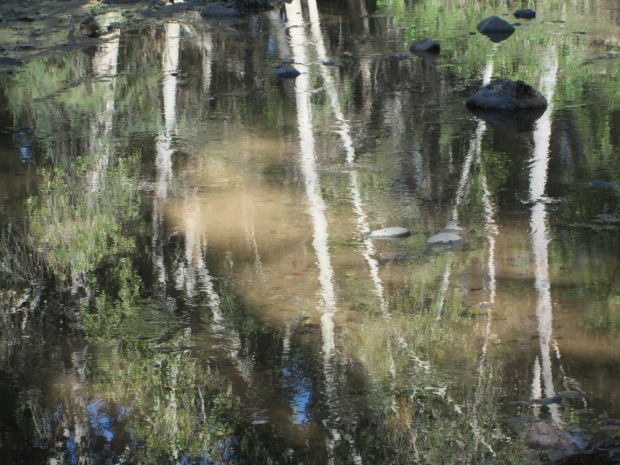
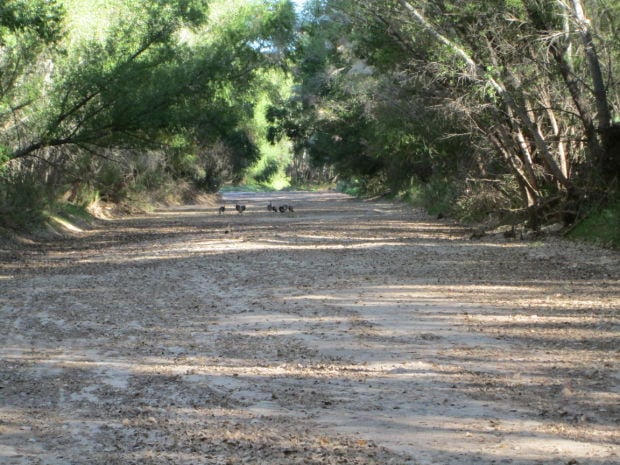
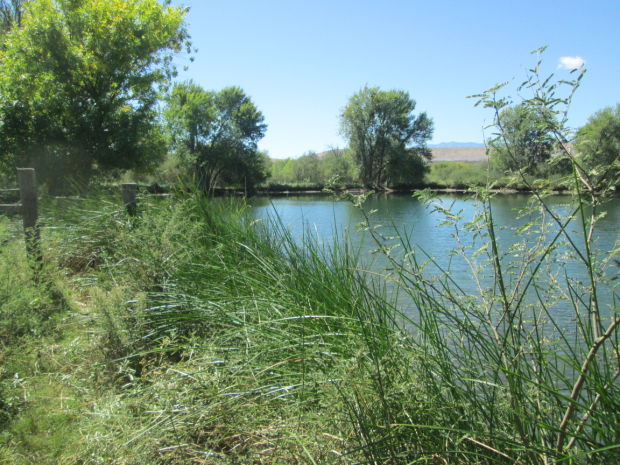
Land owned by mining company BHP Billiton for seven miles along the Lower San Pedro River near San Manuel, Ariz. Photo taken Oct. 3, 2013. Photo by Tony Davis / Arizona Daily Star

Tony Davis / Arizona Daily Star

BHP Billiton land

BHP Billiton land

Land owned by mining company BHP Billiton for seven miles along the Lower San Pedro River near San Manuel, Ariz. Photo taken Oct. 3, 2013. Photo by Tony Davis / Arizona Daily Star

Tony Davis / Arizona Daily Star

BHP Billiton land

BHP Billiton land

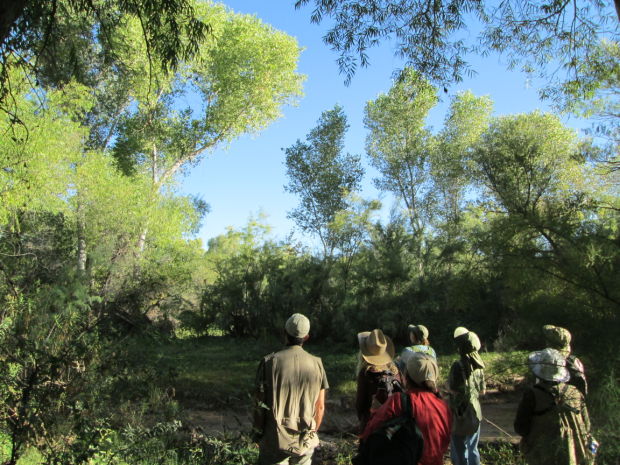
Birdwatchers on a Tucson Audubon Society field trip look for their favorites amidst the giant cottonwood and willow trees along the Lower San Pedro River near San Manuel. Land owned by mining company BHP Billiton for seven miles along the Lower San Pedro River near San Manuel, Ariz. Photo taken Oct. 3, 2013. Photo by Tony Davis / Arizona Daily Star

Tony Davis / Arizona Daily Star

BHP Billiton land

BHP Billiton land

Land owned by mining company BHP Billiton for seven miles along the Lower San Pedro River near San Manuel, Ariz. Photo taken Oct. 3, 2013. Photo by Tony Davis / Arizona Daily Star

Tony Davis / Arizona Daily Star

BHP Billiton land

BHP Billiton land

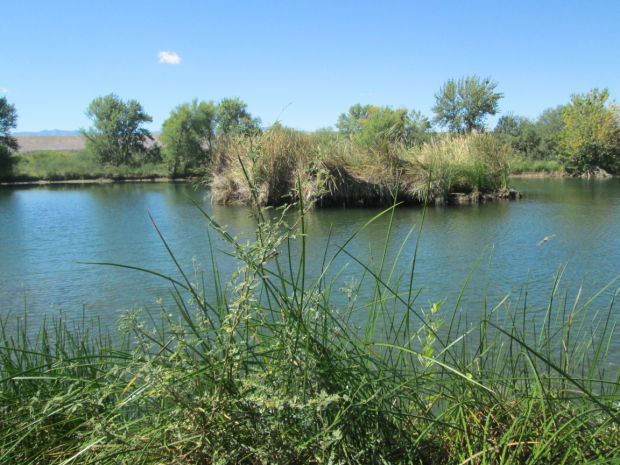
This pond near the Lower San Pedro River, formerly used for irrigating crops back in the 1930s, today is simply habitat for birds and other wildlife, says the pond's owner, mining company BHP Billiton. Land owned by mining company BHP Billiton for seven miles along the Lower San Pedro River near San Manuel, Ariz. Photo taken Oct. 3, 2013. Photo by Tony Davis / Arizona Daily Star

Tony Davis / Arizona Daily Star

BHP Billiton land

BHP Billiton land

Land owned by mining company BHP Billiton for seven miles along the Lower San Pedro River near San Manuel, Ariz. Photo taken Oct. 3, 2013. Photo by Tony Davis / Arizona Daily Star

Tony Davis / Arizona Daily Star

BHP Billiton land

BHP Billiton land

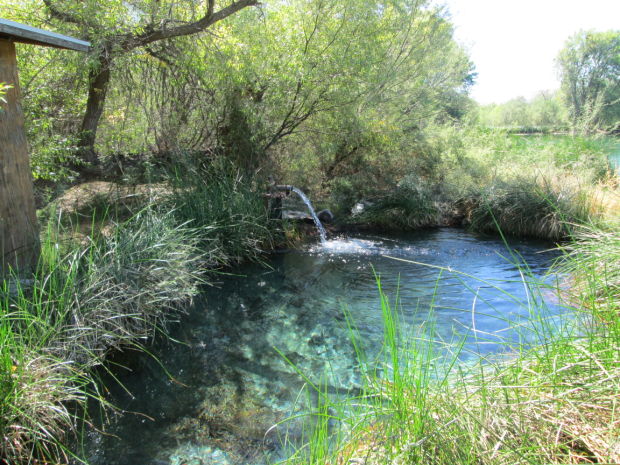
Water from a pressurized, artesian well lying more than 500 feet underground gushes into BHP Billiton's pond near the Lower San Pedro River. Land owned by mining company BHP Billiton for seven miles along the Lower San Pedro River near San Manuel, Ariz. Photo taken Oct. 3, 2013. Photo by Tony Davis / Arizona Daily Star

Tony Davis / Arizona Daily Star

BHP Billiton land

BHP Billiton land

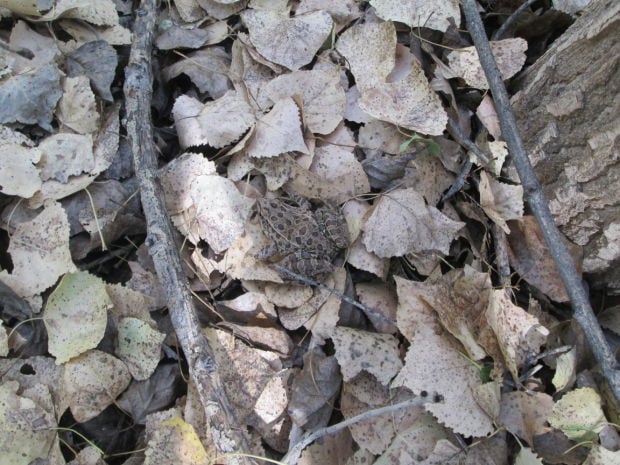
The tiny lowland leopard frog, which has declined significantly in Southeastern Arizona due to predation by non-native species, lives along the Lower San Pedro River. Land owned by mining company BHP Billiton for seven miles along the Lower San Pedro River near San Manuel, Ariz. Photo taken Oct. 3, 2013. Photo by Tony Davis / Arizona Daily Star

Tony Davis / Arizona Daily Star

Rare plant found near Tucson, Sierra Vista to be added to endangered species list

A rare wetland plant with spiky, white spheres for flowers is about to become Southern Arizona’s newest endangered species.

The U.S. Fish and Wildlife Service announced plans on Thursday to add the Arizona eryngo to the list of federally protected species and set aside three small patches of critical habitat near Sierra Vista and on Tucson’s east side.

Conservationists hope the listing will lead to a broader effort to bring back the once-verdant cienegas where the plant is found, starting with the groundwater that sustains them.

Noah Greenwald is the endangered-species director for the Tucson-based Center for Biological Diversity, which petitioned for the eryngo to be listed in 2018 and then sued the Interior Department to force action on its filing.

“It is a really striking plant,” Greenwald said. “It was a conspicuous and beautiful part of the Western landscape that’s been largely lost.”

Greenwald said roughly 95% of spring-fed cienega habitat in the Southwest has been destroyed by groundwater pumping and other human development. The eryngo is also threatened by an invasion of nonnative plants and woody vegetation resulting from warmer and drier conditions brought on by climate change.

The plant is a member of the carrot family that can grow up to 5 feet tall. Also known as ribbonleaf button snakeroot, it is native to Arizona, New Mexico and parts of Northern Mexico.

Only four populations remain, two in Southern Arizona and two in Mexico, though efforts are underway to reestablish the plant elsewhere, including at the historic Canoa Ranch south of Green Valley.

The Fish and Wildlife Service proposal would designate a total of 13 acres in three locations as critical habitat for the plant.

Two of the sites are on the east side of Tucson: 3.1 acres along the Tanque Verde Wash in La Cebadilla Estates off of Redington Road, and about one-third of an acre at Agua Caliente Park at Soldier Trail and Roger Road.

The remaining critical habitat is on 9.6 acres at Lewis Springs in the San Pedro Riparian National Conservation Area east of Sierra Vista.

“Critical habitat helps focus conservation efforts where they are needed most,” said Amy Lueders, regional director for the service in a written statement. “If finalized, this rule would help us conserve the Arizona eryngo, and the ecosystem on which it depends for future generations.”

Greenwald said his organization was hoping for “something a little more ambitious than 13 acres,” which probably isn’t enough habitat to ensure the plant’s survival.

But he said such limited action is typical of a federal agency that has been “beaten down by politics.”

Arizona eryngo is not just some pretty plant, Greenwald said. It’s another potential victim of an ongoing worldwide extinction crisis that’s being fueled by human activity.

It’s not enough to simply set aside the last few patches of ground where the imperiled plant clings to life. Greenwald said the eryngo’s native habitat is important to a lot of other species as well, and it must be restored and protected as much as possible.

If nothing else, he said, this listing “highlights the need for better planning and water management” across the region.

Gates were welded shut on border wall across San Pedro River; feds fix the problem

Federal officials rectified an oversight in border wall construction Tuesday after a sharp-eyed wildlife advocate noticed the gates in the wall across the San Pedro River were welded shut.

“Alarm bells went off” when Myles Traphagen, borderlands program coordinator for the Wildlands Network, saw the gates welded shut Friday, as opening them during a heavy rain would thus be a “daunting task.”

He posted photos online, and the Arizona Daily Star asked the Army Corps of Engineers, which oversees wall construction, about the welding Monday. By Tuesday morning, a construction worker was removing the silver-dollar-sized pieces of metal, known as “tack welds,” that kept the gates from opening.

Typically, tack welds are done during construction to keep gates from swinging freely open, said Jay Field, a spokesman for the Army Corps. The welds are undone when installation is complete and the project is inspected.

“Since construction was paused before inspections could be accomplished some of the tack welds remained,” Field said.

The removal of the tack welds was to be finished Tuesday, Field said, although some will remain on gates that have not been completely installed yet.

President Biden ordered a pause in border wall construction on Jan. 20. As a candidate, he said his administration would not build another foot of wall. While construction is paused, officials are conducting a 60-day evaluation of the wall projects.

The gates on the wall across the San Pedro River are designed to allow water to flow under the wall, which is made of 30-foot-tall steel bollards filled with concrete. The bollards are 6 inches wide and separated from each other by 4 inches of space to allow Border Patrol agents to see activity in Mexico.

Without the gates, debris such as trees and boulders could be swept against the wall, building up pressure until the bollards collapse and send a rush of water and debris down the river. Sections of shorter bollard fencing were toppled over by debris buildup near Lukeville and Nogales in the past decade.

Water levels in the San Pedro River have reached 17 feet in recent years during monsoon storms, according to a U.S. Geological Survey gauge about 5 miles north of where the river flows north across the border.

A few inches of water flowed through the river bed on Tuesday as a construction worker moved from gate to gate, grinding off the welding. He started on the eastern bank and continued into the center of the roughly 500-foot-wide river bed.

This section of border wall is being built by Southwest Valley Constructors, a New Mexico-based affiliate of construction giant Kiewit. The contractor was awarded $2.2 billion to build 88 miles of border wall in Arizona.

Customs and Border Protection officials did not respond to an inquiry from the Star. Last fall, they told a meeting of wildlife advocates, local residents and representatives from congressional offices that the plan was to keep the gates open on the San Pedro River during monsoon season. A Border Patrol agent would open the gates when heavy rains came during other times of the year.

The fact that “such a simple thing” was overlooked, led Traphagen to ask: “Who’s minding the store?”

Said Field: “When alerted, our guys went out and took care of it.”

Related to this collection

Arizona Daily Star
  • Facebook
  • Twitter
  • Bluesky
  • YouTube
  • Instagram
  • Arizona Daily Star Store
  • This is Tucson
  • Saddlebag Notes
  • Tucson Festival of Books

Sites & Partners

  • E-edition
  • Classifieds
  • Events calendar
  • Careers @ Lee Enterprises
  • Careers @ Gannett
  • Online Features
  • Sponsored Blogs
  • Get Healthy

Services

  • Advertise with us
  • Register
  • Contact us
  • RSS feeds
  • Newsletters
  • Photo reprints
  • Subscriber services
  • Subscription FAQ
  • Licensing
  • Shopping
© Copyright 2026 Arizona Daily Star, PO Box 26887 Tucson, AZ 85726-6887
Terms of Use | Privacy Policy | Advertising Terms of Use | Do Not Sell My Info | Cookie Preferences
Powered by BLOX Content Management System from bloxdigital.com.
  • Notifications
  • Settings
You don't have any notifications.

Get up-to-the-minute news sent straight to your device.

Topics

News Alerts

Breaking News