

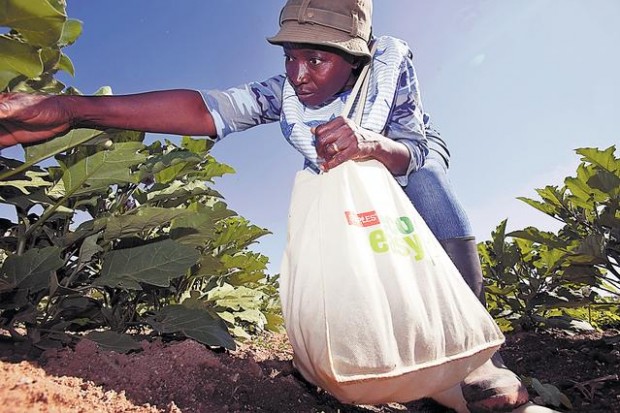
Jawn Golo watched flames destroy her home and possessions in the Liberian Civil War and thought that her world was over.
"I just thought that was the end of my life," said Golo, 50.
She and her husband, James Golo, fled with their children from Monrovia, Liberia's capital, in October 1990. They spent 15 years in a refugee camp in Ghana, enduring hunger, bouts of cholera, a son who was partially blinded and Jawn's monthlong paralysis from snakebite. Nearly two decades after rebels burned their home on Africa's western coast, the family leads a quieter life in Litchfield Park, running an organic farm it started with the help of a refugee program. The Golos are among 1,190 resettled Liberian refugees in the state, according to the Arizona Refugee Resettlement Program.
Their business, Golo Family Organic Farm, sits on 9 acres near Indian School and Perryville roads.
People are also reading…
"We grow cucumbers, eggplants, melons, jute leaves, okra, green beans, zucchini and sweet potatoes" and sell them to local grocers, said James, 52.
The couple and their five children, ages 16 through 27, spent a recent day crouched around a mound of globe eggplants, trimming stems and boxing the vegetables to meet a surprise order. The heap of ripe purple fruit, green fields and radio music buzzing in the background tell the story of a new beginning for the family, which once lived on leaves boiled in polluted water.
The Golos' journey to the southwest valley of metro Phoenix began in the open lands in Monrovia, where they scavenged bushes for edible leaves and fruit to trade for meager rations of rice and cooking oil. At night, huddled in bushes and fearing stray bullets from rebel gunfire, they endured a cold rainy season, too afraid to light a fire for warmth because light drew unwanted notice.
The family had little food, drank dirty water and suffered diarrhea. The couple worried about their unborn baby, knowing that when he arrived, there would be no medical attention or even a blanket to swaddle him from the rain.
"But if there is life, then there is hope," Jawn said. "I prayed harder than ever."
Her prayers seemed answered on Oct. 3, 1990, when a United Nations ship took the family to the refugee camp of Buduburam, in neighboring Ghana.
The passage lasted 42 hours. During that time, the family hunkered together on an overcrowded deck where people died from starvation and dehydration, their bodies flung into the ocean, James said.
At Buduburam, refugees such as the Golos were safe but faced cholera, hunger and depression as they waited to be resettled.
A letter from the U.N. Refugee Agency renewed the family's hope in June 2005, 15 years after leaving Liberia. The Golos were selected from a list of longtime refugees to be resettled in the Phoenix area.
"It was like a dream; at first we didn't believe it," said James, a former accountant.
It has taken several local and international nonprofit groups to help the Golos adjust to a new life in metropolitan Phoenix.
The Refugee Agency paid for their plane tickets and travel expenses. Catholic Social Services of Central and Northern Arizona assisted with housing and food until the Golos could get back on their feet.
The International Rescue Committee of Phoenix and the U.S. Department of Agriculture's Farm Services Agency supported the Golos as they entered the farming business in 2007. A member of Trinity Lutheran Church now rents a Phoenix home to the family for $350 a month.
In Litchfield Park, the Golos lease their farmland from Arizona-based Blue Sky Organic Farms Inc. Their goal is to become self-sufficient.
"They are nice people," said Sally LaPlace, who worked with Blue Sky and now runs Soil Servants, a local soil company. "I helped them understand the marketing that is available here, what stores to sell to and how to promote their business."
The Golos say farming in the Arizona heat is not easy, but they are grateful for the stability, education and opportunities available to their children.
"Here the rule of law is stronger," James said. "People can't harm you and go free."
Liberia has restored peace since an elected government was installed in 2006. But the Golos say they are unlikely to return to the country, which is plagued by high unemployment.
What the family hopes for now is to end 19 years of exile and become U.S. citizens.
"Anywhere can be your home if there is love," Jawn said.


