Long before Covid-19 killed more than 6,400 nursing home residents in New York State, understaffing was a chronic problem at long-term care facilities.
But the state Department of Health missed by more than seven months its deadline for delivering to state lawmakers a report on whether a proposed nursing home minimum staffing law was needed.
State Health Commissioner Howard Zucker promised lawmakers last week he would deliver the late report on Aug. 14.
Meanwhile, only 31 of the 617 nursing homes in New York have earned the top five-star rating in staffing in July from the federal government.
And only one of those 31 nursing homes was in the Buffalo region – McAuley Residence, a nonprofit nursing home in the Town of Tonawanda.
People are also reading…
When the Covid-19 pandemic hit, the U.S. Centers for Medicare and Medicaid Services issued a waiver allowing nursing homes to stop filing payroll data that show staffing levels. As a result, the staffing star ratings it issues every month this year have been based on the 2019 fourth quarter filing.
The waiver has recently been lifted and updated ratings are expected to be published this fall on the federal Nursing Home Compare website, often a first stop for families looking for nursing homes for a loved one.
There is no federal law that requires nursing home staff to spend a minimum amount of time each day with residents, but facilities are required to be “adequately staffed.”
More than half the states have minimum standards for time the nursing staff must spend daily with residents, but New York State is not among them.
A 2001 federal study of nursing homes concluded each resident needs a minimum of 4.1 hours of nursing care per day.
The proposed safe staffing law in New York would require more than that, but when it might be voted upon remains in limbo.
The nursing home industry – which contributes heavily to state politicians – objects to the bill, estimating it would cost facilities $1 billion to comply.
A five-star rating from the feds for staffing did not always provide nursing home residents with a shield against Covid-19. Some of the nursing homes that earned five-star ratings had high numbers of residents die from Covid-19.
Staffing star rating
Sixty-one nursing homes, or 10%, received the lowest one-star rating for staffing, including two in Western New York: the Villages of Orleans Health and Rehab Center in Orleans County and Houghton Rehab and Nursing Center in Allegany County.
Experts say several factors come into play in determining a nursing home’s star rating for staffing.
Among the criteria considered is acuity levels, or the medical needs of each home’s residents. The higher the residents’ needs, the greater the need for registered nurses to perform assessments in tracking each resident’s condition.
The average amount of time spent by registered nurses, licensed practical nurses and certified nursing assistants also figures into the ratings. The number of residents in a facility is another factor.
In addition, the “case mix,” which reflects the acuity level, figures into the Medicaid reimbursement rate nursing homes receive.
According to a study conducted for the nursing home industry, the average Medicaid rate paid to nursing homes in New York State in 2017 was $243 per day per resident, while the actual daily cost for a resident was $307. The $64 difference represents one of the highest “deficits” in the country between actual cost and what Medicaid pays, according to industry officials.
The debate on whether nursing homes are receiving enough from Medicaid has been ongoing for years and is likely to continue as the state grapples with substantially reduced revenues caused by the Covid-19 pandemic.
Yet nursing homes that succeed in scoring five-star ratings for staffing more often than not rely heavily on Medicaid.
How McAuley succeeded
At the nonprofit McAuley Residence, which had a five-star overall rating as well as the top rating in staffing, about one-third of residents’ stays were paid for by Medicaid.
“We will spend the money it takes to make sure that we have the staff needed to care for our residents and patients,” said Patricia W. O’Connor, vice president for long term care operations at Catholic Health, which operates the McAuley Residence.
Catholic Health officials have also pointed out McAuley and the organization’s three other nursing homes have all operated at a financial loss for more than a decade.
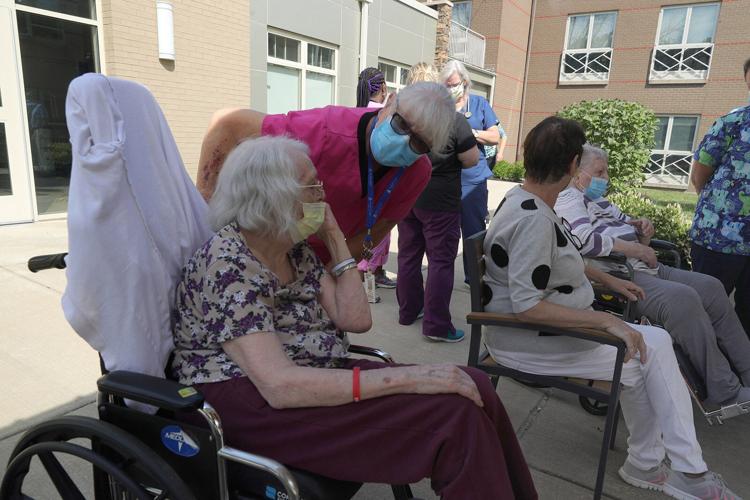
McAuley, a 160-bed facility, has about 200 staff members and about 110 residents. Prior to the pandemic, it averaged about 140 residents.
Registered nurses at McAuley spent on average 80 minutes a day with each resident. The statewide average is half that, 41 minutes.
"We have an RN model whereas other agencies might be heavier on other disciplines such as LPNs or aides," explained Tom Gleason, Catholic Health's senior vice president for home and community-based care. "We believe an RN model is right for patient care, especially considering the amount of sub-acute patients we take care of.
O’Connor cited several practices that helped to elevate McAuley’s staff rating to five stars:
• A pool of 58 float employees that can be shifted within the Catholic Health system when a shortage occurs in one of its facilities.
• Providing staff with “the tools they need to do their job,” O’Connor said, "everything from lifting equipment to adequate linens and other patient care items to adequate staffing."
• Ongoing review of benefits and compensation packages paid to workers to make sure the organization remains competitive.
In interviews with job applicants, "we often hear from people we are interviewing, when we ask why they are looking to leave their current facility, that they do not have enough help and they can’t provide proper care because of supply shortages," O'Connor said.
Lindsay Heckler, supervising attorney at the Center for Elder Law & Justice in Buffalo, said the star ratings for staffing are a useful tool for families to look at in deciding where to place a loved one, but it should not be the sole factor.
Nancy Leveille, director of special projects and education development for the New York State Health Facilities Association, recommended families tour facilities.
“Talk to the staff and see what their specialties are. See how it matches up with their loved ones needs,” she said.
Not immune to Covid-19
McAuley Residence had two residents die from Covid-19 at the facility, according to Health Department statistics. But that number does not include deaths of residents who tested positive at McAuley and were transferred to a hospital or another facility before they died.
As of this week, the total number of McAuley residents who had died from Covid-19 was 39, said JoAnn Cavanaugh, a Catholic Health spokeswoman.
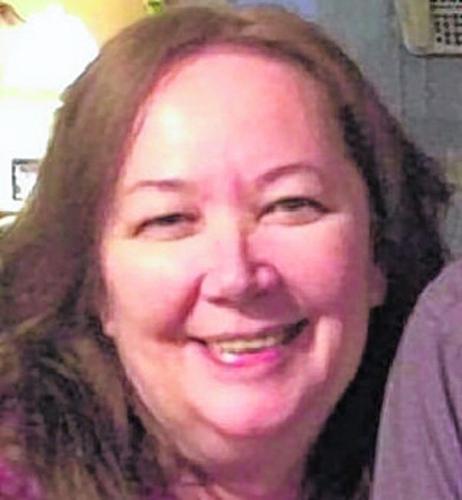
McAuley also had the only known Covid-19 death of a nursing home worker in the Buffalo region. Joan Neudecker, 60, a licensed practical nurse, died May 13 at Kenmore Mercy Hospital after testifying positive for Covid-19, according to her daughter.
In all, 31 McAuley workers tested positive for the virus through July 26, according to data provided by the nursing home to the Centers for Medicare and Medicaid Services.
How a for-profit succeeded
Still, when it comes to staffing, nonprofits like McAuley Residence and government-run facilities, though fewer in number statewide, dominate the federal government’s list of 31 “much above average” nursing homes.
There are about 200 nonprofit and government-run nursing homes in the state compared to approximately 400 for-profit facilities. Only four of the for-profit nursing homes had five-star ratings for staffing in July.
Maplewood Nursing Home in the Rochester suburb of Webster is one of the four. There, 74% of the residents pay from their own resources to live there and only 24% are covered by Medicaid, according to state Health Department statistics.
“We have a much higher percentage of private pay and that helps in a nursing home because 80% of costs are labor,” said Gregory Chambery, whose family has owned and operated the nursing home for three generations.
Hiring the right staff, Chambery said, is crucial in providing quality care. When considering a hire, the owner explained that he looks for individuals who have previously provided care for a family member.
“My best employees are those who have taken care of an uncle, an aunt, a mother, a father. If it is not good enough for your mom or dad, we don’t want it here,” he said.
Labor pool shortage
Leveille, of the New York State Health Facilities Association, said it is difficult for nursing homes to compete with the higher wages and benefits hospitals provide to registered nurses, licensed practical nurses and certified nursing assistants.
She blames the situation on the low Medicaid rate paid to nursing homes.
Industry officials also say they need to do more to attract workers.
“We haven’t done a good enough job in telling the story that there is a career ladder working in the long-term care field,” said James Clyne, the CEO of LeadingAge New York, which represents nonprofit facilities. “With training, you can work your way up from certified nursing assistant to a registered nurse.”
Advocates for the proposed minimum staffing law say that for-profit nursing homes could provide better care if more of the Medicaid dollars were spent on staff salaries instead of going to profits.
“Even though nursing homes claim they work on low-profit margins, there is no accountability on where the money goes,” said Richard Mollot, executive director of the Long Term Care Community Coalition in New York City. “A lot of the funds paid for resident care actually go to profit and related-party transactions.”
Related-party transactions involve nursing home owners doing business with relatives who run companies providing services to the facilities.
As for the long-awaited study on the proposed safe staffing law, Zucker was criticized last week for the long delay in releasing it.
The criticism came during a virtual hearing by the state Assembly and Senate, which was looking into how Gov. Andrew M. Cuomo’s administration responded to the impact of the pandemic at nursing homes.
Zucker told lawmakers the study was delayed because of the pandemic, but it was pointed out that the Health Department was supposed to complete the study by December, prior to the pandemic.

Joan Neudecker.