

Papa John’s is now Papa Johns.
The apostrophe disappeared this week. That shouldn’t matter much in Western New York, where several of the chain’s locations have also disappeared in recent years. Small wonder in that: It’s tough for chain pizza joints to make a go of it in a region where so many mom-and-pop shops beat Papa’s hands down.
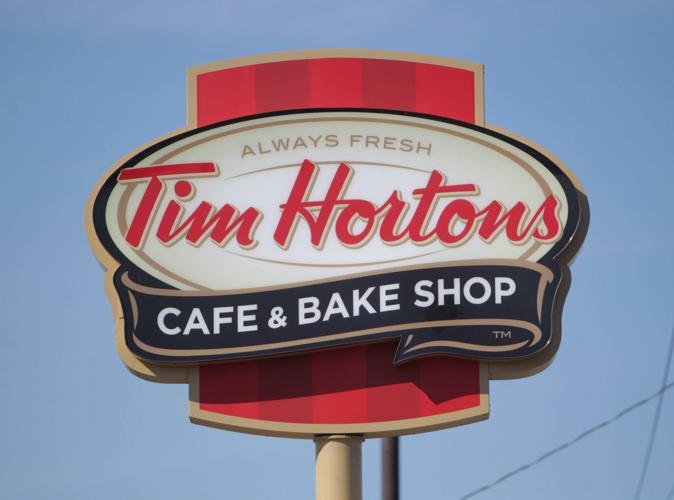
All of which brings to mind another AWOL apostrophe – one that really does matter hereabouts. This is the story of how Tim Horton’s became Tim Hortons. We’ll call it the Case of the Missing Apostrophe. And it actually begins centuries ago, with the French and Indian War.
That was the North American conflict within a larger imperial war between Great Britain and France in the mid-1700s. The Brits won the war, giving them control of the vast colonial territory of what colonists called the New World. France lost its claims to Canada in the Treaty of Paris, signed in 1763.
People are also reading…
As it happens, 201 years later, a hockey player by the name of Tim Horton opened a doughnut shop in Hamilton, Ont. It was called Tim Horton Donuts. Then, as the business expanded and opened new stores, the name was changed to Tim Horton’s – with the possessive apostrophe.
Horton was a stalwart defenseman for the Toronto Maple Leafs when he opened that first store in 1964. The Leafs won their third consecutive Stanley Cup that year under coach Punch Imlach. They would win another – the Leafs’ last to date – in 1967. Imlach would become a founding father of the Buffalo Sabres as their first coach and general manager. And in 1972, he acquired Horton, who in the interim had played for the New York Rangers and Pittsburgh Penguins. “At last,” Imlach said, “I have a major-league defenseman.”
Horton, already well into his 40s, offered veteran leadership to a young team. The Sabres reached their first playoffs in 1972-73, Horton’s first season with them. He was a fan favorite, holding strong on the Buffalo blue line. The next season the Sabres played a February game in Toronto. On his drive back to Buffalo, Horton died in a one-car crash on the Queen Elizabeth Way, in St. Catharines. He was 44. Old-timers remember Feb. 21, 1974, as the saddest day in Sabres history.
Two years later, Parti Quebecois came to power in Quebec amid old resentments about English domination ever since the French and Indian War. The new government soon passed a law that made French the sole official language of the province. But in French, an apostrophe is used only to replace a letter that is omitted. There is no French equivalent to the apostrophe-S structure in English to indicate possession.
And that is how Tim Horton’s morphed into Tim Hortons. Hortons is nonstandard English, making it the same in either language. And by eliminating the apostrophe, Tim Hortons could be one common brand across Canada.
That brand came to be a colossus of Canadian culture. The National Post put it this way a few years ago: “Its triumph wasn’t that it sold coffee, but that it sold us an indelible idea. Somehow, improbably, a mediocre coffee chain became a cornerstone of our national identity. Worse, we never seemed to mind.”
We love Tim Hortons in Western New York, too. The new Buffalo-themed version of Monopoly includes spaces for local entities such as Ted’s Hot Dogs, Perry’s Ice Cream, The Buffalo News – and Tim Hortons. What’s more, Buffalo boasts a statue of a skating Tim Horton outside the Tim Hortons at Harborcenter, a few slap shots from KeyBank Center, home of the Sabres.
Horton is one of nine players in NHL history – along with the likes of Wayne Gretzky and Gordie Howe – whose number has been retired by two teams. Let’s call that a Double Double. (For Horton, that means his No. 2 in Buffalo and his No. 7 in Toronto. At Tim Hortons, of course, it means two shots of cream and two shots of sugar.)
Hereabouts we’ll be thinking a lot about Tim Horton, and Tim Hortons, when March rolls around. That’s when the Sabres and Maple Leafs will play outdoors in the Tim Hortons Heritage Classic in Hamilton, Ont., home of the original Tim Horton Donuts, at Tim Hortons Stadium, home of the Hamilton Tiger-Cats. (Punctuation fans take note: There is no apostrophe in Hortons, but there is a hyphen in Tiger-Cats.)
Why did Papa Johns jettison its apostrophe? The company did not say in its announcement, though it did offer this bit of corporate-speak: “We are evolving how the Papa Johns experience comes to life across all touchpoints,” whatever that means.
This much is sure: The missing apostrophe in Papa Johns has little to do with the French and Indian War or Parti Quebecois. It is simply gone.
Adieu, apostrophe. We hardly knew ye.


