The global apparel supply chain that powers the multibillion-dollar university logo gear is both fascinating and complex. But consumers may not think about how overseas garment workers are treated when they purchase a new T-shirt with their alma mater’s logo on it.
The Lee Enterprises Public Service Journalism team published an investigation that reveals the chronically low pay and labor violations that plague the factories where college gear is made.

Garment workers making college logo gear for top U.S. universities deal with long hours, labor rights violations, wage theft and poverty wages on a regular basis. Can universities do more?
Lee interviewed a Honduras worker struggling with poverty-level wages, former child workers now fighting for better pay and treatment in Bangladesh and other experts and advocates to give us an insight into present-day conditions.
Here are five key takeaways from the investigation:

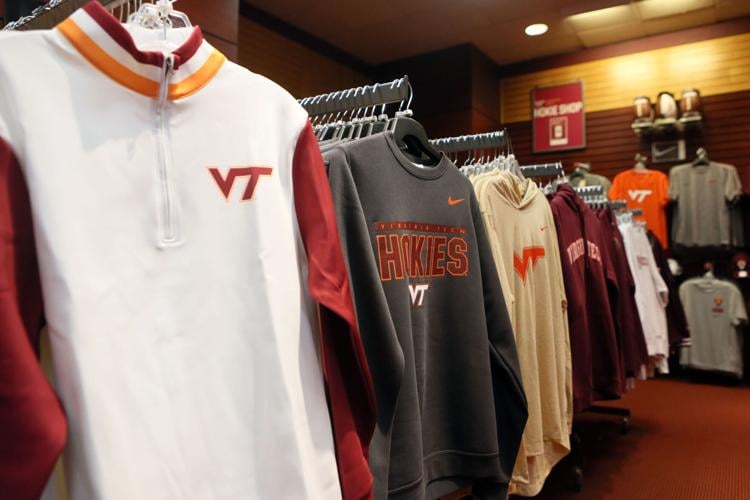
Virginia Tech licensed apparel for sale in the Lane Stadium Hokie Shop prior to the start of the Pittsburgh Virginia Tech football game in Blacksburg, Va., on Saturday, Sept. 30, 2023.
1. Labor rights violations include everything from sexual harassment to union-busting
People are also reading…
Wage theft, union-busting, harassment, poverty wages and other abuses are rampant at factories making university logo apparel, despite efforts made by colleges over the years to try to improve conditions for workers.
“We continue to see labor rights violations in a lot of university factories," said Scott Nova of the Worker Rights Consortium, a monitoring organization is funded by about 175 top U.S. universities that helps to identify and rectify problems in factories and the entire apparel industry, where university logo apparel is made right alongside gear for professional sports teams and other fashion brands.
For example, In 2021 the WRC uncovered what it describes as an “illegal wage theft scheme” that took place at a Thailand factory that worked with Nike. The situation resulted in workers losing more than 15 days of wages. It still hasn’t been rectified despite the WRC’s efforts to involve Nike. Neither the factory nor Nike replied to our requests for comment.

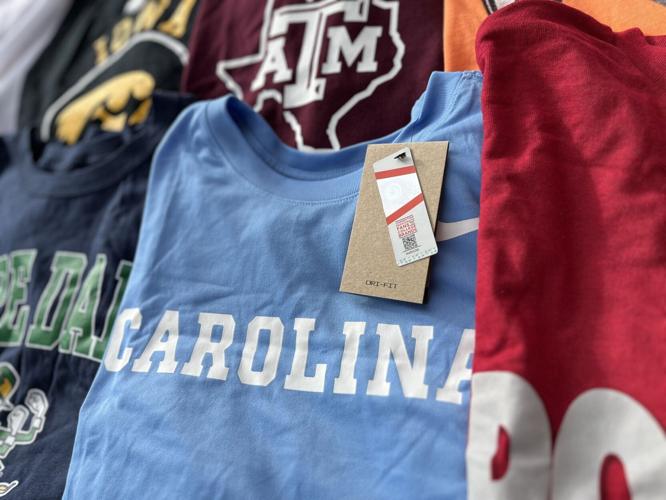
This $35 Nike T-shirt featuring the University of North Carolina was made El Salvador, where a garment worker was likely paid no more than 21 cents to make it.
2. Poverty wages aren’t a new problem – but COVID and inflation have made them worse.
At the onset of the pandemic in spring 2020, brands canceled orders en masse, backing out on about $40 billion in orders. Workers ultimately paid the price of those actions, said Jason Judd, executive director of Cornell University’s Global Labor Institute.
And in many places, wages have not been raised despite high inflation impacting workers.
In Bangladesh, garment workers earning a minimum monthly wage of 8,000 Bangladeshi Taka – or $72.50 – are facing poverty so extreme that their food consumption is below what nutritionists recommend, according to the Asia Floor Wage Alliance, a labor group that advocates for garment workers across the continent.
Experts have estimated a living wage there is at least $200 per month. Garment workers there are fighting for a higher minimum wage now but have so far been unsuccessful.
"They work with empty stomachs,” said Sultana Begum, a former Bangladeshi child garment worker who is now an activist with the Green Bangla Garments Workers’ Federation, a group that fights for higher wages, building safety and worker rights.

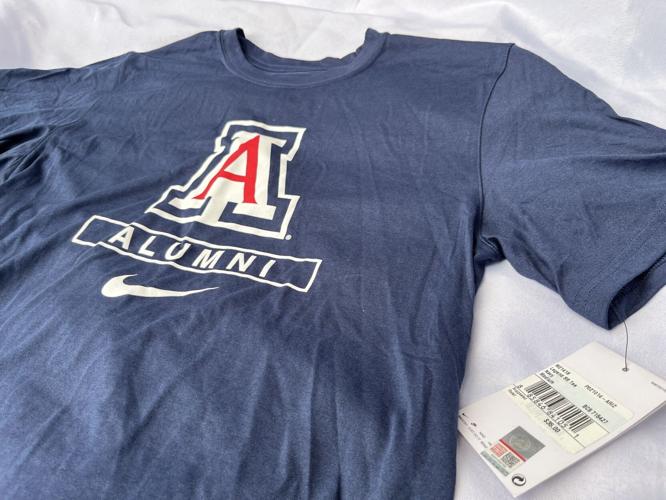
This $35 Nike T-shirt featuring the University of Arizona logo likely resulted in no more than 21 cents for the garment worker who made it.
3. Some universities are much more involved in tackling this issue.
There is a core group of colleges that appear to have taken the lead on trying to combat the poor conditions in factories. Those colleges have made efforts to be transparent about their supply chain.
They’ve made their apparel licensees adhere to manufacturing codes of conduct that forbid things like child labor, unpaid overtime, harassment and more. Some have required that their licensees uphold specific building safety standards in countries like Bangladesh and Pakistan.
But many colleges aren’t very engaged in the issue. For example, less than half of NCAA Division I Football Bowl Subdivision universities are part of the WRC and the FLA.
Check out our database to compare how NCAA Division I Football Bowl Subdivision schools have responded to this problem - if at all.
4. Brands and retailers are part of the issue, universities say.
The intense market pressures of the global apparel industry have squeezed workers for decades, since overseas apparel production started ramping up in the 1980s and 1990s as brands left the U.S. in search of lower labor costs and higher profit margins. Instead of running their own factories, brands have increasingly outsourced production to outside suppliers.
That results in a “tremendous downward pressure” on subcontractor factories, said Matthew Williams, an expert in the global apparel labor movement and a lecturer at Loyola University in Chicago.
“The factory owners essentially have to run sweatshops if they want to stay in business,” Williams said.
5. There is little government regulation to combat this problem.
Global apparel industry experts say U.S. trade policy largely doesn’t hold U.S. companies responsible when there are labor abuses or poverty wages at the subcontractor factories they work with to make their clothes.
A notable exception to that is the Uyghur Forced Labor Prevention Act, which went into effect in 2022. That law aims to stop the importation of goods manufactured with forced labor in the People’s Republic of China, especially from Xinjiang.
Some labor rights advocates hope trade policies like that can be expanded. Until then, university codes of conduct have been helpful tools to help tackle the worst abuses in factories. But enforcement of such codes of conduct is spotty.
Hayleigh Colombo is a member of the Lee Enterprises Public Service Journalism Team. Kimberly Wethal, Brendan Denison, Timothy Stanley and Faith Redd contributed to this report.