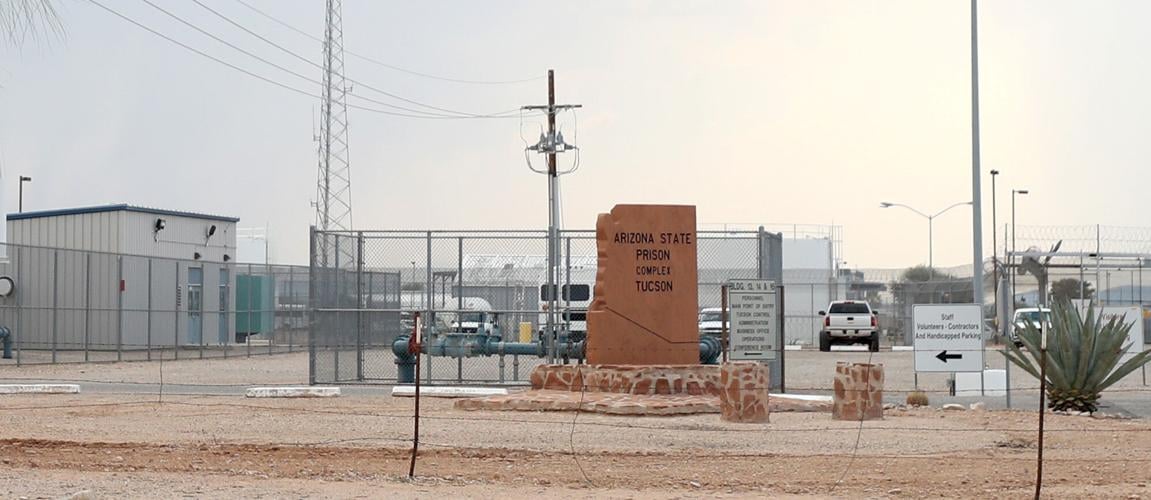
PHOENIX — Saying she's run out of patience that inmates are suffering and dying unnecessarily, a federal judge wrested control late Thursday of the state prisons' health-care system from the Department of Corrections, Rehabilitation and Reentry.
And Arizona taxpayers are going to pick up the yet-to-be-determined tab.
In an 83-page order, U.S. District Court Judge Roslyn Silver detailed complaints that go back 14 years about inadequate physical and mental health care at the 10 prison complexes across the state. Those include a history of agreements to do better, injunctions and even multi-million-dollar fines.
"But now, after nearly 14 years of litigation with defendants having not gained compliance, or even a semblance of compliance with the injunction and the Constitution, this approach has not only failed completely but, if continued, would be nothing short of judicial indulgence of deeply entrenched unconstitutional conduct,'' the judge wrote.
People are also reading…
"Plainly, only the imposition of the extraordinary can bring an end to this litigation and the reasons it was brought,'' Silver continued. "An end to unconstitutional preventable suicides. An end to unconstitutional preventable deaths. An end to unconstitutional failures to treat those in severe pain.''
The order comes over objections from state prison system attorneys. They argued they should remain in control of health care and that bringing in a receiver from outside to run it, as the judge will now do, would just slow things up.
Silver dismissed that claim.
"Even since the issuance of the injunction, defendants have failed for more than two years to implement relatively simple solutions,'' she said. "Here, given more than 11 years of delays and the same arguments and non-compliance, the court finds that appointing a receiver that is willing to implement the recommendations of the neutral experts would be relatively quick and efficient.''

A federal judge has ordered a takeover of health care operations in the state prison system from the Department of Corrections, Rehabilitation and Reentry.
The judge made it clear she believes the people running the system are not interested in making fixes to bring care into compliance with constitutional requirements, and are also incapable of doing so.
"Defendants have consistently dragged their feet, delayed, exploited ambiguity, and fought compliance at every turn, making continued insistence on compliance ineffective,'' Silver wrote. "Defendants lack the leadership capacity to complete the necessary systemic changes to achieve compliance.''
Gov. Katie Hobbs put at least some of the blame on her predecessors.
"I inherited a prison system plagued by a decade of neglect and mismanagement,'' Hobbs said in a written statement late Thursday, a claim not disputed by the judge, who previously imposed $2.5 million in fines on the department when it was run by Gov. Doug Ducey.
But Hobbs insisted that under Ryan Thornell, her hand-picked choice to head the department, there have been "meaningful reforms'' and that there are "drastically improved healthcare outcomes and increased staffing.''
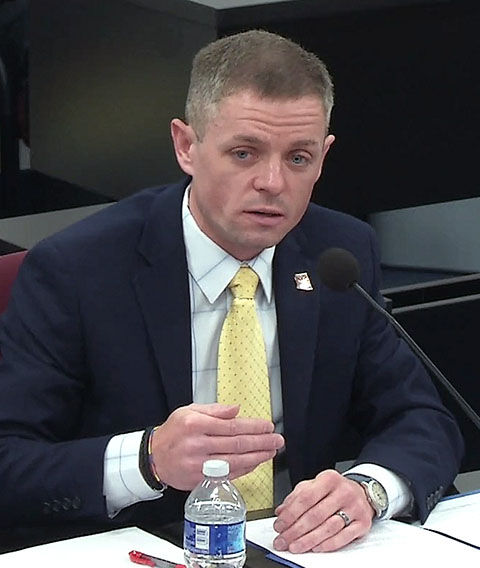
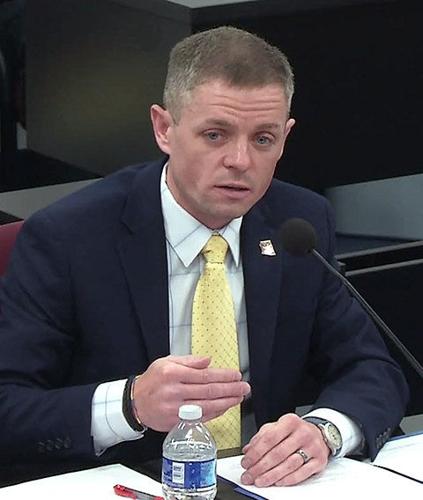
Ryan Thornell, director of the Arizona Department of Corrections, Rehabilitation and Reentry
The judge doesn't share that assessment about the Arizona Department of Corrections, Rehabilitation and Reentry.
"Here, the long history of this case has made evident that ADCRR's healthcare is deeply, systemically flawed,'' Silver said in Thursday's ruling. "New leadership already in place for two years has failed to make headway in rooting out systemic issues or offered any concrete plan for achieving compliance.''
Corene Kendrick, an attorney who is deputy director of the American Civil Liberties Union's National Prison Project, which brought the lawsuit, told Capitol Media Services she wasn't surprised that Silver took the rare step of appointing a receiver to run the prisons' health-care system. She said evidence of inadequate care presented by court-appointed monitors was "staggering and overwhelming''
"Here, the facts just make it so absolutely clear that the non-compliance is not anecdotal or just one-off incidents, but that the systemic rot goes to the core of the health-care system in Arizona,'' Kendrick said.
The judge acknowledged that appointing a receiver who will be in charge of ensuring inmates get the mental and physical care to which they are constitutionally entitled is an unusual remedy.
But she said that, after years of litigation, including court-appointed monitors, things really haven't gotten better. And rather than working with the monitors, she said state and prison officials "have engaged in unproductive and distracting litigation tactics.''
She also dismissed claims that a receiver she appoints will waste money.
"There will be costs for improvements to the healthcare system,'' Silver wrote.
"But the entire point of almost 14 years of litigation and the remedy for many years of constitutional violations is to improve the healthcare system,'' she continued. "As such, defendants cannot use the cost of improvements already required under the injunctions to oppose appointment of a receiver on the grounds of expense.''
The judge ordered lawyers for the state and those for prisoners to confer and, within 30 days, propose the duties, powers and authority of a receiver, presenting her with five potential appointees within 60 days.
Kendrick said whoever is put in charge will have broad authority — including ordering the state to spend more money than it wants to care for prisoners.
"Once the receiver is appointed they can basically get money from the Llegislature,'' she said. "That's exactly what happened in California.''
None of what Silver did should come as a surprise.
The 2012 lawsuit against Arizona's system by the ACLU, the Prison Law Office and other prisoner rights groups alleged grossly inadequate care that harmed or even killed inmates.
The state agreed to a settlement in 2014.
But federal judges overseeing the case ruled repeatedly in the following years that mental and physical health care provided to prisoners failed to live up to basic constitutional standards. They twice found the state in contempt and issued multi-million-dollar fines.
In 2021 Silver threw out that settlement because of the ADCCR's "pervasive material breaches'' of the agreement. And during a 15-day trial before Silver in late 2021, attorneys for prisoners presented evidence of repeated and horrific consequences inmates suffered due to poor or inadequate health care.
Silver agreed with their findings.
In a sweeping 200-page ruling in 2022, the judge said care provided by the state at prisons is "plainly grossly inadequate'' and state officials are acting "with deliberate indifference'' to the substantial risk of harm to inmates. She laid out facts she said show that top prison officials were aware of conditions that resulted in serious — and unnecessary — physical injury and death to inmates, but actively ignored the problems.
All of that was verified by court-appointed monitors, Silver said.
"Despite years of knowledge, driven by this litigation and defendants' monitoring of private healthcare contractors' performance, defendants have in fact made no significant attempts to substantively change the health care system and compel sufficient staffing,'' Silver wrote at the time.
Since then, the state has increased spending on health care and boosted staffing.
When the injunction was issued, it was spending about $300 million a year on health care and had about 1,100 providers under contract. The most recent corrections department report from last month shows about $400 million in yearly spending and more than 1,600 providers under contract.
However, only 1,365, or 84%, of those positions were filled. And at the time of last September's hearing, the state had been without a state medical director for a year.
Sophie Hart, an attorney for the Prison Law Office, told Silver during a hearing last September that it was clear the state lacked the capacity or the will to fix the system and the time had come for Silver to appoint a receiver to do the job.
"We are asking this court to appoint a receiver because after more than a decade of litigation, people incarcerated in the Arizona state prisons remain at unreasonable risk of harm, including death, due to a fundamental lack of medical and mental health care,'' she told Silver. "The monitor's recent report is devastating — it details the many system-level failures that continue to cause harm on a daily basis to our clients.''
Silver, in her latest ruling, agreed.
For example, in December 2023, attorneys for the state did not dispute a claim by plaintiffs that "staffing in the prisons at the moment is grossly deficient.''
And there were more issues of poor medical care, "including a patient who committed suicide, which the monitors deemed preventable and that occurred because of 'wholly inadequate' care,'' the judge wrote.
One of the issues has been funding.
The judge said attorneys for the prison system acknowledged the "excessive amount of time it has taken to obtain adequate staffing.''
But she said they "made the shocking argument that they should be excused because of legislative 'budget limitations' and offered 'to submit a request for supplemental appropriations.''' Worse, said Silver, is that the state's lawyers warned that the request "might not be approved'' and that, even if it were, it could take 18 months to actually get the funds.
Meanwhile, the judge said, the problems continued.
She cited a report by Dr. Bart Abplanalp, a licensed clinical psychologist and one of the monitors, who investigated a cluster of suicides. The judge said not only were various provisions of the injunction to provide better care violated, but that the doctor said if the prison system had complied "it would have decreased the probability of, if not prevented, these deaths.''
Silver also said the record undermines claims by the state that the prison system is "closing in on 100% compliance.''
For example, she said that only 3% of the referrals for mental health evaluations outside the prison were timely, "meaning a shocking 7,140, or 97% of these critical, life and death referrals were not timely or never occurred at all.''
Moreover, "the monitors discovered medications had been maladministered, placing patients at serious risk of harm,'' Silver wrote.
Then there's the fact that the prison system is using nurses to provide care that Silver said is "beyond the scope of their licensure.'' Even when a nurse might be appropriate, there were not enough of them to provide care.
All of that, said Silver, shows things really haven't gotten better.
"And after 14 years of litigation with little to change, continuing to employ the same approach would be wildly inefficient with no indication that improvement will accelerate,'' she said. "The court finds no lesser measure will suffice to remedy the pervasive constitutional violations present in defendants' healthcare delivery system.''
Howard Fischer is a veteran journalist who has been reporting since 1970 and covering state politics and the Legislature since 1982. Follow him on X, formerly known as Twitter, Bluesky, and Threads at @azcapmedia or email azcapmedia@gmail.com.