

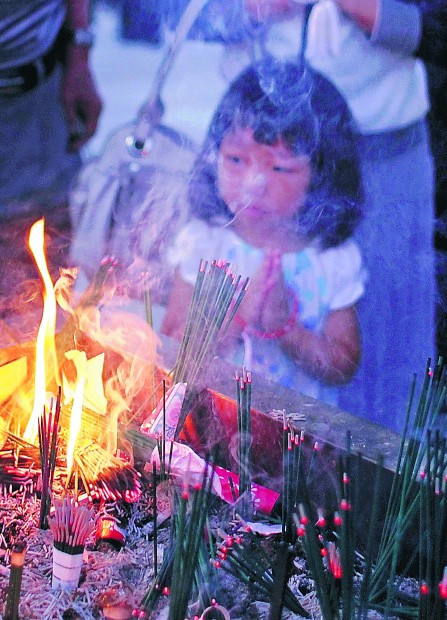
HIROSHIMA, Japan - The site of the world's first atomic bomb attack echoed with the choirs of schoolchildren and the solemn ringing of bells today as Hiroshima marked its biggest memorial yet and the first to be attended by the U.S. and other major nuclear powers.
Washington's decision to send U.S. Ambassador John Roos to the 65th anniversary of the bombing was seen by many as potentially paving the way for President Obama to visit Hiroshima - which would be unprecedented for a sitting U.S. leader.
Along with the United States, Britain and France also made their first official appearance at the memorial, as well as U.N. Secretary-General Ban Ki-moon. Altogether, 74 nations were represented.
Hiroshima was careful to ensure that the memorial - while honoring the 140,000 who died on or soon after the attack on Aug. 6, 1945 - emphasized a look-forward approach. It focused not on whether the bombing was justified - a point that many Japanese dispute - but on averting a future nuclear attack.
People are also reading…
Roos said the memorial was a chance to show resolve toward nuclear disarmament.
"For the sake of future generations, we must continue to work together to realize a world without nuclear weapons," he said in a statement.
Ban, who presented flowers at the Eternal Flame in Hiroshima's Peace Memorial Park, said this year's memorial would send a strong signal to the world that nuclear weapons must be destroyed.
"Life is short, but memory is long," Ban said. "For many of you, that day endures … as vivid as the white light that seared the sky, as dark as the black rains that followed."
Ban added that the time has come to move from "ground zero to global zero" - a world without any nuclear weapons.
Washington's decision to attend the anniversary has been welcomed by Japan's government, but it has generated complex feelings among some Japanese who see the bombing as unjustified and want the United States to apologize.
About 140,000 people were killed or died within months when the American B-29 name the Enola Gay bombed Hiroshima on Aug. 6, 1945. Three days later, about 80,000 people died after the United States attacked Nagasaki.
Japan surrendered on Aug. 15, ending World War II.


