
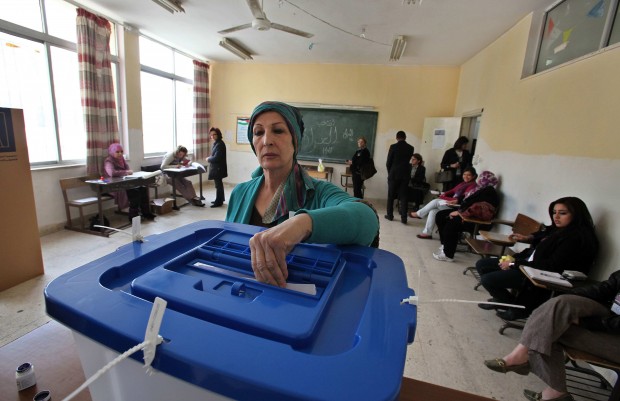
AMMAN, Jordan - Thousands of Iraqis living abroad lined up at polling stations to cast ballots in their homeland's crucial parliamentary elections Friday, a constituency Iraq's Sunni Arab minority hopes will boost its showing.
Voting was being held in 16 countries across the globe, from neighboring Syria and Jordan, home to the largest Iraqi expatriate communities, to Australia and the United States.
The United Nations refugee agency estimates that about 2 million Iraqis are living abroad - the majority of whom fled violence following the 2003 U.S.-led invasion.
A large proportion of those - particularly in Jordan and Syria - are Sunni Arabs who fled the fierce wave of sectarian killings at the height of the war.
That has made their votes a major focus of attention for Sunni leaders in Iraq, who are hoping a solid turnout among their community will counterbalance a strong vote among the Shiite majority for their own religious parties.
People are also reading…
Voting abroad will be held for three days, while in Iraq most voters go to the polls on Sunday, choosing a 325-seat legislature. The largest bloc in parliament will try to put together a government to lead Iraq for four key years as U.S. troops withdraw.
In Jordan, a Sunni tribal leader from the western Iraqi province of Anbar, Saad Al-Hardan, warned that after the Americans leave, Iran will try to dominate Iraq - a common fear among Sunnis because of the deep ties between Iraqi Shiite parties and Tehran.
"The U.S. occupation will end, but the Iranian one is there to stay. The Iranian influence is significant in parliament and in the government," he said.
Many of those voting said they wanted liberal and secular politicians to take over from Shiite Prime Minister Nouri al-Maliki, whom many Sunni Muslims accuse of isolating Sunnis.
Syria has nearly 800,000 Iraqi refugees, while Jordan's community is estimated as high as 500,000, according to the United Nations.
The head of the Iraqi election commission in Amman, Nehad Abbas, said turnout out Friday was good. He expects around 180,000 Iraqis in Jordan to cast ballots.
Voting seemed slower in Lebanon, home to about 50,000 Iraqis.
In the U.S., Haider al-Khasali, 39, said he would like to see al-Maliki stay on as prime minister because "he is a good man and he respects the people, the law."
"But maybe he needs more time because Saddam Hussein's Baath Party is still working in Iraq," al-Khasali said after voting in Nashville, Tenn.
The issue of out-of-country voting nearly derailed the election when some lawmakers said an early version of the election law did not treat votes by Iraqi expatriates as equal to those within the country. The issue was eventually resolved but highlighted just how important Sunnis view expatriate voting.
In Iraq, election commission member Hamdiya al-Hussaini said 600,000 people had cast their ballots Thursday in early voting across Iraq.
Those who took part included security officials, detainees, medical workers and others who might not be able to get to the polls Sunday.
The early vote was marred by a string of blasts that killed 17 people, highlighting the fragile nature of the country's security gains.
US Toll in Iraq
• Deaths: 4,384
• Wounded: 31,706
SOURCE: Department of Defense