

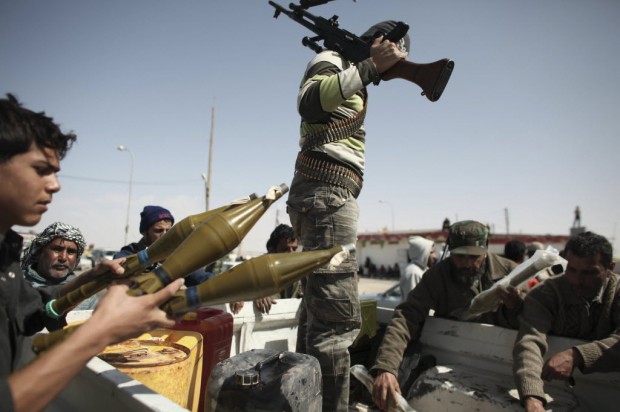
CAIRO - Moammar Gadhafi is safe for now, holed up in the Libyan capital surrounded by his followers and militiamen. Rebels hold a large swath of the east and a string of towns nearer the capital. But neither side seems capable of dislodging the other.
The fate of the oil-rich country may depend on how long Gadhafi can maintain the loyalty of troops, mercenaries and tribes that still support him - and on whether the West decides to take military action to end the standoff.
Nonetheless, analysts caution, it could be months before Libya is rid of its leader of 41 years.
The prospect of a prolonged conflict in the vast and mostly desert nation could ruin Libya - breaking it up along regional or tribal lines, destroying its oil wealth and turning many of its 6 million inhabitants into refugees and asylum seekers in neighboring countries or across the Mediterranean in Europe.
People are also reading…
Gadhafi has given no sign that he is willing to step down. Instead, he has vowed to fight until the end.
"Gadhafi is boxed in. At best, he could hope to be given asylum in Zimbabwe or perhaps Chad," said Marina Ottaway, director of the Middle East program at the Carnegie Endowment, a Washington-based think tank. "The main question is how long he will have people willing to defend him."
U.S. Secretary of State Hillary Rodham Clinton this week spoke of a Libya embroiled in turmoil for a long time, saying the country "could become a peaceful democracy, or it could face protracted civil war."
Foreign intervention could tip the balance. Already there is talk in the West about enforcing a no-fly zone on Libya to protect rebel-held areas from airstrikes. The United States also has moved warships closer to Libya's Mediterranean coast. And some in the rebel-held areas say they would welcome airstrikes by Western nations against pro-Gadhafi forces.
But it could be some time before the international community reaches a consensus on what to do about Libya militarily. Many analysts believe the U.S. and European nations - most likely to lead any military action - may not have the stomach for a new front given their longtime involvement in Afghanistan and Iraq.
Russia is likely to block the U.N. from giving its blessing to a no-fly zone or airstrikes. U.S. Defense Secretary Robert Gates this week noted that carrying out strikes is not just a matter of protecting protesters - you have to take out Libyan air defenses first, a riskier and more expansive act.
But Gadhafi's threats to fight to the end could prompt the West to intervene sooner, said defense analyst Anthony Cordesman of the Center for Strategic and International Studies in Washington.
"The problem is that whenever Gadhafi escalates, the West will escalate back," Cordesman said. "If he executes those threats, he will force the West to become more engaged."


