

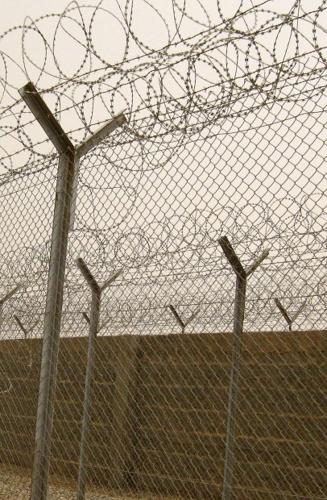
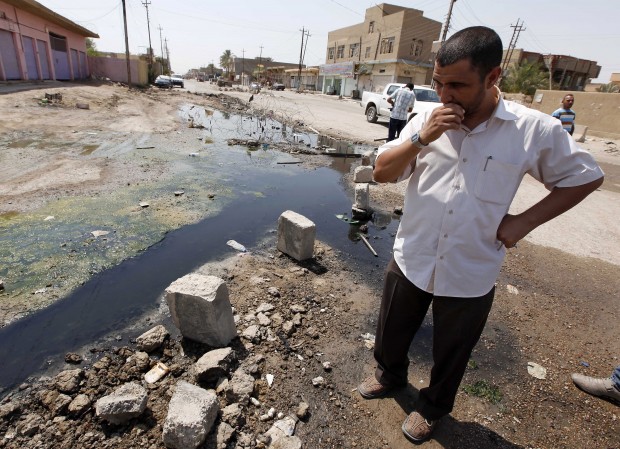
KHAN BANI SAAD, Iraq - A $40 million prison sits in the desert north of Baghdad - empty. A $165 million children's hospital goes unused in the south. A $100 million wastewater-treatment system in Fallujah has cost three times more than projected, yet sewage still runs through the streets.
As the U.S. draws down in Iraq, it is leaving behind hundreds of abandoned or incomplete projects. More than $5 billion in American taxpayer money has been wasted - more than 10 percent of about $50 billion the U.S. has spent on reconstruction in Iraq, according to audits from a U.S. watchdog agency.
That amount is likely an underestimate, based on an analysis of more than 300 reports by auditors with the special inspector general for Iraq reconstruction. And it does not take into account security costs, which have run almost 17 percent for some projects.
There are success stories. Hundreds of police stations, border forts and government buildings have been built; Iraqi security forces have improved after years of training; and a deep-water port at the southern oil hub of Umm Qasr has been restored.
People are also reading…
Even completed projects for the most part fell far short of original goals, according to an Associated Press review of hundreds of audits and investigations, and visits to several sites. And the verdict is still out on whether the program reached its goal of generating Iraqi good will toward the United States instead of toward insurgents.
Col. Jon Christensen, who took over as commander of the U.S. Army Corps of Engineers Gulf Region District this summer, said the federal agency has completed more than 4,800 projects and is rushing to finish 233 more. A total of 595 projects have been terminated, mostly for security reasons.
Christensen acknowledged that mistakes have been made. But he said steps have been taken to fix them, and the success of the program will ultimately depend on the Iraqis - who have complained that they were not consulted on projects to start with.
"There's only so much we could do," Christensen said. "A lot of it comes down to them taking ownership of it."
The reconstruction program in Iraq has been troubled since its birth shortly after the U.S.-led invasion in 2003. The United States was forced to scale back many projects as they spiked in cost, sometimes to more than double or triple initial projections.
As part of the so-called surge strategy, the military in 2007 shifted its focus to protecting Iraqis and winning their trust. American soldiers found themselves hiring contractors to paint schools, refurbish pools and oversee neighborhood water distribution centers. The $3.6 billion Commander's Emergency Response Program provided military units with ready cash for projects and paid for Sunni fighters who agreed to turn against al-Qaida in Iraq for a monthly salary.
But sometimes civilian and military reconstruction efforts were poorly coordinated and overlapped.
Another problem was coordination with the Iraqis, who have complained that they weren't consulted and often ended up paying to complete unfinished facilities they didn't want in the first place.
"Initially when we came in, . . . we didn't collaborate as much as we should have with the correct people and figure out what their needs were," Christensen said. He stressed that Iraqis are now closely involved in all projects.
One clinic was handed over to local authorities without a staircase, said Shaymaa Mohammed Amin, the head of the Diyala provincial reconstruction and development committee.
"We were almost forced to take (the projects)," she said during an interview at the heavily fortified local government building in the provincial capital of Baqouba. "Generally speaking, they were below our expectations. Huge funds were wasted, and they would not have been wasted if plans had been clear from the beginning."
As an example, she cited a date-honey factory that was started despite a more pressing need for schools and vital infrastructure. She said some schools were left without paint or chalkboards, and in need of renovations.
"We ended up paying twice," she said.
In some cases, Iraqi ministries have refused to take on the responsibility for U.S.-funded programs, forcing the Americans to leave abandoned buildings littering the landscape.
"The area of waste I'm most concerned about in the entire program is the waste that might occur after completed projects are handed over to the Iraqis," Inspector General Stuart Bowen said.
The U.S. military pinned great hopes on a $5.7 million convention center inside the tightly secured Baghdad International Airport compound, as part of a commercial hub aimed at attracting foreign investors. A few events were held at the sprawling complex, including a three-day energy conference that drew oil executives from as far away as Russia and Japan in 2008, which the U.S. military said generated $1 million in revenue. But the contracts awarded for the halls did not include requirements to connect them to the main power supply. The convention center, still requiring significant work, was transferred to the Iraqi government "as is" on Jan. 20, according to an audit by the Inspector General's Office.
The buildings have since fallen into disrepair, and dozens of boxes of fluorescent light bulbs and other equipment disappeared from the site. Light poles outside have toppled over, and the glass facade is missing from large sections of the abandoned buildings.
Waste also came from trying to run projects while literally under fire.
The Americans committed to rebuilding the former Sunni insurgent stronghold of Fallujah after it was destroyed in major offensives in 2004. The U.S. awarded an initial contract for a new wastewater-treatment system to FluorAmec of Greenville, S.C. - just three months after four American private security contractors were savagely attacked and killed.
An audit concluded that it was unrealistic for the U.S. "to believe FluorAmec could even begin construction, let alone complete the project, while fierce fighting occurred daily." The report also pointed out repeated redesigns of the project, and financial and contracting problems.
The Fallujah wastewater-treatment system is nearly complete - four years past the deadline, at a cost of more than three times the original $32.5 million estimate. It has been scaled back to serve just a third of the population.
Desperate residents, meanwhile, have begun dumping their sewage in the tanks, causing foul odors and running the risk of seepage, according to the head of Fallujah's municipal council, Sheik Hameed Ahmed Hashim.
"It isn't appropriate for the Americans to give the city these services without completing these minor details," Hashim said. "We were able to wipe out part of the memories of the Fallujah battles through this and other projects. . . . If they leave the project as it is, I think their reputation will be damaged."


