

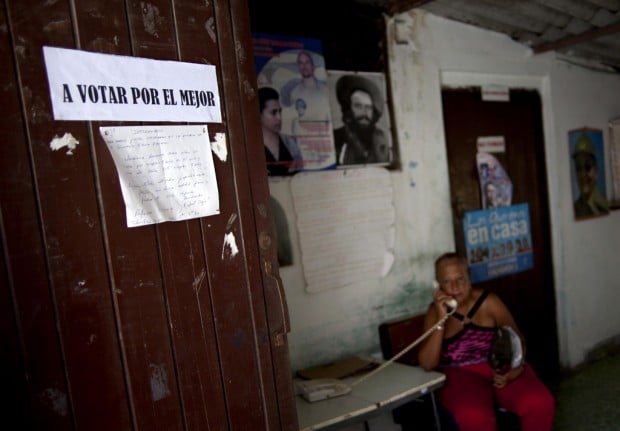
HAVANA - There are no flashy television ads or campaign signs spiked into front yards. And candidates definitely don't tour the island shaking hands and kissing babies.
Elections in Cuba lack the hoopla they have in other countries, but authorities here say they give people a voice in government and rebut charges that the country is undemocratic. Critics call them a sham since voters can't throw out the Communist Party long led by Fidel and Raul Castro.
A long, complicated and truly unique electoral process is under way on this communist-run island, with more than 8 million Cubans going to the polls this weekend for municipal elections. The process culminates in February, when national legislators vote on who will occupy the presidency, a post held by Raul Castro since 2008.
The latest electoral exercise began in September when Cubans met in common spaces, parks and buildings for neighborhood assemblies to choose the municipal candidates. Those assemblies nominated 32,000 candidates, and each electoral district must have two to eight names on the ballot.
People are also reading…
Sheets of paper with terse biographies and photos of the candidates were then taped up in each neighborhood for residents to read. That's just about the only campaigning that's allowed.
Today, Cubans will cast ballots to choose among these candidates for municipal assemblies that administer local governments and relay complaints on issues such as potholes and housing, and social and sports programs.
After the local elections, commissions elected by workers, farmers, youths, and student and women's groups then choose candidates for the national legislature, which eventually elects the next president.
Near-complete voter participation is expected. In 2007-2008, turnout was 96.8 percent.
The government says perennial high turnouts are a clear sign of support for the revolution. Dissidents say people vote for fear that not doing so could get them in trouble.
Polling places also turn into social gatherings for neighbors. Young students escort the elderly and the disabled to vote, and Cubans are reminded by state television, unions and women's groups that casting a ballot is a patriotic duty.
The entire process is devoid of party slogans, ads or logos, since only one party is legal in Cuba: the Communist Party, and its job is to "guide" society and its politics rather than impose candidates, said Ruben Perez, secretary of the National Electoral Commission.
While the Communist Party's power and influence are enormous, candidates don't have to be party members.
But those who are not usually come from allied groups such as the Federation of Cuban Women and the neighborhood-watch Committees for the Defense of the Revolution.
The nomination assemblies also see heated debate about local problems such as slow police response and poor water supply.
But it is rare, almost unheard of, for a candidate to be nominated against the party's wishes, and there's no real electoral threat to the country's rulers. There are no direct elections for the presidency or for Communist Party leadership posts, which critics say hold the real power.


