

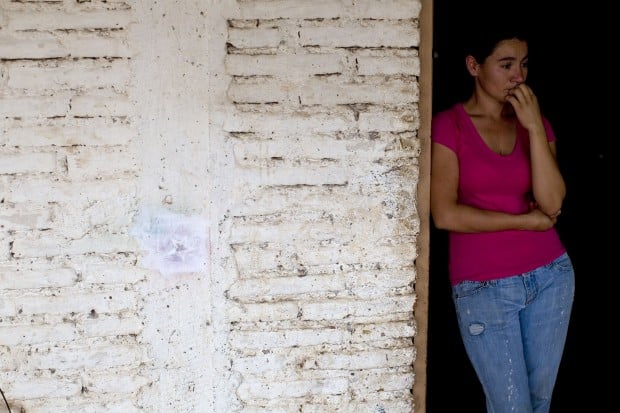
CULIACAN, Mexico - From age 6, each of the Gonzalez brothers learned to make bricks, trudging like nine little chicks behind their father every day before dawn to work in his dusty hilltop brickyard.
Three years ago, three of them in their 30s and 40s quit the backbreaking work, saying they had a better opportunity abroad.
Now, having escaped the Mexican drug war that leaves bodies on the streets of their city of Culiacan almost daily, the brothers face the gallows in Malaysia, standing trial on Wednesday on charges of working in a factory where police found $15 million in methamphetamine. If convicted, they face Malaysia's mandatory sentence of death by hanging for drug trafficking.
The case raises questions about a connection between their home state, Sinaloa, the cradle of Mexico's drug trade, and a country 10,000 miles away that is a regional production hub for meth. While authorities say there is no direct evidence to tie the Sinaloa cartel, Mexico's most powerful, to meth production in Asia, they wouldn't be surprised by such a link.
People are also reading…
Only a month after leaving Mexico, the brothers - Jose Regino, 33, Luis Alfonso, 43, and Simon Gonzalez, 36 - called home during a family birthday party. Their relatives thought they were calling with congratulations. Instead the brothers told them they were under arrest.
The relatives hung up stunned and searched for Malaysia on their globe.
"If I had been asked to go, I would not have gone," brother Ismael Gonzalez said as he dragged a wheelbarrow filled with dark clay at the brickyard, his bare feet caked in mud. "I say they had no idea what they were getting into."
Malaysia has increasingly become a regional production hub for methamphetamine, according to the U.S. State Department 2011 International Narcotics Control report. Most labs so far have been financed or operated by Singaporean, Chinese, Taiwanese, Thai or Iranian traffickers.
Mexican drug cartels have long-standing ties with Asian suppliers to obtain methamphetamine precursor chemicals, but they have not been known to be involved in production in that part of the world. U.S. officials, however, suspect the Sinaloa gang is seeking market share in Asia.
While the brothers have no criminal records, and the family insists they are innocent, the U.S. law enforcement official said it would not be unusual for a Mexican cartel to recruit inexperienced foot soldiers for such an operation, and cooking methamphetamine is a simple procedure.
Malaysian police say the brothers were arrested in March 2008 at a secluded meth factory along with a Singaporean and a Malaysian. Police seized more than 60 pounds of methamphetamine worth $15 million.
The Mexican Foreign Relations Department says three other Mexicans were detained in Malaysia on drug charges around the same time and released last year. It declined to give details about their cases.
The six are the first Mexicans to be arrested in Malaysia on drug trafficking charges, according to the department.
The brothers' Malaysian attorney, Kitson Foong, said they were arrested outside the factory and were not involved in what was going on inside. He declined to give details about what the brothers were doing in Malaysia but said: "They are not guilty. They are not drug traffickers."
Malaysian prosecutor Umar Saifuddin Jaafar said the Mexicans were arrested inside the factory. He said the prosecution team was not aware that the brothers came from a hotbed of drug trafficking in Mexico but that they "had some knowledge of the procedure, the equipment" at the laboratory.
"These people knew what they were doing. They operated in a very secretive environment. It seems to be that these people are experts," Jaafar said.
Neighbors and relatives say there was no sign that the brothers aspired to the ostentatious world of Sinaloa's capos, whose families live in mansions, drive Jaguars and bury their dead in gaudy mausoleums with spiral staircases and balconies.
On good days, the brothers earned about 300 pesos - $25 - making and selling bricks.
Simon dislocated three disks in his back several years ago, and a doctor urged him to quit.
"He kept working," said their sister, Alejandrina. "It's the only thing to do in the neighborhood, and it's the only thing that my father taught him since he was little. Bricks, bricks, bricks."
She said two men her brothers sometimes played soccer and basketball with told them about a job opportunity abroad, and they left together.
"They never told us where they were going. They only said they were going to try their luck at another job," she said.


