

TOKYO - Asia paused on Sunday to remember Japan's surrender to the Allied forces, which ended World War II 65 years ago, as the Japanese prime minister apologized for wreaking suffering on the region and the South Korean president said Tokyo's remorse was a step in the right direction.
From Nanjing - the site of a 1937 massacre by Japanese troops - to Tokyo's Yasukuni Shrine, which has drawn outrage from Asia for honoring Class A war criminals, people prayed for the millions who died in war and expressed hopes for peace.
The reckoning with history has taken special meaning this year as it comes amid a global effort to realize a world without nuclear weapons, a resolve backed by President Obama. But there were reminders of lingering tensions.
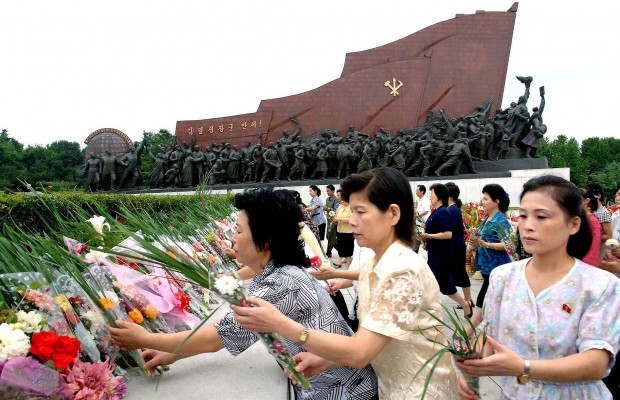
In Seoul, President Lee Myung-bak, dressed in traditional robes, led a ceremony celebrating the liberation of the Korean Peninsula from Japan's 1910-45 colonial rule with the Aug. 15 surrender.
People are also reading…
He also urged North Korea to abandon military provocations and make a "courageous change" toward peace. Relations with North Korea have nose-dived after the March sinking of a South Korean warship and Pyongyang's firing last week of a barrage of artillery into South Korean waters.
In Tokyo, at a ceremony for the war dead, Prime Minister Naoto Kan reiterated his apology to South Korea for wartime atrocities, and this time offered his regret to all of Asia.
Last week, Kan offered "deep remorse" in an apology issued ahead of the 100th anniversary of the Japanese annexation of the Korean Peninsula on Aug. 29, 1910.
Many older Koreans still harbor resentment against Japan over the colonization. Hundreds of thousands of Koreans were forced to fight as front-line soldiers, work in slave-labor conditions or serve as prostitutes called "comfort women" in brothels operated by the military.
In Australia, World War II veterans and representatives from New Zealand, the U.S. and Asian countries were among more than 300 people gathered in downtown Sydney to mark the anniversary.
Memorials were held earlier this month in Hiroshima and Nagasaki, the two Japanese cities devastated by U.S. nuclear attacks at the end of World War II.
U.S. Ambassador John Roos became the first official U.S. representative to attend the Hiroshima commemoration this year. Hopes are high Obama will also go to Hiroshima during his trip to Japan set for later this year.
At Sunday's ceremony, Emperor Akihito led a moment of silence at noon, bowing before a stage filled with yellow and white chrysanthemums.
It was the radio broadcast 65 years ago by his father, Hirohito, that announced the end of World War II - the first time the Japanese public had ever heard the voice of the emperor, who had been revered as a living god.
"I feel once again a deep sadness for those many who lost their precious lives and for their families," Akihito said. "I pray for the continued prosperity of our nation and for world peace."
Associated Press writers Hyung-jin Kim in Seoul, Kristen Gelineau in Sydney and Joe McDonald in Beijing contributed to this report.


