

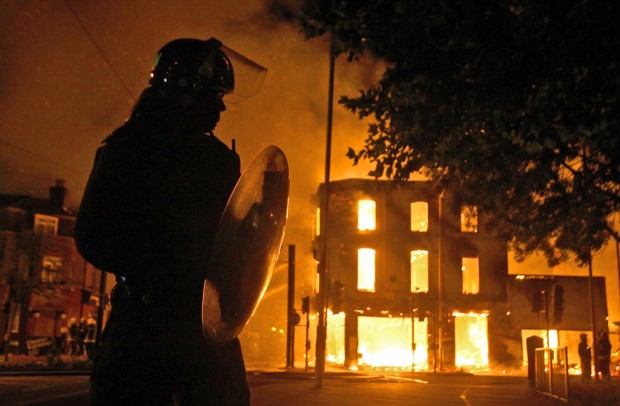
LONDON - Violence and looting spread to new areas of London on Monday - and to a second major city - as shops and cars were set ablaze and authorities struggled to contain the spiraling disorder on a third night of rioting in Britain's capital.
The worst unrest in London, host to next year's summer Olympic Games, in decades saw buildings, vehicles and garbage dumps set alight, stores burglarized and police officers pelted with bottles and fireworks as groups of young people rampaged through neighborhoods across the capital.
Fire crews battled to control a raging blaze that swept through a 100-year-old family-run furniture store in Croydon, in south London, and forced nearby homes to be evacuated.
In the nation's central city of Birmingham, dozens of people attacked shops in a main retail district - spreading the chaos beyond London for the first time since violence broke out on Saturday night.
People are also reading…
As authorities struggled to keep pace with the unrest, Prime Minister David Cameron cut short his summer vacation in Italy and will convene a meeting of the government's crisis committee today to toughen the response to the escalating violence.
It began late Saturday in London's northern Tottenham district when a peaceful protest over the police's shooting of a suspect turned violent, leaving parts of the high street charred and its shops looted. But some have blamed the unrest on unemployment, insensitive policing and frustration across Britain over the government's austerity budget, which will bring deep cuts to social services and welfare payments.
"There is significant disorder breaking out in a number of our communities across London," Tim Godwin, the acting London police commissioner said Monday, acknowledging that the 1,400 officers police deployed across London were struggling to halt the unrest.
Some residents called for police to deploy water canons to disperse rioters, or call on the military for support.
Witnesses in several neighborhoods said police were slow to respond as violence broke out in communities in the east and south of London previously untouched by the chaos, leaving young thugs free to set fires and steal from stores.
The small groups of rioters - most with their heads and faces covered - used SMS messages, instant messaging on BlackBerry cellphones and social media such as Twitter to coordinate their attacks and outwit the police.
Once the preserve of businesspeople, BlackBerry handsets are popular with teenagers, thanks to their free, fast instant messaging system. BlackBerry's manufacturer, Research in Motion, said in a statement it was were assisting authorities in their investigation and "feel for those impacted by the riots in London."


