


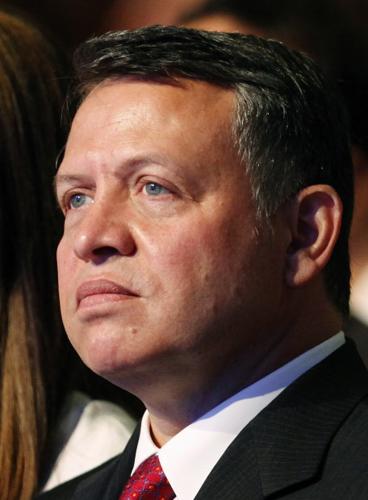
JERUSALEM - Yet another government fell Tuesday to the rumblings of revolution that are sweeping the Middle East, as Jordan's King Abdullah II dismissed the country's prime minister and Cabinet after weeks of protests.
The surprise move appeared aimed at pre-empting the types of massive protests that are under way in Egypt and Tunisia and are being planned in other Arab countries, including Yemen, Sudan, Syria and Algeria.
However, King Abdullah's choice of Marouf al-Bakhit, 64, a former army general and former prime minister, to replace Samir Rifai, a wealthy businessman and former court adviser, failed to impress a coalition of political forces behind nationwide protests that have been running weekly since the end of last year.
Demonstrators have called for the protests to continue until the new government takes office and institutes concrete changes.
People are also reading…
Like other protests that have spread across Arab nations recently, the demonstrations in Jordan have focused on a better quality of life for average citizens. Protest organizers say the main issues are poverty, price increases and endemic corruption.
Demonstrators from the Islamist movements also have called for constitutional amendments to curb the king's power to name heads of government. The constitution gives the king sweeping powers to appoint and dismiss prime ministers and to dissolve the parliament.
Unlike Egypt and Tunisia - where government authorities first ignored protests and then reacted harshly - Jordan attempted to placate the protesters by distributing water and candy at demonstrations and announcing a wage increase for civil servants and military personnel.
"The move by the king was clearly part of what is going on across the Middle East. This is not a liberal reform kind of area. Reform usually takes years to achieve, and here we are seeing it spread like wildfire," said professor Assaf David, an expert on Jordanian affairs at the Hebrew University in Jerusalem.
Nowhere have the unfolding events across the Middle East been more closely watched than in Israel.
Israel already has moved at least one battalion to reinforce its southern border with Egypt. Military officials said the move was meant to stop "infiltrators and other people hoping to take advantage of the chaos to attack Israel."
Israeli troops also were moved to guard the northern borders with Syria and Lebanon.


