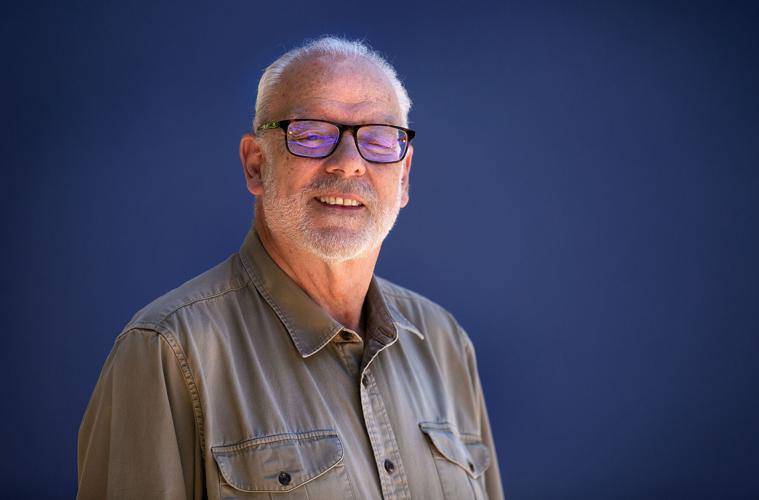
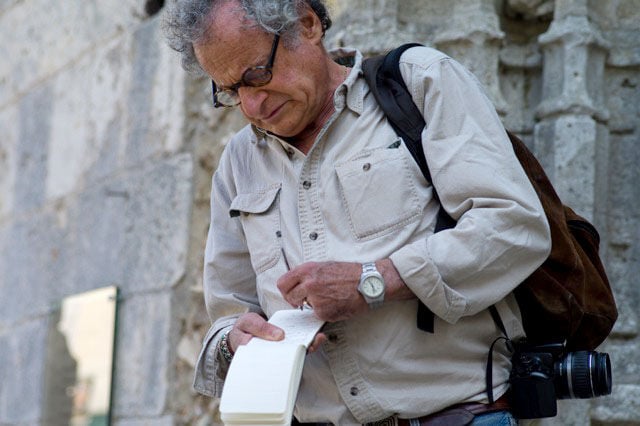
How the heck do I introduce Mort Rosenblum? Tucson’s most distinguished journalist? Arguably the best journalist the University of Arizona has produced? One of the best reporters in the proud history of the Associated Press? The author, at last count, of 15 books on everything from olives to Africa to the French way of being? A reporter for 60 years in 200 countries, covering everything from Argentina’s Dirty War to the Iron Curtain collapse, from El Salvador to Bosnia to Rwanda to Lebanon to Afghanistan?
Actually, I’d simply like to introduce him to you as a columnist who will be appearing regularly on the Opinion pages of the Arizona Daily Star, starting today.
This occasion does offer a chance to reprise one of journalism’s most amazing careers, which continues.
This is not breaking news: I’m ancient. I’ve been in journalism for 55 years (started full-time at age 16). In every one of those years, Mort Rosenblum has been a role model, someone whose work I have appreciated and admired.
People are also reading…
Long before I met him, his was a byline I looked for on the fanfold pages spitting from AP teletype machines, because every Rosenblum story was sure to be crisp, powerful, important. When I started as an adjunct instructor at the University of Arizona school of journalism, department head Don Carson gave me a grade book to use that he said had been passed on from a former instructor, and when I saw the name “Mort Rosenblum” on the inside cover, I was honored.
Four decades or so ago, I actually got to know Mort. There seems to be some disagreement about who coined the phrase “never meet your heroes” — Proust? Flaubert? — but whoever it was, was wrong in this case. My regard for Mort only grew: Sitting next to him as he succinctly told a group of AP editors why they should care about world news even as they concentrated on Arizona. Getting to see him in his beloved Paris, perched at a desk in his flat on the Île Saint-Louis surrounded by a self-made mountain of books and papers, assembling a book on Eastern Europe. Reading his prescient AP series on the global water crisis (for which he won a Harry Chapin Award). And a series he directed on the global fisheries collapse. And his great book “Squandering Eden.” On and on.
Rosenblum grew up in Tucson, in his own words “hooked on ‘journalism’ since editing the Cactus Chronicle at Tucson High.” He left the UA a year before his scheduled graduation to work at the Caracas Daily Journal for a year before returning to work full-time at the Star as a general assignment reporter while finishing his degree.
AP hired him in 1965, ostensibly for the Phoenix bureau, but quickly sent him on to Newark and then, at age 23, to cover mercenary wars in the Congo.
Rosenblum ran AP bureaus in Africa, Southeast Asia and South America before moving to Paris in 1977 as bureau chief for France and its former colonies.
He stepped away to serve as executive editor of the International Herald Tribune, then returned to AP as one of three special correspondents, the first based abroad. With his choice of anywhere in the world to be based, he chose to stay in Paris, traveling globally from there. He won AP’s top reporting award in 1990, 2000 and 2001. His major magazine credits are too numerous to list.
He has given back as a teacher, returning to Tucson for 21 years to teach a short course on international reporting at the University of Arizona and also taking Tufts University students all over the world on reporting assignments.
And he keeps on reporting. His “Mort Report” (www.mortreport.org) is a self-described “labor of love, with a lot of help from my friends: Old-style correspondents of hard-won experience and young ones with fresh eyes.”
The plan here is for two columns a month from Mort. Today’s debut piece on this page is an example of the local passion and global perspective that he’s in a unique position to provide.
Enjoy him, readers. I know I will.

David McCumber
David McCumber is executive editor of the Arizona Daily Star.