The following is the opinion and analysis of the writer:

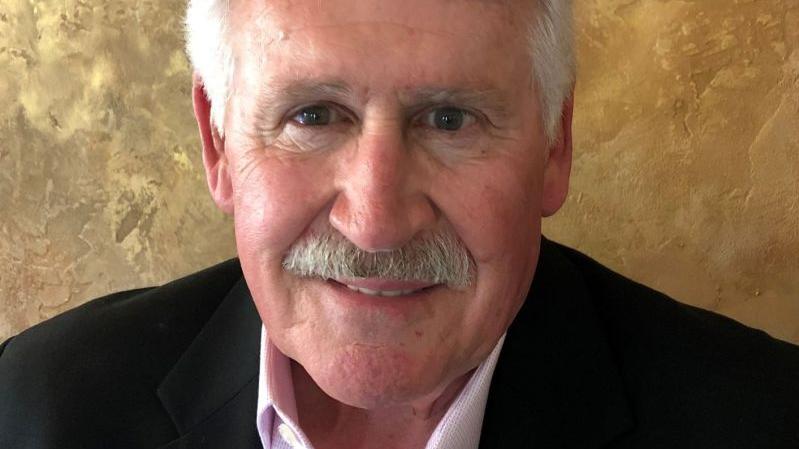
Phineas Anderson
Some time ago, I met a man named Alexander Boros, with whom I spoke for less than 30 minutes. Our parting left me stunned.
I met him for the first time and only time in the apartment of an old family friend. Annette and I had planned to go out for dinner. When she opened her door, I saw an older man with glasses, gray thin hair, and soft features sitting on the couch.
“Phineas, this is Alexander Boros, the brother of my next-door neighbor,” Annette said. Alexander rose, bowed slightly, and looked at me kindly.
He asked if I would like a brandy, saying it would only take a moment to go to his sister’s apartment to fetch it. I responded that a brandy would be nice, and he left. Annette said Alexander, who was 77, had come from Toronto to see his elder sister. She was in the hospital, dying of cancer. Annette was helping him settle his sister’s affairs.
People are also reading…
Alexander returned with a tray on which there were three aperitif glasses filled with brandy. He toasted Annette and me, speaking with a noticeable, pleasant-sounding European accent. There was an immediate grace and charm about the man, but there was also a kind of weariness in his demeanor, a certain heaviness that comes with shouldering the burdens of life.
After sipping his brandy, Alexander said to me, “Do you know the difference between ordinary brandy and Cognac, my friend?”
I told him I did not. He went on to explain that Cognac was considered more expensive and older than ordinary brandy, and it was made in the small town of Cognac in western France. Only distilleries in that town were permitted to use the name “Cognac” on their bottles. People who made Cognac selected the grapes by hand, one by one.
“When people are in love, they drink the Cognac after dinner, you know,” Alexander told me.
“Have you been to Paris, Phin?” I nodded I had. “Then, you know what a romantic city it is. No people prepare food better than the French. When you are in love, it is so wonderful to take your lady to a small restaurant on a side street, sit at a table covered with a white cloth, candles, and perhaps a single flower in a vase, slowly enjoy your food and complete the evening by having a Cognac together.”
He paused, savoring his past. Listening to him speaking, I became curious about what part of Europe he was from. He said he was from Hungary, having immigrated to Canada some 40 years before.
“We have a nice dinner wine in Hungary. It is called Tokai, but it is not the same as the Cognac. In place of Cognac, we have gypsy music. You’re at a table with your lady, and the head of the gypsy orchestra will come up to you quietly and ask if you would like them to play music in honor of your lady. It is all very polite, and if you say no, then the orchestra simply moves on. But if you are in love, and you say yes, the gypsy music plays to your lover’s ears and it is an evening you will both always remember.”
Again, he seemed to drift off into romantic memories, and then asked if we had time for just one small story. We said, “Please.”
“I had a love when I was 6. Ours was a real love. We were in school together. I come from Baja, a small town of about 3,000 people south of Budapest, about 20 kilometers from the Yugoslavian border. Everyone in the town knew of our love, because it was so sweet and innocent and sincere. We were in love right up to the age of 19.
“Each town in Hungary before the war had its own gypsy orchestra. The leader always carried a little black book and in that book he had everyone’s birthday. I remember when I was a small boy that the gypsy orchestra came to our home at 6 a.m. for my mother on her birthday. She was so happy! When my love was graduating from high school, though I was poor and only had a few coins in my pocket, I was determined to have the gypsy orchestra play at her home one evening in her honor. I found the gypsies and said I could not pay the full price, but they agreed to play because they knew of our love. In those days, once the gypsy music played, your lady did one of two things. She either came to the window with a burning candle, which meant she loved you, or she did not appear at the window at all. But for me there was no question. My love came to the window with the candle lighting her beautiful face, and we exchanged knowing smiles. She was the love of my life.”
Less than a half hour had passed since I had met Alexander, but I could not help but be taken with this soft-spoken, romantic of a man. He asked if he could send me some gypsy music. I told him I would be delighted and gave him my address. He stood up to go, kissed Annette’s hand, shook my hand and made his way to the door. “One last question. Phin, what is the origin of your name?”
I told him that all I knew was that the name Phineas was in the Old Testament. “Are you Jewish?” he asked. I said no. He said, “I ask this because your name is in the Old Testament, and because I am Jewish.”
He opened the door to leave, turned to us, paused, and then said, “And my love, she was Jewish and when she turned 19 she was taken from me, and was burned in Auschwitz.” With that he bowed, said goodbye, and gently closed the door.
May 6 is Yom Ha-Shoah, Holocaust Remembrance Day on the Jewish calendar.
I heard Greda Klein (1924-2022), a Holocaust survivor and author of “The Hours After” say several years ago that people should not think back in bitterness and hatred, but rather to act by doing a good and loving deed, to perform community service in memory of those who died, like Alexander’s love. Such acts will make the world a better place, and each of us in our way can do something that will help this wish come to pass.
Follow these steps to easily submit a letter to the editor or guest opinion to the Arizona Daily Star.
Phineas Anderson is a retired school administrator and former head of Green Fields Country Day School in Tucson. He can be reached at phineasa@gmail.com